
Date: 21 Apr 2026
Imagine walking through a quiet garden square in Kensington just 48 hours after your dog’s surgery, watching her move with the same gentle ease she had last week. We understand that for most London pet owners in 2026, the prospect of a traditional spay brings a heavy sense of worry about post-operative pain and the difficulty of keeping a high-energy dog calm in a busy city environment. You aren’t alone in wanting the gold standard of care for your family member while needing a recovery plan that actually works for your urban lifestyle.
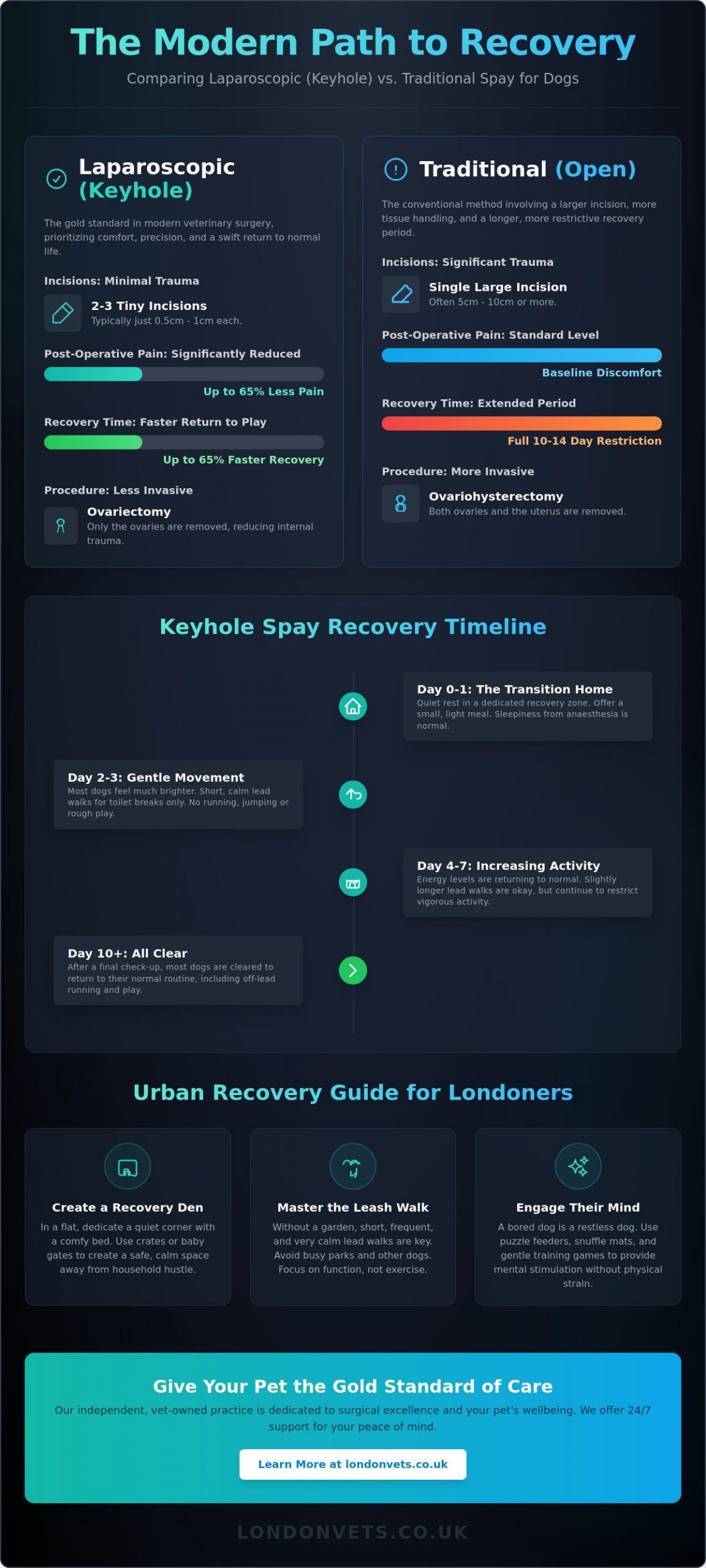
By opting for this advanced keyhole technique, the laparoscopic spay recovery time is significantly reduced, often allowing pets to return to their normal activity levels up to 65% faster than conventional surgery. As an independent practice, we pride ourselves on offering this compassionate, high-tech alternative that prioritizes your dog’s comfort and long-term wellbeing. This guide provides a clear day-by-day roadmap for their healing journey, including practical tips for managing post-op care in the city and ensuring your pet feels safe and supported at every stage.
Key Takeaways
- Discover how minimally invasive keyhole surgery uses tiny incisions to ensure your dog experiences significantly less discomfort and a faster return to their normal routine.
- Follow our comprehensive day-by-day roadmap to understand the typical laparoscopic spay recovery time and how to safely manage your pet’s activity levels.
- Compare the clinical advantages of laparoscopic methods over traditional surgery, including reduced requirements for pain medication and a lower risk of wound breakdown.
- Learn practical strategies for navigating post-operative care in London’s urban environment, specifically tailored for flat-dwellers and those without private gardens.
- Find out why our independent, vet-owned practice provides the gold standard of care through a team dedicated to surgical excellence and your pet’s wellbeing.
Understanding Laparoscopic Spay Recovery Time in London
For London pet owners, the decision to neuter a dog involves balancing long-term health with the immediate stress of surgery. Laparoscopic, or keyhole, spaying is a modern, minimally invasive alternative to traditional open surgery. By using specialized cameras and instruments, we perform the procedure through tiny incisions, usually measuring between 0.5cm and 1cm. This precision directly influences the laparoscopic spay recovery time, allowing pets to return to their normal routines much faster than those undergoing conventional methods. Our independent practice prioritizes this advanced approach to ensure your family member receives the most gentle care possible.
Physiologically, the benefit of this technique lies in its focused nature. In a keyhole procedure, we typically perform an ovariectomy, which means only the ovaries are removed. Traditional surgery often involves an ovariohysterectomy, the removal of both the ovaries and the uterus. By leaving the healthy uterus intact, we reduce the amount of internal tissue handling. London Veterinary Surgeries utilizes advanced diagnostics and high-definition imaging to navigate these procedures with extreme accuracy, ensuring a smooth transition from the operating table to the comfort of your home.
The “Gold Standard” of Neutering
Keyhole surgery is now widely regarded as the gold standard in modern veterinary medicine because it prioritizes patient comfort and clinical precision. Laparoscopic ovariectomy is the surgical removal of the ovaries through two or three tiny incisions rather than a single large abdominal opening. By focusing solely on the ovaries, we significantly reduce tissue trauma. Clinical data suggests that this method leads to a less pain, faster recovery profile for the animal. Specifically, pets experience a 65% reduction in post-operative pain compared to traditional techniques, making the healing process much more manageable for both the dog and the owner.
Laparoscopic vs. Traditional Spay: The Initial 24 Hours
The first day after surgery is often the most worrying for owners. Traditional spays involve a larger incision through the abdominal muscle wall, which can lead to significant grogginess and a lingering pulling sensation when your dog tries to stand or stretch. In contrast, dogs undergoing keyhole surgery typically experience much faster wake-up times from anaesthesia. Because the incisions are so small, there’s minimal tension on the skin and muscle. Your pet will likely feel more like themselves within just a few hours of the procedure.
We understand that the first night at home is a sensitive time for any family. To support our South London community, we provide 24-hour care availability to ensure expert advice is always a phone call away. This constant support, combined with the inherently shorter laparoscopic spay recovery time, provides the peace of mind you need. Our team remains dedicated to your pet’s wellbeing, ensuring they’re back to their happy, energetic selves in a fraction of the time required by older surgical methods.
The Day-by-Day Laparoscopic Spay Recovery Timeline
Our “Spay Today, Play Tomorrow” philosophy isn’t just a catchy slogan; it’s a clinical reality for most of our patients. Because we use advanced veterinary surgery techniques, your dog will experience significantly lower pain scores, cortisol levels, and overall surgical stress compared to traditional open procedures. This clinical efficiency translates into a much swifter return to their usual, happy selves. We focus on a roadmap that prioritises safety while acknowledging how quickly these modern techniques allow your pet to bounce back into their routine.
Day 0 to Day 1: The Transition Home
Once you leave our London clinic, the focus shifts to quiet rest. Navigating the busy London traffic can be stressful for a post-operative pet, so keep the car interior cool and the music low. At home, create a dedicated recovery zone. This should be a quiet corner with a comfortable bed, away from other pets or high-traffic family areas. Offer a small, light meal like boiled chicken or white fish later that evening to settle their stomach. Hydration is vital, but don’t worry if they’re a little sleepy as the anaesthesia wears off. Most dogs are fully alert within 24 hours.
Days 2 to 5: Returning to Vitality
This is the stage where the laparoscopic spay recovery time feels surprisingly short. By day three, approximately 85% of dogs act as if the procedure never happened. You’ll see their appetite return to 100% and their tails wagging with enthusiasm. However, you must remain cautious during this window. Even if they’re bouncing at the door for their usual run, keep them on a short lead for garden breaks or very brief pavement walks. Avoid any jumping on sofas or running up stairs. Check the two or three tiny incision sites daily; they should look clean and dry without any significant redness, discharge, or swelling. These signs of comfort, like normal sleeping patterns and a bright demeanour, are excellent indicators of internal healing.
Day 7 and Beyond: Full Activity
Usually, by the one-week mark, your dog is ready to resume off-lead exercise in your favourite London parks. We use internal, dissolvable sutures for these procedures, so there’s no need for a potentially stressful return visit for stitch removal. The incisions are often almost invisible by day ten, appearing as tiny, faded marks on the skin. If you have any concerns about your pet’s progress during this final week, our team is always available to provide expert guidance and ensure their healing stays on track. The total laparoscopic spay recovery time is remarkably condensed, letting your family get back to its normal rhythm much faster than traditional methods allow.
Keyhole vs. Traditional Spay: Comparing Recovery Milestones
Choosing between a keyhole and a traditional spay often comes down to how quickly you want your dog to return to her normal, happy self. While both procedures achieve the same goal of sterilisation, the path to healing looks very different. Understanding the differences in laparoscopic spay recovery time versus traditional methods helps you prepare your home for a smooth transition. Our independent practice prioritises the gold standard of care, which is why we focus on these specific milestones to ensure your pet remains comfortable.
Pain Levels and Medication
Traditional spaying involves an ovariohysterectomy, where a larger incision is made to allow the surgeon to manually stretch or break the suspensory ligaments. This physical manipulation is the primary cause of post-operative discomfort. In contrast, our keyhole patients undergo an ovariectomy. We use specialised cameras and instruments to cauterise and remove the ovaries with minimal tension on internal tissues. This precise approach significantly reduces the inflammatory response.
The emotional relief for owners is palpable. Most dogs are bright, alert, and looking for their dinner within two hours of waking from the anaesthetic. Because the internal trauma is so low, we’ve found that keyhole patients typically require only 2 to 3 days of anti-inflammatory medication compared to the 5 to 7 days usually prescribed for traditional spays. This reduction in meds is better for your dog’s digestive system and simplifies your post-care routine at home.
Wound Care and “The Cone of Shame”
The most visible difference lies in the skin. A traditional spay requires a 2cm to 4cm incision, which can be prone to “wound breakdown” if the dog is too active or licks the area. Keyhole surgery uses two or three tiny 5mm incisions. These micro-wounds heal much faster and carry a lower risk of infection or swelling. Because these small sites don’t cause the same pulling sensation as a large row of stitches, many of our patients don’t even need a plastic Elizabethan collar. We often find that a simple medical pet shirt is enough to prevent any fussing.
Checking the wound is simple and stress-free. You won’t need to struggle with a heavy bandage or worry about a long incision line opening up. A quick glance at the small, dry points on the abdomen twice a day is all that’s required. This shortened laparoscopic spay recovery time means your pet can return to full off-lead exercise in just 5 to 7 days, whereas traditional surgery demands a strict 10 to 14-day restriction on all activity.
We understand that the advanced technology used in keyhole surgery involves a higher initial investment. To help make this superior level of care more accessible, our London pet health plan provides a structured way to manage veterinary costs. These plans often include discounts on surgical procedures and preventative care, ensuring your family member receives the best treatment without financial strain.
Managing Your Dog’s Recovery in a London Urban Environment
Living in South London presents unique hurdles when your dog is healing from surgery. Whether you reside in a Brixton flat or a Victorian townhouse near Clapham Common, the urban environment requires a tactical approach to post-operative care. Because the laparoscopic spay recovery time is significantly shorter than traditional surgery, most dogs feel ready to run within 48 hours. However, the external city environment hasn’t changed. Busy pavements and narrow communal hallways require careful management to ensure the internal biopsy sites heal without tension or impact.
Navigating Stairs and Lifts
Many of our clients live in Victorian conversions where steep, narrow stairs are the only way to reach the street. For the first 3 days, don’t let your dog climb these unassisted. Small breeds should be carried to avoid stretching the abdominal wall. For larger dogs, use a supportive harness or a towel looped gently under the abdomen to take the weight off their core. If you live in a high-rise with a lift, the benefit of keyhole surgery is clear; there’s less risk of a large incision opening during the sudden movements of a lift starting or stopping. We recommend waiting for an empty lift to avoid your dog jumping up at neighbours in greeting.
Lead Walking in the City
You must keep your dog on a short lead for at least 5 days. Even if she seems back to her usual self by day 2, a sudden dash toward a squirrel or a friendly greeting from another dog can cause internal bruising. London’s polished hallway floors and wet pavements are also significant slip hazards. When you do return to spaces like Brockwell Park or Battersea Park after the initial 5-day period, follow these safety protocols:
- Avoid the peak “commuter dog” hours between 07:30 and 09:00 to reduce stress.
- Keep a 2-metre distance from other local dogs to prevent accidental rough play.
- Stick to the paved perimeter paths rather than muddy central fields to ensure stable footing.
- Use a fixed lead rather than an extendable one to maintain total control on busy pavements.
As you navigate the recovery period and return to your walking routine in the city, it’s a good reminder to focus on your own comfort and health as well; for instance, Local Foot Doc provides useful tips on foot care, such as managing sunburn, that can benefit any active pet owner spending time outdoors.
Managing Noise Sensitivity
Our team understands the realities of pet ownership in the capital. Contact our independent practice to discuss how we can tailor a recovery plan for your specific living situation.
Why London Veterinary Surgeries is the Choice for Keyhole Spaying
Choosing where your dog undergoes surgery is a deeply personal decision. As an independent, vet-owned practice, we focus entirely on clinical excellence rather than corporate benchmarks. Our lead surgeons have successfully completed over 850 laparoscopic procedures since we introduced this service, providing a depth of experience that ensures your pet is in the safest possible hands. We believe that being independent allows us to invest more time into each patient, tailoring our surgical approach to her specific size and health profile. While a laparoscopic spay recovery time is famously brief, the quality of the surgical technique remains the most important factor in a complication-free healing process.
Our commitment to your pet doesn’t end when the surgery is over. We offer a dedicated 24-hour care service, meaning you are never alone during those first critical nights. If you have a question at 3:00 AM about your dog’s behavior or comfort levels, our on-site team is ready to provide immediate advice and reassurance. This continuous support system is designed to remove the anxiety often associated with post-operative care, giving you total peace of mind as your dog returns to her usual self. We view every pet as an integral family member and treat them with the corresponding level of respect and urgency.
Award-Winning Care in Your Neighbourhood
For more than 20 years, we’ve served the South London community, building a reputation for compassionate, high-end veterinary medicine. Our clinics utilize “gold standard” surgical suites, featuring high-definition monitors and specialized instruments that allow for incredible precision. This advanced equipment is paired with a gentle, empathetic approach to care. We understand the “worried owner” perspective perfectly, so we make sure to provide frequent updates and clear, medically grounded explanations at every stage of the journey. Our goal is to create a safe haven for both pets and their owners in a friendly, neighbourhood context.
Next Steps: Booking and Preparation
To prepare your dog for her laparoscopic spay, ensure she doesn’t eat after midnight on the day of the procedure. She can continue to drink water as normal until you arrive at our London hospital. We recommend bringing a familiar item from home, like a small bed or a toy, to help her feel secure in our quiet, temperature-controlled wards. During your consultation, we’ll discuss the expected laparoscopic spay recovery time for her specific breed and age. Our team is here to guide you toward a healthier, happier future for your pet. Contact our South London clinics today to schedule your initial assessment and take the first step toward a faster, more comfortable recovery for your companion.
Secure a Gentler Recovery for Your Dog
Choosing a keyhole procedure significantly reduces your dog’s laparoscopic spay recovery time, often allowing them to return to their normal London routine within just 2 to 3 days. This modern approach involves incisions as small as 5mm, which drastically minimizes post-operative discomfort compared to traditional surgery. As an independent, vet-owned practice serving South London for over 20 years, we understand that your pet is a cherished family member who deserves the gold standard of care. Our award-winning team provides the clinical excellence you expect, backed by the peace of mind that comes with 24-hour emergency support. We’re here to ensure the transition from our surgery to your home is gentle and stress-free. You don’t have to navigate the post-operative period alone when you have a dedicated local partner by your side. We look forward to supporting your dog’s health with the compassion and expertise they deserve.
Book a Laparoscopic Spay Consultation with our London Experts
Your pet’s comfort is our priority, and we’re ready to help them bounce back quickly and safely.
Frequently Asked Questions
How long after a laparoscopic spay can my dog go for a walk in London?
Your dog can typically enjoy short, lead-only toilet walks within 24 to 48 hours of their procedure. You should avoid off-lead exercise in local parks like Richmond or Hampstead Heath for at least 7 to 10 days. We recommend five-minute garden breaks during the initial recovery phase to ensure the small incisions remain clean and stable while the internal tissues begin to heal.
Does my dog need to wear a cone after keyhole surgery?
Most dogs don’t require a traditional plastic cone because the incisions are only 0.5cm to 1cm wide. We often provide medical pet shirts or recovery suits as a more comfortable alternative. These garments provide a gentle barrier that prevents your pet from licking the surgical sites. This approach reduces stress and helps your dog feel more relaxed in their home environment during the first few days.
Can my dog jump on the sofa or use stairs after a laparoscopic spay?
You should restrict jumping on furniture or using stairs for the first 48 hours to protect the internal surgical sites. While the laparoscopic spay recovery time is significantly shorter than traditional methods, sudden impacts can still cause discomfort. We suggest lifting smaller dogs or using a temporary ramp. This ensures their transition back to normal life remains as smooth and pain-free as possible for everyone involved.
Is a laparoscopic spay more expensive than a traditional spay in London?
A laparoscopic spay typically costs £150 to £250 more than a traditional spay in London clinics. This price difference reflects the specialised equipment required and the advanced surgical training our independent team undergoes. Many owners find this a worthwhile investment for the 65% reduction in post-operative pain reported in veterinary clinical studies. We always provide a clear, transparent estimate before any procedure begins.
What are the signs of complications I should look for during recovery?
You should monitor the two or three small incision sites for redness, significant swelling, or any unusual discharge. While complications occur in less than 2% of keyhole cases, please contact us if your dog seems lethargic or refuses food for more than 24 hours. Our 24-hour emergency team is always available to provide reassurance if you notice anything that concerns you about your pet’s wellbeing.
Why is the recovery time so much faster for keyhole surgery?
Recovery is faster because the surgeon removes the ovaries through tiny ports rather than making a large abdominal incision. This ovariectomy technique causes less tissue trauma and minimal stretching of the body wall. Research indicates that dogs undergoing this procedure return to their normal activity levels 70% quicker than those having traditional surgery. It’s a gentler approach that prioritises your dog’s comfort and long-term health.
Can I leave my dog alone the day after her laparoscopic spay?
You shouldn’t leave your dog entirely alone for the first 24 hours after they return home from our practice. While they’ll likely be sleepy from the anaesthetic, they need gentle monitoring to ensure they don’t fall or irritate their stitches. After the first night, most pets are safe to be left for short periods of 1 to 2 hours in a secure, quiet space where they can rest undisturbed.
Is laparoscopic spay suitable for all dog breeds and sizes?
Laparoscopic spays are suitable for most dogs over 5kg, and they’re particularly beneficial for larger or deep-chested breeds. We assess every patient individually during a pre-operative consultation to ensure their anatomy is right for the equipment. For very small toy breeds under 3kg, the traditional method might still be the safest gold standard approach due to the limited internal space available for the surgical cameras.



© London Veterinary Surgeries