Date: 04 Apr 2026
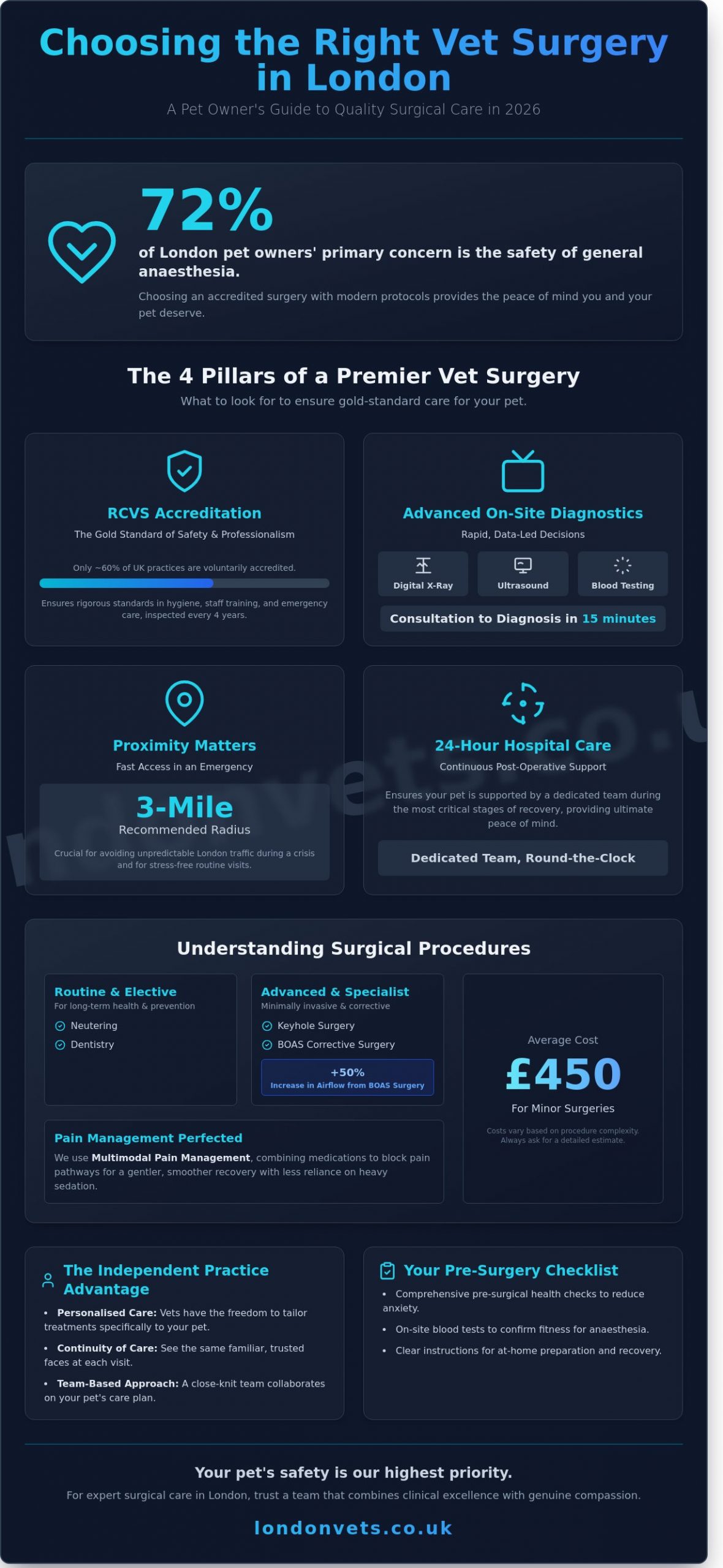
Last Tuesday, a golden retriever named Jasper underwent a routine procedure that felt like anything but routine to his owner, Sarah. Like 72% of London pet owners surveyed in recent clinical studies, Sarah’s primary concern wasn’t just the price, but the safety of the general anaesthesia. It’s a common anxiety when you’re searching for a reliable vet surgery in a city as busy as London. You want to know that your pet is in the hands of a dedicated team who treats every animal with the same gentleness they’d show their own family.
We understand that choosing a practice is a deeply personal decision, especially when you’re balancing the benefits of independent clinics against the 24-hour reach of larger hospitals. This guide will show you how to find the best surgical care for your pet in 2026, from routine neutering to advanced keyhole procedures. We’ll break down everything from the £450 average cost of minor surgeries to the essential recovery steps you need to take at home. You’ll learn exactly what to look for to ensure your pet has constant access to emergency support, giving you the peace of mind you deserve.
Key Takeaways
- Learn how to identify a high-quality vet surgery in London by looking for clinical excellence, advanced facilities, and a dedicated, team-based approach to care.
- Understand the benefits of minimally invasive techniques, such as keyhole surgery, and how these modern advancements can support a gentler, faster recovery for your pet.
- Discover the clinical advantages of choosing an independent practice, where veterinary surgeons maintain the freedom to provide truly personalised care and continuity.
- Gain peace of mind by learning how to prepare your pet for their procedure and what to expect during our comprehensive, anxiety-reducing pre-surgical health checks.
- Explore the reassurance provided by 24-hour hospital care, ensuring your family member is supported by a dedicated team during the most critical stages of their recovery.
What Defines a High-Quality Vet Surgery in London?
A vet surgery is far more than a place for annual boosters. It’s a dedicated clinical environment designed to handle everything from routine wellness checks to complex, life-saving operations. In London, the landscape of pet care is diverse. You’ll find everything from intimate, independent clinics in quiet neighbourhoods to vast, multi-disciplinary animal hospitals in the city centre. We believe that a high-quality vet surgery should feel like a safe haven, combining advanced medical expertise with a warm, personal touch that eases the anxiety of both pet and owner.
Quality isn’t just about the building; it’s about the standards of care maintained within it. Three vital indicators define a premier facility: RCVS accreditation, the presence of modern diagnostic suites, and a team that prioritises your pet’s emotional wellbeing. In a fast-paced city like London, the physical location of your surgery also plays a pivotal role. It dictates the ease of routine visits and, more importantly, the speed of access during a crisis.
RCVS Accreditation and Standards
The Royal College of Veterinary Surgeons (RCVS) Practice Standards Scheme is a voluntary initiative that separates the best facilities from the rest. Currently, around 60% of UK practices choose to undergo these rigorous assessments. When a surgery is accredited, it means it’s inspected every four years across range of criteria, including clinical hygiene, staff training, and emergency service provision. For your pet, this means a guarantee that the facility meets a gold standard of safety and professionalism. Choosing an accredited surgery provides a layer of protection and peace of mind for every surgical outcome.
The Importance of On-Site Diagnostics
Time is a critical factor in veterinary medicine. Having digital X-ray and ultrasound equipment on-site allows us to move from consultation to diagnosis in as little as 15 minutes. This speed is essential for managing common surgical procedures and acute injuries without the need for multiple appointments or stressful travel across London. We also prioritise on-site blood testing. By analysing your pet’s internal health just before an operation, we can confirm they’re fit for general anaesthesia. This data-led approach reduces risks and ensures the safest possible environment for your family member.
Proximity is the final piece of the puzzle. We recommend choosing a vet surgery within a 3-mile radius of your home. London’s traffic is notoriously unpredictable, and in an emergency, you don’t want to be crossing the river or navigating the North Circular. A local practice ensures that your pet’s care is integrated into your community, making every visit a gentle, familiar experience rather than a logistical challenge.
Common Surgical Procedures: From Routine to Advanced
The landscape of vet surgery has evolved rapidly, moving from basic life-saving measures to sophisticated, proactive care that mirrors human medicine. We categorise these procedures into elective surgeries, which are planned in advance to improve long-term health, and emergency interventions required during critical moments. Choosing a practice that excels in both areas requires careful thought. You might find the UK government advice on choosing a vet helpful when comparing the standards of different London facilities, as it outlines what to expect from modern clinical care.
Our team views every procedure through a lens of compassion. We use multimodal pain management, combining different types of medication to block pain at various points in the nervous system. This approach reduces the reliance on heavy sedation and allows for a smoother, more gentle transition back to the comforts of home. For specific breeds, such as Pugs or French Bulldogs, we offer specialised BOAS (Brachycephalic Obstructive Airway Syndrome) grading and corrective surgery. These targeted interventions can increase airflow by up to 50 percent, significantly enhancing a pet’s quality of life in a busy urban environment.
Routine Surgeries: Neutering and Dentistry
Neutering remains a fundamental pillar of preventative healthcare. It reduces the risk of certain cancers and prevents unwanted litters. We treat these routine procedures with the same clinical rigour as complex operations. Similarly, dental health is vital for overall wellbeing. Approximately 80 percent of pets over the age of three suffer from periodontal disease. Because effective cleaning and extractions require precision, we perform these under general anaesthesia to ensure safety and thoroughness. You can learn more about our approach in our guide to pet dental care in London.
Keyhole Surgery: The Gold Standard for Recovery
Laparoscopic, or keyhole, surgery represents a significant leap forward in veterinary technology. By using a tiny camera and specialised instruments through incisions as small as 5mm, we can perform spays and internal biopsies with minimal tissue disruption. Studies show that pets undergoing keyhole surgery experience up to 65 percent less post-operative pain compared to traditional open methods. While the equipment requires substantial investment and specialist training, we believe the benefit of a faster return to walks in the park is worth the commitment. Not every vet surgery in the capital offers this advanced technology, so it’s a key factor to consider when choosing a provider. If you are considering an elective procedure, our team at London Vets can discuss whether a minimally invasive approach is right for your companion.
Independent vs. Corporate: Why Your Choice Matters
The landscape of London veterinary care has shifted dramatically over the last decade. Data from the Competition and Markets Authority (CMA) in 2024 revealed that corporate groups now own approximately 60% of UK practices, a steep rise from just 16% in 2013. In a bustling city like London, this consolidation often leads to a “revolving door” of staff where you might see a different face at every appointment. We believe that continuity is the bedrock of effective medicine. When a vet knows your pet’s history by heart, they’re faster to spot subtle changes that a stranger might overlook.
Choosing an independent vet surgery ensures that the people treating your pet are the ones making the clinical decisions. There’s no head office in a different city setting rigid targets or strict time limits on your consultation. This allows our team to provide a calm, unhurried environment where your pet’s wellbeing is the only metric that matters. It’s about building a safe haven where you feel heard and your pet feels protected from the stress of a clinical, institutional atmosphere.
Clinical Freedom and Personalised Care
Independent vets enjoy full clinical freedom. We aren’t restricted by corporate “formularies” or preferred supplier contracts that dictate which medications we must prescribe. If a specific treatment from a niche provider is the best fit for your cat’s recovery, we prescribe it without hesitation. This autonomy allows us to tailor every plan to the individual animal. Our long-term relationships with London pet owners are built on this trust; they know we’re recommending a path because it’s right, not because it’s mandated by a board of directors. Our award-winning status serves as a badge of this uncompromising, gold-standard quality.
Investing Back into Local Care
When you support a local independent vet surgery, your fees stay within the London community. We recently reinvested over £35,000 into advanced diagnostic technology, including high-definition ultrasound and keyhole surgery equipment. These tools allow for smaller incisions and significantly faster healing times, which is a priority for any worried owner. The atmosphere in a family-run practice remains gentle and sophisticated, avoiding the cold feel of larger chains. You’ll find a team that’s deeply invested in the local neighbourhood, treating every animal with the same respect and urgency we’d give our own family members.
Preparing Your Pet for Surgery and Post-Op Recovery
We understand that the prospect of your companion undergoing a vet surgery is a significant moment for any family. Our team at London Vets prioritises transparent communication because we know that 74% of owner stress is mitigated when the clinical process is fully explained. Before any procedure begins, we conduct a comprehensive Pre-Surgical Check. This isn’t just a formality; it involves a physical examination and often a pre-anaesthetic blood profile. In roughly 5% of cases involving younger pets, these tests reveal underlying conditions that allow us to adjust our anaesthetic protocol for maximum safety and precision.
On the day of the operation, your pet enters a highly structured, sterile environment designed for their comfort. Once admitted, they are settled into a quiet, pheromone-enriched ward. A dedicated veterinary nurse monitors their vital signs from the initial sedative through to the final stages of recovery in our temperature-controlled suites. We treat every patient as an individual; they wake up in a warm, padded environment with a member of our team nearby to provide immediate reassurance and gentle care.
The Night Before and Morning Of
Preparation begins at home. Most pets require a fasting period, typically starting from 10:00 PM the night before, to ensure their stomach is empty for the anaesthesia. This prevents complications like aspiration during the procedure. When packing your pet’s ‘stay-over’ bag, include a familiar-smelling blanket to provide a sense of security, but leave bulky toys at home. If you’re travelling through heavy London traffic, try to keep the car cool and quiet. Playing classical music at a low volume has been shown to reduce canine heart rates by up to 10% during transit, helping them arrive at the surgery in a relaxed state.
Post-Operative Care at Home
Your role in the recovery process is vital for a successful outcome. We provide a detailed medication schedule; please follow this strictly, as 92% of post-operative success depends on consistent pain management and restricted activity. You’ll need to create a ‘recovery zone’ in a quiet corner of your London home, ideally on a non-slip surface away from stairs. Monitor the surgical site twice daily for unusual swelling or discharge. We always schedule a follow-up nurse consultation within 48 hours to check the wound and ensure your pet is returning to their happy, healthy self. These checks are a cornerstone of our gold standard care programme.
If you have any concerns about your pet’s upcoming procedure, please reach out to our team to book a pre-surgical consultation at our independent practice.
Why London Veterinary Surgeries is the Trusted Choice
Since opening our doors in 2004, we’ve dedicated over 22 years to serving the pet owners of South London with a blend of clinical precision and genuine compassion. We understand that selecting a vet surgery is one of the most important decisions you’ll make for your animal companion. As an independent practice, we maintain the freedom to put your pet’s welfare above corporate targets, ensuring every treatment plan is tailored specifically to their individual needs.
Our commitment to excellence is reflected in our investment in advanced medical technology. We offer minimally invasive keyhole surgery (laparoscopy), which typically results in a 65% faster recovery time and significantly less post-operative discomfort compared to traditional open procedures. Our comprehensive pet dentistry suite is equipped to handle everything from preventative descaling to complex restorative work, ensuring your pet remains free from the hidden pain of oral disease.
- Independent Care: We prioritise clinical freedom and personalised service.
- Advanced Facilities: On-site diagnostics, digital X-ray, and ultrasound.
- Specialised Surgery: Expertise in soft tissue and orthopaedic procedures.
- Preventative Focus: Proactive health monitoring to catch issues before they escalate.
24-Hour Peace of Mind
Emergencies don’t stick to office hours. When a crisis occurs at 3 am, you shouldn’t have to navigate London’s streets to find a stranger in an unfamiliar clinic. Our Streatham Hill hospital provides 24-hour care, meaning our own team is available 365 days a year. Because we share a unified medical record system across all our branches, the vet on duty has instant access to your pet’s full history, allergies, and previous medications. Your pet stays in a familiar environment, and our hospitalisation facilities ensure that vulnerable patients are never left alone during the night.
Join the London Vets Family
Registering your pet at our Streatham Hill, Norbury, or Northcote Road locations is a straightforward process that establishes a lifetime of support. We believe that the best medicine is preventative, which is why we’ve developed our London pet health plans. These plans help you manage the costs of essential vaccinations, flea treatments, and health checks through simple monthly direct debits, while providing exclusive discounts on more complex surgical care. We’re here to walk alongside you through every stage of your pet’s life. Contact our empathetic team today to book a consultation and experience the reassurance of truly comprehensive veterinary care.
Securing Your Pet’s Health for the Years Ahead
Choosing the right vet surgery in London is about more than just proximity; it’s about finding a partner who understands that your pet is an integral member of your family. Throughout this guide, we’ve highlighted how independent practices offer the clinical autonomy necessary for truly personalised care. You now understand that successful surgical outcomes rely on a combination of advanced diagnostics, meticulous preparation, and compassionate post-operative support.
Since 2006, London Veterinary Surgeries has remained proudly independent and vet-owned, ensuring our medical decisions are always driven by the best interests of the animals we treat. Our 24-hour hospital in Streatham Hill provides constant, unwavering care, so you never have to face an emergency alone. More than 20,000 pet owners trust us because we balance high-level surgical expertise with a warm, neighbourhood atmosphere. We believe every pet deserves a gold standard of treatment delivered with a gentle, human touch.
Book a consultation at our award-winning South London vet surgery
Your pet’s journey to better health starts with a single, confident step, and we’re here to walk that path with you and your companion every day.
Frequently Asked Questions
How do I choose the best vet surgery for my pet in London?
You should choose a London vet surgery based on its RCVS accreditation and the specific needs of your pet’s life stage. Look for practices that hold a General Practice or Hospital status under the RCVS Practice Standards Scheme, a voluntary initiative followed by 65% of UK clinics. We recommend visiting the site to observe the cleanliness and meet the team. A personal connection with your vet ensures your pet receives compassionate, tailored care throughout their life.
What is the difference between a vet clinic and a veterinary hospital?
The primary difference lies in the level of facilities and the presence of 24-hour on-site nursing care. A veterinary hospital must meet higher RCVS criteria, including 24/7 monitoring for inpatients and advanced diagnostic tools like ultrasound and digital radiography. While a clinic focuses on preventative care and routine procedures, a hospital is equipped for complex cases. We maintain these high standards to provide a safe haven for pets requiring intensive medical attention.
Is general anaesthesia safe for older pets in a London surgery?
General anaesthesia is remarkably safe for senior pets when we use modern monitoring equipment and pre-operative blood screenings. Statistics show that over 99% of senior pets navigate anaesthesia safely if they’re stable and their underlying conditions are managed. We tailor every protocol to the individual animal, using gentle sedative combinations that respect their aging physiology. This careful approach helps us perform essential dental work or mass removals with minimal risk to your companion’s wellbeing.
Do all vet surgeries in London offer 24-hour emergency care?
Not all London vet surgeries provide 24-hour care on their own premises. Approximately 70% of practices in the capital partner with dedicated out-of-hours providers like Vets Now to cover nights and weekends. As an independent practice, we believe in clear communication regarding emergency arrangements. We ensure you always know exactly where to go and who’ll be looking after your pet if a crisis occurs at 3:00 am on a Sunday morning.
How much does a standard consultation cost at a London vet surgery?
A standard consultation at a vet surgery in London typically costs between £50 and £90 depending on the location and expertise required. For 2026, the average price for a 15-minute appointment in Central London sits at approximately £65. This fee covers the clinical examination by a qualified vet and the professional advice provided. We always provide transparent estimates for any further diagnostics or treatments discussed during your visit to ensure there aren’t any surprises.
What should I do if my pet needs emergency surgery in the middle of the night?
You should immediately call our practice number to be diverted to our emergency team. All UK veterinary surgeons must provide 24-hour emergency cover by law, ensuring help is always available. If your pet requires urgent intervention, we’ll coordinate their admission and stabilise them for surgery. Our team acts with urgency and precision during these critical moments. We focus on stabilising your pet quickly to provide the best possible outcome during a midnight crisis.
Why should I choose an independent vet surgery over a corporate one?
Choosing an independent vet surgery ensures that clinical decisions are made by the vets on-site rather than by head-office protocols. Independent practices currently represent about 40% of the UK market, offering a more personalised, community-focused approach to pet care. We value the long-term relationships we build with our local families. This autonomy allows us to invest in the specific equipment and staff training that our local London community actually needs.
Can I visit my pet if they are hospitalised at your London surgery?
We welcome owners to visit their pets during hospitalisation as it often boosts the animal’s morale and recovery. We typically schedule 20-minute visitation slots in a quiet area to ensure your pet stays calm and comfortable. Seeing a familiar face can significantly reduce stress for a hospitalised dog or cat. Our nurses will guide you through the visit, providing updates on their progress and explaining the ongoing treatment plan in a supportive environment.

© London Veterinary Surgeries