
Date: 29 Apr 2026
It’s 11:42 PM on a rainy Tuesday in South London when you notice your cat, Luna, is breathing heavily and won’t touch her water bowl. We understand the sudden, cold spike of panic that hits when you realize your companion is in distress after regular hours. You shouldn’t have to guess whether a symptom is a minor hiccup or a life-threatening crisis while watching the clock. Finding reliable emergency pet care london shouldn’t feel like a race against time and transport. We’ve seen that prompt action within the first 60 minutes of an incident can significantly improve clinical outcomes for trauma cases.
You want the peace of mind that comes from a clear plan of action and a compassionate team waiting to help. This 2026 guide provides the gold standard of information to help you identify a true emergency, perform immediate first aid, and navigate the city’s transport network to reach safety. We’ll outline our specific triage steps for your pet’s wellbeing, explain how our independent practice supports the South London community 24/7, and ensure you’re equipped to act with calm authority when it matters most.
Key Takeaways
- Identify non-negotiable emergency symptoms and understand the “Golden Hour” to ensure your pet receives rapid, life-saving veterinary attention.
- Master safe handling and first aid techniques to keep your pet calm and stable while navigating transport across the city.
- Navigate the emergency pet care london landscape by understanding the benefits of choosing independent, vet-owned practices for personalized out-of-hours support.
- Demystify the costs of urgent treatment by learning how emergency fees are structured and how to prepare your finances with insurance or VIP plans.
- Discover the reassurance of having a dedicated, local guardian in South London available 24/7 to provide high-level clinical expertise with a gentle, human touch.
Identifying a Veterinary Emergency: When to Seek Immediate Care
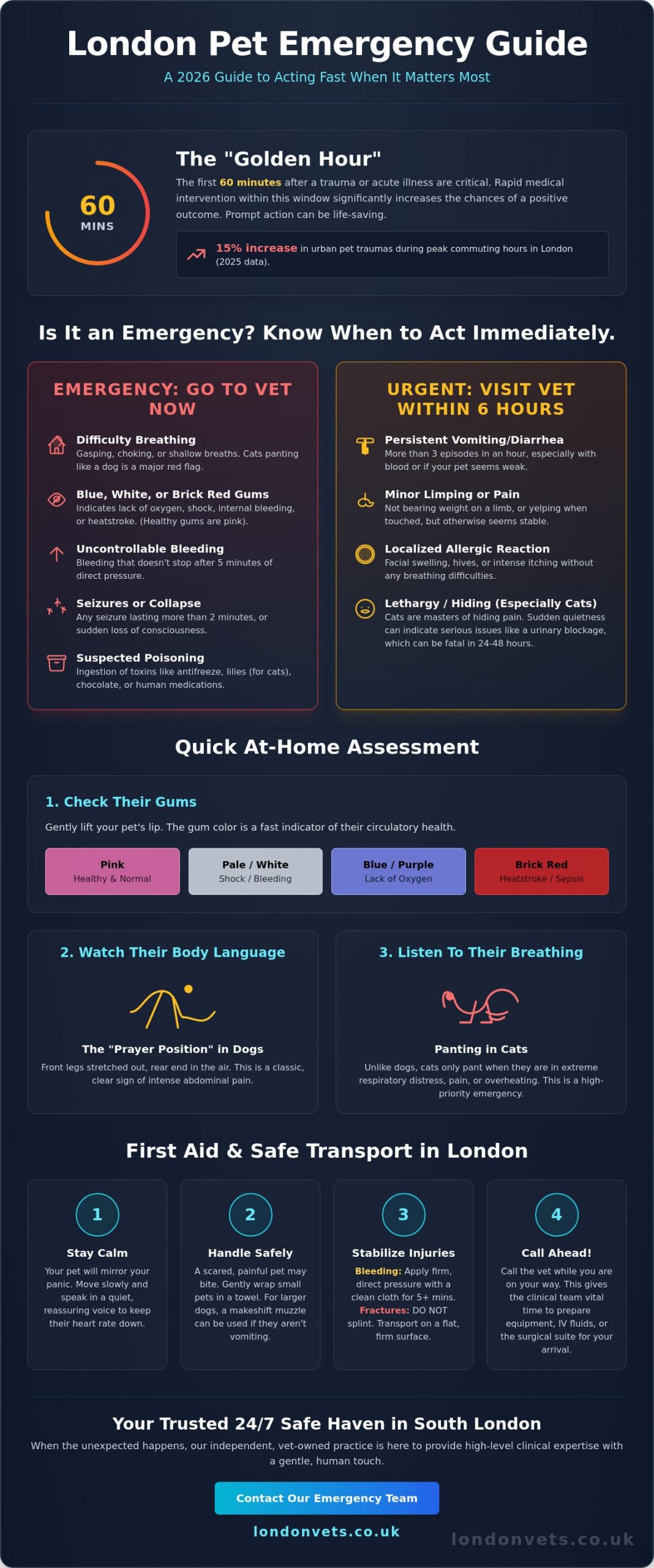
When your companion faces a sudden crisis, the distinction between a minor worry and a life-threatening event can feel blurred by panic. Our team understands this anxiety deeply. In the world of veterinary medicine, we often speak about the “Golden Hour.” This is the critical 60-minute window following a trauma or acute illness where rapid medical intervention significantly increases the chances of a positive outcome. Whether it’s a road traffic accident on a busy London A-road or a sudden collapse at home, getting your pet to emergency pet care london facilities within this timeframe is vital for stabilizing vital organs.
London presents unique urban hazards that we see frequently in our independent practice. These range from the ingestion of toxic lilies sold in local flower markets to accidental poisonings from antifreeze on city streets during winter. In 2025, data showed a 15% increase in urban pet traumas during peak commuting hours. Knowing when to act can save your pet’s life. We categorize cases into two groups: “Urgent” cases require a vet visit within 6 hours, while “Emergency” cases require you to leave for the clinic immediately.
- Emergency (Immediate): Difficulty breathing, uncontrollable bleeding, blue or white gums, seizures, or suspected poisoning.
- Urgent (Within 6 hours): Persistent vomiting (more than 3 times in an hour), minor limping, or localized allergic reactions like facial swelling.
Physical Red Flags: Assessing Vital Signs at Home
Checking your pet’s gums is one of the fastest ways to assess their circulatory health. Healthy gums should be a bubblegum pink. If they appear pale or white, it often indicates shock or internal bleeding. Blue or purple tinged gums suggest a lack of oxygen; this is a high-priority emergency. Brick red gums can signal heatstroke or sepsis. Beyond colour, watch for the “prayer position,” where a dog stretches their front legs forward while keeping their rear up. This is a clear sign of intense abdominal pain. If your cat is panting like a dog, don’t wait. Cats only pant when they’re in extreme respiratory distress or pain.
Behavioural Changes and Neurological Signs
Neurological emergencies often manifest as sudden disorientation or an inability to stand. If your pet is circling or their eyes are flicking rapidly from side to side, they need immediate emergency pet care london. Seizures are particularly frightening for owners. If your pet starts seizing, don’t put your hands near their mouth; they might bite reflexively. Instead, clear away hard furniture and time the event. A seizure lasting more than two minutes is a medical emergency that requires professional intervention to prevent brain damage. For cats, remember that they’re masters of hiding pain. A cat that’s suddenly “quiet” or lethargic isn’t just tired; it’s often a sign of a severe underlying issue like a urinary blockage, which can be fatal within 24 to 48 hours.
Immediate First Aid and Transporting Your Pet in London
The first fifteen minutes of a medical crisis are often the most critical. When you’re faced with a sudden injury or illness, your primary goal is stabilization. We understand how distressing these moments are, but your pet relies on your composure to stay safe. Start by taking a deep breath; pets are incredibly sensitive to human cortisol levels and will mirror your panic. By staying quiet and moving slowly, you prevent their heart rate from spiking further, which is vital for emergency pet care london cases involving respiratory distress or shock.
Safety is our next priority. Even the most affectionate dog or cat may bite or scratch when they’re in significant pain. Use a thick towel to gently wrap smaller pets, which provides a sense of security and prevents struggling. For larger dogs, a makeshift muzzle using a soft bandage can be used, provided they aren’t vomiting or struggling to breathe. If you suspect a fracture, don’t attempt to splint the limb yourself as this often causes more damage; instead, keep the pet on a flat, firm surface like a piece of plywood or a rigid car parcel shelf. For active bleeding, apply firm, direct pressure with a clean cloth for at least five minutes without lifting it to check the wound.
Before you leave your home, call our surgery immediately. This allows our clinical team to prepare the oxygen tanks, IV fluids, or surgical theatre before you arrive. Every UK veterinary practice follows the RCVS guidance on 24-hour emergency care, ensuring that help is always available, but a heads-up call allows us to provide life-saving triage advice while you’re in transit. If you’re unsure of the severity, our team can help you decide on the next steps for your pet’s urgent wellbeing.
London Transport Logistics: Getting to the Vet Fast
Navigating the capital during a crisis requires a strategy. If you don’t have a car, Uber Pet is a reliable option in London, though you should message the driver immediately to confirm you have an injured animal. Black Cab drivers are traditionally very accommodating, but it’s best to have a heavy blanket or carrier ready to protect their vehicle. While TFL rules allow pets on the London Underground and buses, we advise against public transport for emergencies due to the noise, crowds, and potential delays. If traffic is heavy on the A1 or North Circular, tell us your location when you call; we can often suggest alternative routes or check real-time local disruptions to get you here faster.
First Aid for Specific Urban Emergencies
- Heatstroke: If your dog collapses after a walk in one of London’s parks, move them to the shade and use tepid water to cool their coat. Avoid ice-cold water, which can cause blood vessels to constrict and trap heat internally.
- Poisoning: If your pet eats something toxic, like chocolate or lilies, grab the packaging or a sample of the substance. Knowing the exact ingredients helps us administer the correct antidote instantly.
- Gastric Torsion: Gastric torsion, or Bloat, is a life-threatening emergency where the stomach twists and cuts off blood supply, requiring surgical intervention with zero delay.
How Emergency Pet Care Works in London: Independent vs. Corporate
The veterinary landscape in London has shifted significantly over the last decade. By 2024, data from the Royal College of Veterinary Surgeons (RCVS) indicated that nearly 60% of UK practices were under corporate ownership. As we move through 2026, this trend continues to shape how emergency pet care london is delivered. For a pet owner in a crisis, understanding the difference between a corporate-owned clinic and an independent, vet-owned practice is vital for making informed decisions under pressure.
Corporate clinics often operate under standardized protocols designed for efficiency across hundreds of locations. While these provide a baseline of care, they can sometimes lack the flexibility required in complex emergencies. Independent practices, like ours, prioritize clinical autonomy. This means our vets have the freedom to tailor every treatment plan specifically to your pet’s unique needs without following a rigid corporate script. It’s a model built on trust and medical excellence rather than shareholder metrics.
The Advantage of Local, Independent Expertise
When you face a midnight emergency, you need to feel like a person, not a case number. Independent practices thrive on personalized care. We know our South London community, and we treat every animal that walks through our doors as if they were our own. This connection is especially important during a crisis when anxiety levels are high. Our vet-owned status means that medical decisions are made on the clinical floor by the experts actually treating your pet.
- Clinical Autonomy: Our vets choose the best medications and techniques based on the latest research, not corporate supply contracts.
- Gold Standard Protocols: We maintain high-tier diagnostic equipment and surgical suites across our South London locations to ensure immediate intervention.
- Continuity of Care: For pets requiring complex veterinary surgery in London, staying within a familiar, independent ecosystem reduces stress for both the animal and the owner.
24/7 Hospitals vs. Out-of-Hours Partnerships
It’s important to distinguish between a standard clinic and a dedicated 24/7 hospital. Many daytime vets use an “Out of Hours” (OOH) partner. This means that when they close at 7 PM, you’re referred to a different facility, often across the city. This can lead to fragmented care if notes aren’t transferred perfectly. We operate as a cohesive unit. If your pet is admitted to our hospital at 3 AM, we ensure a seamless handover to the morning team. We provide a full digital summary of all treatments and diagnostics to your primary vet by 9 AM the following day, ensuring they stay fully informed of your pet’s status.
Hospitalisation at an independent facility means your pet receives constant monitoring. If they need to stay overnight, they aren’t left alone in a dark room. Our night teams consist of qualified vets and nurses who provide 1-to-1 care, monitoring vitals and administering pain relief at precise intervals. We focus on creating a calm, quiet environment to help your pet rest, which is a critical component of the recovery process after emergency pet care london interventions.
Budgeting for Emergency Care: Fees, Insurance, and VIP Plans
We understand that financial transparency is vital when your pet needs urgent medical attention. Managing the costs of emergency pet care london involves understanding why out-of-hours services differ from routine appointments and how preparation can ease the burden during a crisis. Our goal is to provide a safe haven for your family, where clinical excellence meets honest, clear communication about every aspect of your pet’s treatment plan.
Understanding Emergency Consultation Fees
The premium attached to emergency consultations reflects the high level of readiness required to save lives at any hour. Our independent practice maintains a full team of dedicated night-shift vets and nurses who are specifically trained in emergency and critical care (ECC). This fee ensures that advanced diagnostic equipment, such as our on-site laboratory and imaging suites, remains powered and calibrated 24/7. While emergency care has a premium, it provides life-saving access to critical care specialists who are ready to act the moment you walk through our doors. We always provide detailed estimates before proceeding with any major surgery or hospitalisation, ensuring you can make informed decisions for your pet’s wellbeing.
A typical emergency bill in London is structured to cover the immediate intensity of the situation. This usually includes:
- The Emergency Consultation: A thorough physical assessment by an out-of-hours specialist.
- Stabilisation and Diagnostics: Immediate interventions like oxygen therapy or rapid blood tests to identify life-threatening issues.
- Treatment and Monitoring: Ongoing surgical care or intensive nursing in our hospital wards.
Insurance and Financial Support
Managing insurance claims for urgent visits requires a clear understanding of your policy’s specific terms. Most London clinics operate on a pay-and-claim basis; this means you settle the account at the time of treatment and your insurer reimburses you directly. It’s essential to verify if your policy covers out-of-hours surcharges or if pre-existing conditions might exclude certain emergency treatments. Our team is always happy to assist with the necessary paperwork to ensure your claim is processed as quickly as possible.
To help manage the broader costs of pet ownership, many families utilize London pet health plans. These preventative schemes cover routine vaccinations, parasite control, and regular wellness reviews. By investing in a gold standard of preventative healthcare, you significantly reduce the risk of avoidable emergencies, such as advanced dental infections or preventable viral illnesses. This proactive approach allows you to reserve your insurance limits and emergency funds for genuine, unpredictable accidents. We view ourselves as your community-focused partner, helping you stay prepared for any situation.
If you have questions about our fees or need help understanding your insurance options, contact our team today for supportive guidance.
London Veterinary Surgeries: Your Trusted Safe Haven in South London
For over 20 years, London Veterinary Surgeries has stood as a pillar of support for the local community. We’ve built our reputation on a foundation of clinical excellence and genuine empathy. When you’re searching for emergency pet care london, you need more than just a doctor; you need a team that understands the bond you share with your animal companion. Our independent status allows us to put clinical decisions first, ensuring your pet receives a gold standard of treatment tailored to their specific needs.
Our South London facilities are equipped with the latest diagnostic tools to handle urgent cases with precision. We utilize digital X-ray and ultrasound technology to provide immediate insights into internal injuries or illnesses. For surgical needs, we offer minimally invasive keyhole procedures. This approach significantly reduces recovery times and post-operative discomfort, getting your pet back on their feet faster. Our team consists of highly skilled professionals who have dedicated their careers to the fast-paced environment of emergency medicine, ensuring your pet is in the most capable hands.
Award-Winning Care for London’s Pets
More than 20,000 London pet owners have entrusted us with their family members because we treat every patient as if they were our own. We’re proud of our “Cat Friendly Clinic” accreditation, which highlights our commitment to reducing stress for our feline patients during high-pressure situations. By working in harmony with our Kent veterinary surgery groups, we provide a seamless network of expertise that covers everything from routine check-ups to complex emergency interventions. This synergy ensures that our medical knowledge is always at the cutting edge of the industry.
Ready When You Need Us Most
Emergencies don’t follow a schedule, which is why we offer 7-day-a-week availability and robust 24-hour support for emergency pet care london. We recommend that local owners register with us today to ensure peace of mind for the future. Having your pet’s medical history already on our system saves precious minutes during a crisis. You can reach us immediately at our South London locations, where our team is always standing by to help. We don’t just see patients; we care for family members. Your pet’s wellbeing is our lifelong mission.
- Proven Experience: Over two decades of serving London’s pet community.
- Advanced Diagnostics: On-site ultrasound and digital X-rays for rapid results.
- Specialised Surgery: Keyhole procedures for faster, less painful recoveries.
- Constant Support: 7-day access and 24-hour emergency protocols.
Protecting Your Pet with Confidence and Care
Being prepared for the unexpected is the greatest gift you can give your pet. By recognizing the early signs of a veterinary emergency and understanding the logistics of transport across the city, you’re already one step ahead. It’s about more than just finding a clinic; it’s about finding a team that treats your pet like a member of their own family. As a multi-award winning independent group, we prioritize clinical autonomy and gentle, personalized treatment for every patient we see.
Our commitment to emergency pet care london is backed by the trust of over 20,000 London pet owners who rely on our expertise. We provide 24-hour emergency care available 365 days a year, ensuring that a safe haven is always within reach for your companion. From advanced diagnostics to surgical procedures, our team maintains a gold standard of treatment around the clock. You can rest easy knowing that professional, empathetic support is only a phone call away, regardless of the hour.
In an emergency, call us immediately or find your nearest London Veterinary Surgery. Your pet’s health is our lifelong passion, and we’re ready to help whenever you need us.
Frequently Asked Questions
How do I know if my pet needs an emergency vet or can wait until morning?
Immediate signs like difficulty breathing, non-stop bleeding, or sudden collapse require instant medical attention. If your pet shows these symptoms, they need emergency pet care london services right away. Other red flags include seizures lasting over two minutes or suspected poisoning. Trust your instincts; we’d rather see a pet for a minor concern than miss a critical life-saving window during the night.
What are the most common pet emergencies in London?
Road traffic accidents and toxin ingestion are the most frequent reasons for urgent visits in the capital. According to 2024 veterinary clinical data, chocolate toxicity and raisin ingestion remain high, especially during festive periods. In city parks, heatstroke is a common summer risk, while bite wounds from dog-on-dog interactions often require immediate surgical cleaning and stabilization to prevent infection.
Do I need to be a registered client to use your emergency service?
No, you don’t need to be a pre-registered client to access our emergency care. We act as a dedicated community guardian, providing a safe haven for any animal in distress regardless of their usual clinic. We’ll stabilize your pet and coordinate with your regular vet to ensure a seamless transition of medical records for follow-up treatment and long-term recovery plans.
How much does an emergency vet consultation cost in London?
Emergency consultation fees in London typically range from £150 to £300 depending on the time of night and the facility’s location. This initial fee covers the clinical examination and triage by a skilled professional. According to the 2025 Veterinary Fees Survey, out-of-hours surcharges are standard across the UK to maintain 24-hour staffing levels and advanced diagnostic equipment for urgent cases.
Can I get a taxi or Uber Pet to an emergency vet in London?
Yes, Uber Pet is a reliable option for transport across London, though you should verify availability in the app before you leave. Black cabs are also legally required to accept assistance dogs, and many drivers will accommodate pets if they’re in a carrier or restrained. Always call ahead to the driver to ensure they can accommodate your pet’s specific medical condition safely during the journey.
What should I do if my pet eats something poisonous in a London park?
Call us immediately and try to identify exactly what your pet consumed, such as blue-green algae or discarded food. If you’re in a park like Hampstead Heath or Richmond Park, note the specific area where it happened. Don’t attempt to induce vomiting at home; professional emergency pet care london teams use specific medications to safely manage toxin absorption and protect your pet’s internal organs.
Will my pet insurance cover the full cost of an emergency visit?
Most comprehensive UK pet insurance policies cover emergency consultations and life-saving treatments, though you’ll usually need to pay your agreed excess. Policies vary, so check if your provider has a direct claim agreement with the clinic. Approximately 85% of standard policies include out-of-hours coverage, but limits on diagnostic imaging or overnight hospitalisation may apply depending on your specific level of cover.
What information should I have ready when I call the emergency vet?
Please have your pet’s age, breed, and a clear description of their symptoms ready when you phone our team. It’s helpful to know when the issue started and any existing medical conditions or current medications they’re taking. This information allows our clinicians to prepare the necessary diagnostics and life-saving equipment before you even arrive at our practice doors, ensuring we’re ready to act.



© London Veterinary Surgeries