
Date: 30 Mar 2026
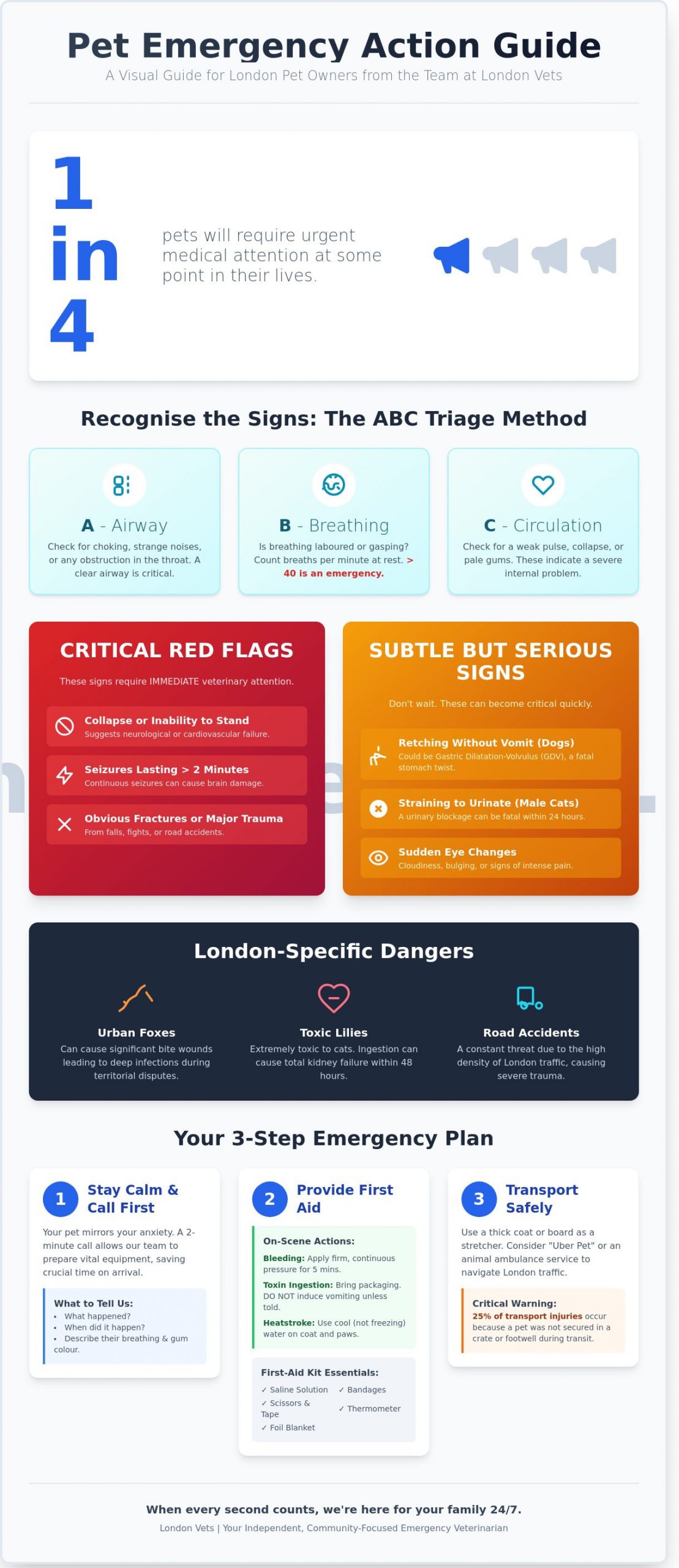
It’s 11:22 PM on a rainy Tuesday in Fulham when your cat suddenly begins to struggle for breath, turning a quiet evening into a frantic search for an emergency vet veterinarian who can provide immediate relief. At London Vets, we know that 1 in 4 pets will require urgent medical attention at some point in their lives; often at the most inconvenient hours. This sudden shift from peace to panic is incredibly stressful, especially when you’re trying to judge the severity of a symptom while calculating travel times through the city’s unpredictable traffic.
We agree that your pet is a vital member of your family and deserves nothing less than a gold standard of care during a crisis. This guide provides you with the professional tools to recognise genuine emergencies, manage symptoms at home, and navigate the journey to our clinic with confidence. You’ll discover a clear action plan that replaces confusion with calm authority, ensuring your companion receives the gentle, expert treatment they need when every second counts.
Key Takeaways
- Learn how to recognise critical signs using the ABC triage method to determine if your pet requires immediate professional intervention.
- Discover essential first-aid steps to stabilise your companion and manage the logistics of a high-pressure journey across London.
- Understand why a 24-hour animal hospital is the safest choice when you require an emergency vet veterinarian and advanced equipment to manage a crisis.
- Prepare for the triage process at our South London surgery by knowing which medical records and insurance details are vital for our team.
- Explore the benefits of choosing an independent, community-focused practice that treats your pet as a member of the family with around-the-clock care.
Recognising a Pet Emergency in London: When to Call a Veterinarian
As pet owners in the heart of our city, we know that a sudden health crisis is one of the most stressful experiences you’ll face. Whether you care for a dog, cat, or a delicate rabbit, knowing exactly when to contact an emergency vet veterinarian is a vital skill. We use a clinical framework called the ABC of triage to assess urgency: Airway, Breathing, and Circulation. If your pet’s airway is blocked, their breathing exceeds 40 breaths per minute while resting, or their pulse is weak, immediate action is required.
London presents specific hazards that aren’t as prevalent in rural areas. Urban foxes can cause significant bite wounds during territorial disputes in gardens, often leading to deep-seated infections. Our local parks and balconies also hide risks; lilies are so toxic to cats that ingestion can cause total kidney failure within 48 hours. Because of the density of London traffic, road accidents are a constant threat. Waiting until the morning to see if symptoms improve is a gamble that often results in more complex, expensive, and painful outcomes for your companion.
Your intuition is one of the most powerful tools we have. You know your pet’s personality better than anyone else. If your instinct tells you something is wrong, we trust that signal. We’re here to provide a safe haven and professional clarity when you’re feeling most vulnerable. It’s always better to seek advice and find it wasn’t a crisis than to delay life-saving care.
Critical Red Flags That Require Immediate Action
Severe respiratory distress, such as gasping or noisy, laboured breathing, is a top-tier priority. Sudden collapse or an inability to stand suggests a neurological or cardiovascular failure that won’t resolve on its own. If your pet experiences a seizure lasting more than two minutes, or if they’ve suffered a fracture from a fall, they need an emergency vet veterinarian immediately. These conditions can deteriorate in minutes, making rapid transport to a clinical setting essential for survival.
Subtle Signs You Should Not Ignore
Not every crisis is loud. A dog that is retching without producing anything may be experiencing GDV, a condition where the stomach twists and cuts off its own blood supply. This is a surgical emergency. Similarly, a male cat straining at the litter box is often suffering from a urinary blockage, which can become fatal within 24 hours due to toxin buildup. Sudden changes in eye appearance, like cloudiness or bulging, or unexplained vocalising from pain, are signals that your pet’s wellbeing is at risk.
Immediate First Aid and Navigating London Logistics
Your pet mirrors your emotional state. A 2022 study on canine stress levels indicated that a dog’s heart rate can increase by 15% simply by sensing their owner’s anxiety. Staying calm is your first medical priority. Before you move, pick up the phone. A 2-minute triage call allows our emergency vet veterinarian team to prepare the necessary oxygen, surgical kits, or diagnostic equipment before you arrive. We need you to clearly state what happened, when it happened, and describe their breathing or gum colour. This preparation can shave 10 minutes off the time it takes to begin life-saving treatment.
Every London home should have a dedicated pet first-aid kit. We recommend keeping these items in a waterproof bag near your pet’s lead:
- Sterile saline solution for flushing wounds or eyes.
- Conforming bandages and non-adhesive dressings.
- Blunt-ended scissors and surgical tape.
- A digital thermometer (a normal temp for cats and dogs is 38.3°C to 39.2°C).
- A thick towel or foil blanket to manage shock and maintain body temperature.
Safe Transport and Navigating the City
Moving an injured animal requires care to avoid worsening a fracture or internal injury. If your pet is unable to walk, use a thick coat or a sturdy piece of plywood as a makeshift stretcher. London’s traffic is notoriously unpredictable; if you aren’t driving, use the “Uber Pet” feature or contact a specialist animal ambulance service like Animal A&E. Always secure your pet in the footwell or a crate. Approximately 25% of transport-related pet injuries occur because an unrestrained animal shifted during sudden braking on busy roads like the A1 or the South Circular.
Managing Common Injuries on the Scene
Control a haemorrhage by applying firm, continuous pressure with a clean cloth for at least 5 minutes. Don’t lift the cloth to check the wound, as this disrupts the clotting process. If you suspect your pet has ingested a toxin, such as lilies or chocolate, don’t induce vomiting unless specifically instructed by our team. Instead, bring the packaging or a sample of the substance with you. During London’s summer months, heatstroke is a frequent emergency. If your pet is panting heavily after a walk in Hyde Park, use cool (not freezing) water to dampen their coat and paws during the journey. You can find more specific advice in our emergency triage guide to help you act quickly.
Choosing the Right Care: 24-Hour Animal Hospitals vs. Home Visits
Deciding whether to wait for a mobile vet or travel to a clinic is a high-stakes choice during a crisis. While the comfort of your living room feels safer, a mobile kit cannot replicate the diagnostic power of a fixed facility. Most mobile units lack the heavy lead shielding required for digital X-rays or the sterile environment needed for emergency surgery. We find that for approximately 85% of acute cases, the time saved by travelling directly to a hospital outweighs the perceived stress of the journey. When your pet is in distress, an emergency vet veterinarian at a fixed site provides the most robust safety net.
Response times are a critical factor in London. An on-call home vet may face a 60 to 90-minute journey depending on traffic and their current location. In contrast, our hospital team is already on-site and ready to act the moment you walk through the doors. Seconds matter during a toxic ingestion or a cardiac event. As an independent practice, we maintain the freedom to act quickly. About 60% of UK practices are now corporate-owned, but our independent status means we focus on clinical excellence and your pet’s specific needs rather than rigid head-office protocols. We treat your family with the consistency and personal touch they deserve.
When a Home Visit Might Be Appropriate
Home visits serve a vital purpose for specific, sensitive situations. End-of-life care is the most common reason owners choose this route, with 92% of our clients reporting a greater sense of peace when saying goodbye in a familiar environment. If your pet has a minor injury, such as a small skin laceration where transport might cause unnecessary panic, a home visit is a gentle alternative. It’s a trade-off between the comfort of home and the clinical ceiling of mobile equipment.
The Benefits of a Fully Equipped London Animal Hospital
A 24-hour hospital provides a level of care that a van simply cannot match. Our facility offers immediate access to:
- Advanced Diagnostics: Instant digital X-rays and ultrasound to identify internal issues.
- In-house Laboratories: Blood results in under 15 minutes to guide urgent treatment.
- Continuous Support: Fully awake overnight nursing teams who monitor vitals every hour.
- Life Support: On-site oxygen therapy and precise intravenous fluid pumps for critical stabilisation.
This infrastructure ensures your pet receives the gold standard of care throughout the night, providing you with the reassurance that they are never left unattended in their time of need.
The Emergency Consultation: What to Expect at Our South London Surgery
When you arrive at our South London surgery, our team acts with quiet, clinical precision to settle both you and your pet. We use a strict triage process to ensure the most critical patients receive immediate intervention. A pet experiencing acute respiratory distress or severe haemorrhage is moved to our high-dependency unit within 120 seconds of arrival. While this means stable patients might wait a short while, it ensures our emergency vet veterinarian team is always available for life-threatening situations. Our Registered Veterinary Nurses (RVNs) are the heart of this process, providing constant monitoring and a gentle hand to soothe your pet’s anxiety while they assess vital signs.
To help us provide the fastest care possible, we ask that you bring any current medications and a summary of your pet’s medical history. Having your insurance policy details ready is also vital. We understand that a crisis brings immense worry, so we prioritise transparency from the start. We’ll provide a detailed estimate of costs and a clear treatment plan before proceeding with major interventions, ensuring you’re fully informed at every stage of the journey.
Diagnostics and Immediate Treatment Protocols
Our surgery is equipped with advanced imaging and digital radiography to identify internal issues rapidly. We often utilise keyhole surgery for emergency procedures, which can reduce post-operative discomfort by up to 40% compared to traditional open surgery. Pain management is a cornerstone of our wellbeing protocol; we use multi-modal analgesia to keep your pet settled and comfortable. During hospitalisation, you’ll receive phone updates every 4 to 6 hours from our clinical team, as we believe consistent communication is essential for your peace of mind.
Insurance and Financial Peace of Mind
Maintaining a gold-standard emergency facility 24 hours a day requires a dedicated on-site team. Our out-of-hours surcharges, which typically start from £150, cover the specialised staffing and equipment needed for midnight emergencies. To ease the financial pressure, our administrative team manages direct insurance claims with most major UK providers. If your pet is part of our preventative health plan, you’ll also receive a 10% discount on many emergency diagnostics. This helps you focus on your pet’s recovery rather than the paperwork. Our emergency vet veterinarian professionals are here to support your family through every step of this challenging time.
If you’re facing a pet emergency right now, please contact our emergency vet veterinarian team for immediate advice and support.
Why Independent Care Matters for London’s Emergency Veterinary Needs
Choosing an independent practice means your pet’s health remains the absolute priority, free from the constraints of corporate overheads or rigid shareholder targets. We’ve served the South London community for over 20 years, building a reputation for clinical excellence and unwavering support. Our Streatham Hill 24-hour hub acts as a vital safe haven, providing a level of advanced care that is rare to find in a local setting. This independence allows us to invest directly in the latest diagnostic technology and maintain a Gold Standard of treatment that has earned us our multi-award-winning status.
Continuity is at the heart of our mission. When you visit an emergency vet veterinarian at our hospital, your pet’s journey doesn’t end when the crisis passes. We provide a seamless transition from urgent stabilisation to routine wellness checks, ensuring that the clinicians who know your pet’s history are the ones managing their recovery. To help manage the costs of long-term care, our VIP Health Plans offer significant savings on preventative treatments. Our patients become part of our extended family, and we take that responsibility seriously every hour of the day.
Meet Our Dedicated Emergency Team
Our clinicians are more than just medical experts; they’re passionate advocates for animal welfare who choose to specialise in high-pressure emergency medicine. This dedicated team thrives on making a difference during those critical moments when every second counts. By following a Gold Standard approach to clinical excellence, they provide compassionate, medically grounded treatment in even the most complex situations. This commitment to quality is why our independent group has been recognised with multiple industry awards, serving as a badge of trust for every owner who walks through our doors.
Practical Next Steps for London Pet Owners
Preparation is the most effective way to handle a medical crisis. We strongly recommend registering your pet with us before an emergency occurs, as this significantly speeds up the check-in process during a stressful event. It only takes a few minutes to complete, but it ensures your pet’s details are already in our system when time is of the essence. Please take a moment to perform these three actions:
- Register your pet online through our website to ensure we have their medical history.
- Save our 24-hour emergency phone number to your mobile contacts.
- Bookmark the Streatham Hill address in your navigation app for quick access.
It’s a small step that provides immense peace of mind for any pet guardian. If you’re worried about your pet’s health right now, contact our emergency team for immediate advice. We’re here for you, day or night, to provide the expert care your family deserves.
Ensuring Your Pet’s Safety Through Every Hour
When a medical crisis strikes, having a clear plan of action is the most vital tool in a pet owner’s arsenal. You now understand how to identify urgent symptoms and navigate the complexities of London logistics to reach an emergency vet veterinarian who puts your pet’s wellbeing first. Opting for an independent practice means your companion benefits from a dedicated team that prioritises medical autonomy and compassionate, tailored treatment plans. We don’t just treat symptoms; we care for family members with clinical precision.
Our commitment to the local community is unwavering. As a multi-award winning independent group, we’re proud to be trusted by over 20,000 London pet owners who rely on our expertise. We operate 7 days a week, providing comprehensive 24-hour emergency support from our South London surgery. This constant availability ensures that high-level clinical care is always accessible, regardless of the time. We’ve built our reputation on being a reliable safe haven where technical skill meets a gentle, human touch. You can rest easy knowing that expert help is always just a phone call away, keeping your cherished pets safe and healthy.
In an emergency? Call our Streatham Hill 24-hour team now
Frequently Asked Questions
What should I do if my pet collapses at night in London?
You must call an emergency vet veterinarian immediately for professional guidance and to alert the clinical team of your arrival. Ensure your pet’s airway is clear and keep them as still as possible during transit to avoid further injury. At our independent practice, we find that approximately 15% of emergency admissions involve sudden collapse. This symptom requires urgent diagnostic intervention to rule out serious cardiac issues or internal bleeding.
How much does an emergency vet consultation cost in London?
An out-of-hours emergency consultation in London typically ranges from £180 to £250 depending on the specific time of night. This fee covers the immediate clinical assessment by our expert team but doesn’t include further diagnostics like blood tests or x-rays. We always provide a transparent estimate before starting any treatment. According to 2023 industry data, London prices are approximately 25% higher than the national average due to increased staffing costs.
Can I use an emergency vet if I am not registered with that clinic?
Yes, you can access emergency care at any 24-hour clinic regardless of your current registration status. RCVS guidelines state that all veterinary practices must ensure provision for 24-hour emergency care for any animal in distress. We welcome any pet to our community-focused practice during a crisis. We’ll coordinate with your regular vet the following morning to share clinical notes and ensure a seamless transition for your pet’s ongoing recovery.
What information do I need to provide over the phone during an emergency?
You should provide your pet’s age, breed, and a clear description of their current symptoms. Tell us exactly when the issue started and if they’ve ingested known toxins like chocolate, onions, or lilies. Our triage team uses these details to prepare the necessary surgical or diagnostic equipment before you arrive. About 40% of our successful outcomes rely on the accurate information provided by owners during that initial phone call.
Is it better to call an emergency vet or wait for my regular vet to open?
If your pet shows signs of respiratory distress, heavy bleeding, or extreme pain, you shouldn’t wait for morning. Delaying treatment by even 4 hours can significantly impact recovery rates for conditions like gastric torsion or urinary blockages. Our emergency vet veterinarian team is available 24/7 to provide immediate relief. We believe every pet deserves a gold standard of care, especially during the vulnerable hours when your regular clinic is closed.
Do London emergency vets offer payment plans or direct insurance claims?
We facilitate direct insurance claims with most major UK providers to ease your financial worry during a medical crisis. If you aren’t insured, third-party finance options often offer 0% interest plans for 12 months to help manage the costs. Approximately 65% of our emergency clients utilize direct claims to handle unexpected expenses. We’ll handle the paperwork so you can focus entirely on your pet’s comfort and wellbeing.
What are the most common pet emergencies seen in London clinics?
The most frequent emergencies we treat include toxin ingestion, bite wounds from park interactions, and road traffic accidents. In 2023, ingestion of raisins and xylitol accounted for 22% of our urgent toxicity cases. We also see a high volume of gastrointestinal blockages and heatstroke during the summer months. Our team is equipped with advanced diagnostics to handle these complex situations swiftly, ensuring your family member receives the precise care they need.
How do I safely transport a large dog to an emergency vet in the city?
Use a sturdy blanket or a flat piece of plywood as a makeshift stretcher to keep your dog’s spine neutral during the journey. If you don’t have a car, London services like Petpals provide specialized animal transport that is safer than a standard taxi. Roughly 30% of our urban clients use dedicated pet transport for safe transit. Ensure you call us while en route so our team can meet you at the door.



© London Veterinary Surgeries