Date: 12 Apr 2026
Last Tuesday, a client named Eleanor sat in our waiting room, her hands trembling slightly as she thought about her Golden Retriever’s upcoming surgery. Like many owners living in compact London flats, she dreaded the thought of keeping an active dog calm for fourteen days during a traditional recovery. If you feel that same knot of anxiety when considering your pet’s operation, you aren’t alone. We believe your dog deserves the highest level of surgical care without the prolonged discomfort of a standard procedure. By choosing a keyhole spay London pet owners can reduce post-operative pain by up to 65 per cent compared to traditional methods. This guide explains how this advanced, minimally invasive technique eliminates the need for a “cone of shame” and gets your companion back to the green spaces of Hyde Park or Richmond Park in days rather than weeks. We’ll walk you through the safety benefits and the gentle recovery process that makes this the gold standard for modern canine care.
Key Takeaways
- Learn how laparoscopic techniques offer a gentler alternative to traditional surgery, using tiny 1cm incisions to prioritise your dog’s comfort and wellbeing.
- Discover why a keyhole spay london is the gold standard for modern pet care, proven to result in 65% less post-operative pain for a faster, happier recovery.
- Understand the step-by-step surgical journey at our independent practices, ensuring you feel reassured and informed from the initial consultation to same-day discharge.
- Gain expert guidance on navigating the recovery period, including how to safely return to gentle lead-walks in local spots like Brockwell Park or Wandsworth Common.
- Identify the essential criteria for selecting a surgical expert, focusing on hospital-standard facilities and the reassurance of 24-hour emergency support.
What is a Keyhole Spay? Understanding Laparoscopic Surgery in London
Understanding Laparoscopic Surgery helps pet owners grasp how this method focuses on an ovariectomy. In a standard spay, the ovaries and the entire womb are usually removed through a 5cm to 10cm incision. In a keyhole procedure, we typically only remove the ovaries. Research from the Royal Veterinary College confirms that leaving a healthy uterus behind doesn’t increase the risk of future health issues, such as pyometra, provided the hormonal trigger of the ovaries is gone. This focus on removing only what’s necessary reduces surgical time and internal trauma.
We use high-definition cameras and specialised vessel-sealing devices to perform the procedure. These tools allow us to operate with a level of delicacy that wasn’t possible twenty years ago. It’s why this has become the preferred choice for London pet owners who want the best for their dogs. This “gold standard” of care, once reserved for human gallbladder or appendix removals, is now the safest way to neuter your pet in a modern keyhole spay london facility.
The Science of Laparoscopy
Laparoscopy is a technique using 0.5cm to 1cm incisions to access the abdomen. These tiny entry points are the foundation of a faster recovery. Our surgical monitors provide 20x magnification, allowing the team to see every blood vessel and ligament in incredible detail, far exceeding what the naked eye can see during open surgery. Instead of using traditional nylon sutures to tie off vessels, we use advanced thermal energy tools. These devices seal the blood vessels instantly and securely. This process significantly lowers the risk of internal bleeding and eliminates the “foreign body” reaction some dogs experience with internal stitches.
Why “Independent” Matters for Your Dog’s Surgery
Choosing where your dog has their procedure is a vital decision for any pet parent. Many corporate clinics face pressure to meet high profit margins, which can sometimes impact the level of investment in the latest theatre technology. As a multi-award winning group of independent veterinary practices, we operate with a different philosophy. We reinvest in top-tier laparoscopic stacks and HD imaging because we believe every pet deserves the gold standard of care. Our independent status means your dog is treated by a consistent team that understands their medical history, providing a calm, familiar environment that reduces pre-operative anxiety. We view your pet as a member of the family, not a number on a spreadsheet.
Keyhole vs. Traditional Spay: Comparing the Benefits
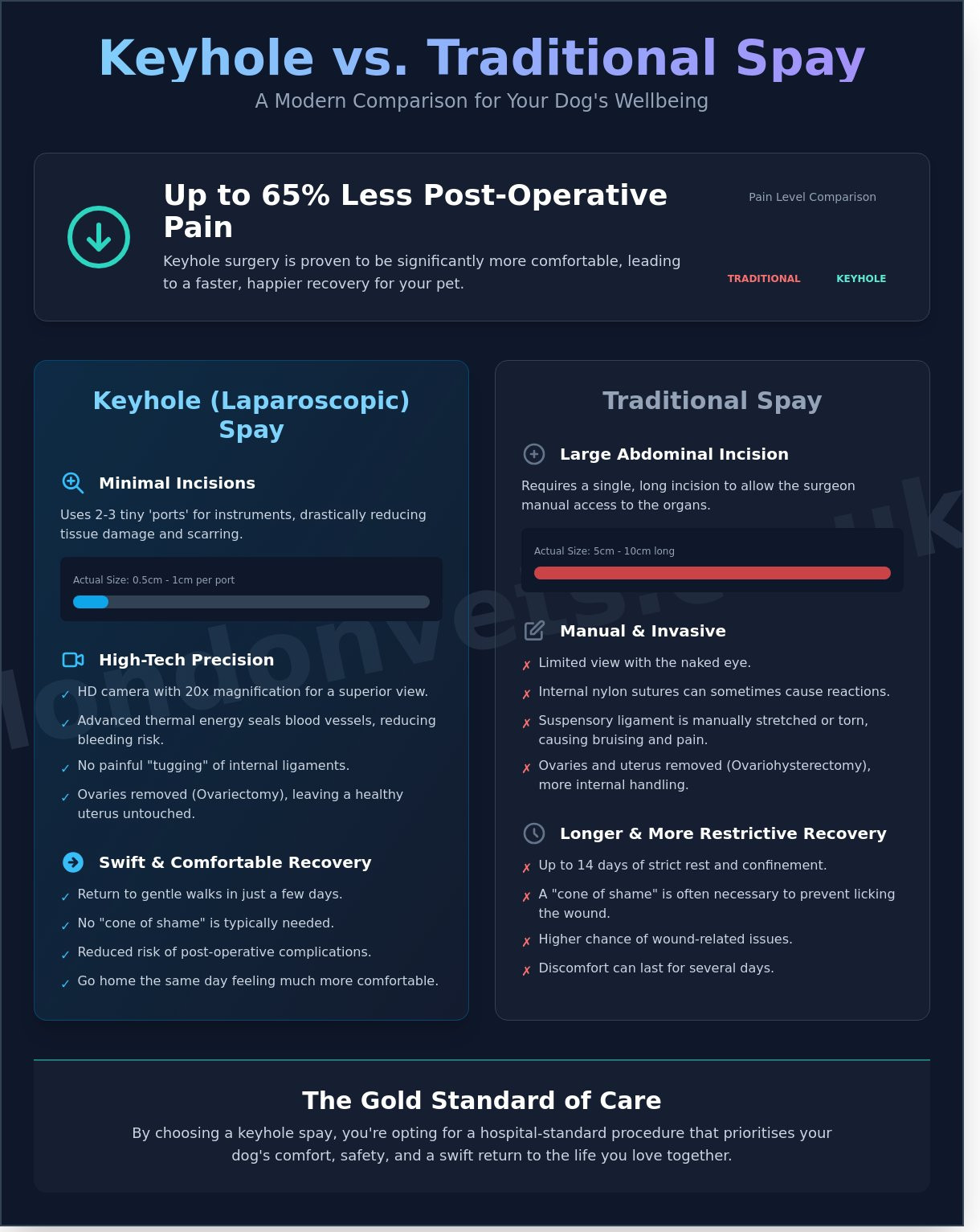
The physical difference between a traditional spay and a modern keyhole procedure is immediately visible. In a conventional “open” surgery, a vet makes an incision that can range from 5cm to 10cm to allow for manual access to the reproductive organs. By contrast, a keyhole spay London owners choose for their pets typically involves just two or three tiny ports, each measuring between 0.5cm and 1cm. This smaller surgical footprint is the foundation for every other benefit your dog receives, from faster healing to reduced scarring.
Safety is our primary focus during any surgical procedure. Traditional methods require the surgeon to manually stretch or break the suspensory ligament to bring the ovaries into view. This “tugging” is the primary source of internal trauma and post-operative bruising. Laparoscopic surgery uses a high-definition camera to provide a magnified view of the internal structures. This precision allows us to seal blood vessels with advanced thermal energy rather than traditional sutures, significantly reducing the risk of internal bleeding. Research published by the British Small Animal Veterinary Association (BSAVA) confirms that these minimally invasive techniques result in fewer postoperative complications compared to open surgery.
Pain Management and Comfort
Pet owners’ biggest worry is often their dog’s comfort. Clinical evidence indicates that keyhole patients experience 65% less pain than those undergoing traditional surgery. Because we aren’t pulling on internal ligaments, the surgical site remains calm. This reduced trauma means your dog won’t require the same level of heavy narcotics or morphine-based pain relief during recovery. Smaller wounds also mean there’s a significantly lower risk of post-surgical infection or the common issue of “wound breakdown” caused by a dog licking at a large row of stitches. Most of our patients are back on their feet and feeling like themselves within 24 to 48 hours.
Is the Extra Cost Justified?
While the initial price for a keyhole spay London may be higher than a traditional spay, it represents an investment in human-grade technology. We utilise sophisticated Karl Storz or Covidien equipment, the same brands used in high-end human hospitals. Our surgeons undergo extensive specialised training to master these laparoscopic tools, ensuring a gold standard of care. When you consider the “all-in” cost, the value becomes clear. You’ll likely spend less on post-operative medications and require fewer follow-up appointments. If you’re weighing up the options for your dog’s wellbeing, we invite you to speak with our friendly team about how we can make her recovery as gentle as possible.
Many owners ask if removing only the ovaries (ovariectomy) is as effective as removing the whole uterus. Medical data shows that as long as the ovaries are removed, the risk of uterine infections (pyometra) is virtually eliminated. This makes the keyhole approach just as effective for long-term health while being much kinder to your dog’s body.
The Procedure: What to Expect at Our London Surgeries
Every successful surgery begins with a thorough 20-minute pre-surgical consultation. This session isn’t just a formality; it’s a vital safety check where our vets assess your dog’s heart, lungs, and overall temperament. We believe that choosing a keyhole spay london pet owners trust involves a partnership between our clinical team and your family. During this meeting, we’ll confirm your dog’s suitability for the procedure and address any anxieties you might have about the day ahead.
Safety is our absolute priority. Our independent practice uses advanced multiparameter monitoring equipment to track oxygen levels, blood pressure, and heart rhythm throughout the entire process. Because we maintain 24-hour care capability, we provide a level of security that gives you total peace of mind. Your dog is never just a number on a list; they’re a patient receiving gold-standard medical attention from admission to discharge.
Admission and Preparation
On the morning of the procedure, our nursing team welcomes you with a calm, gentle touch approach. We understand that a busy city clinic can be daunting, so we use pheromone diffusers and quiet wards to keep stress levels low. Preparation includes:
- Pre-operative blood tests: We recommend these for every patient to screen liver and kidney function, ensuring they can safely metabolise the anaesthetic.
- Bespoke anaesthetic protocols: Our vets don’t use a “one size fits all” approach. We tailor every dose based on your dog’s breed, age, and exact weight.
- Pre-emptive pain relief: We administer medication before the surgery starts to ensure your dog wakes up feeling comfortable and relaxed.
Inside the Operating Theatre
Once your dog is settled under general anaesthesia, our surgeons begin the specialised laparoscopic process. We make two or three tiny incisions, usually only 5mm to 10mm in length. Through these small ports, we insert a high-definition camera called a laparoscope. This allows the surgeon to perform a comprehensive visual health check of the internal organs, including the liver and spleen, which isn’t possible during a traditional spay.
We use precision vessel-sealing technology to secure the blood vessels. This advanced tool ensures there is virtually zero bleeding, making the procedure incredibly clean and safe. A UK study on laparoscopic spay benefits confirms that this modern approach results in fewer post-operative complications than traditional methods. To finish, we use dissolvable, buried stitches. Most dogs don’t even need external sutures, which often removes the need for a restrictive plastic collar. A keyhole spay london dogs receive at our clinic is designed for a rapid return to their favourite walks and routines.
Recovery and Aftercare: Getting Back to London Life
The recovery period following a keyhole spay london procedure is remarkably swift. On Day 1, most patients are alert and ready for a light meal within two hours of waking from anaesthesia. Because the internal surgical site is significantly smaller than a traditional spay, your dog’s natural appetite and energy levels return almost immediately. We often see dogs walking out of our practice with a spring in their step, looking quite unlike a patient who has just undergone surgery. It is a gentle transition back to their familiar home environment.
Managing exercise in a busy city doesn’t have to be a struggle. For the first few days, we recommend short, lead-only walks in familiar spots like Brockwell Park or Wandsworth Common. This prevents sudden lunging or jumping while the tiny incisions heal. One of the greatest benefits of this technique is the absence of the “cone of shame”. Since the wounds are only 3 to 5 millimetres wide, most dogs ignore them entirely, removing the need for a bulky buster collar that can cause stress in a compact London flat.
Monitoring the site is straightforward. You will only need to check two or three tiny points on the abdomen once or twice a day. These small marks heal quickly, typically requiring no stitches that need manual removal later. This modern approach prioritises your dog’s comfort and your peace of mind.
The First 48 Hours
We suggest offering a small, bland meal such as boiled chicken or a gentle prescription diet on the evening of the surgery to support digestion. Our team provides a clear pain relief schedule, ensuring your pet remains comfortable throughout their rest. While 98% of our patients recover without incident, you should contact us if you notice persistent lethargy, vomiting, or significant redness at the site. We are here to support you at every stage, providing the reassurance that comes from choosing an independent practice.
Returning to Normal Activity
Traditional surgery requires a strict 10 to 14 day restriction, which can be challenging for high-energy breeds living in urban environments. Keyhole surgery reduces this rest period to just 2 or 3 days of quiet time at home. Most dogs can return to off-lead exercise within 5 days of a keyhole procedure. This rapid return to routine is a primary reason why many London owners choose this gold-standard approach for their family members, mirroring the recovery philosophy of human clinics like RED Physiotherapy that prioritise a swift return to mobility and strength.
If you want to ensure the fastest possible recovery for your pet, book a consultation with our surgical team today to discuss the benefits of a minimally invasive spay.
Choosing Your London Keyhole Spay Expert
Selecting a clinic for your dog’s keyhole spay london involves more than just finding the nearest surgery. It’s about finding a team that combines advanced technology with a gentle, personal touch. Start by asking potential vets about their specific laparoscopic experience. You should ask how many of these procedures the lead surgeon performs each month. A surgeon who performs these procedures regularly will have a higher level of precision than one who only treats occasional cases. Ask if they have a dedicated laparoscopic suite and what their protocols are for converting to a traditional spay if complications arise.
You must also consider the support staff and facilities. A hospital-standard environment ensures that your dog has access to high-grade monitoring equipment throughout the surgery. Since recovery happens in the hours following the procedure, 24-hour support is vital. Choosing an independent, local practice means your dog’s post-operative follow-up is handled by the same team that knows their medical history. This continuity of care is often missing in larger corporate chains where you might see a different vet at every appointment. Local care ensures that if you have concerns at 10:00 PM, you’re speaking to professionals who understand your pet’s specific case.
- Does the vet use modern vessel-sealing technology to minimize bleeding?
- Is there a dedicated recovery nurse assigned to your dog?
- Are post-operative check-ups included in the initial surgical fee?
- What specific pain management protocols do they follow for laparoscopic cases?
Why London Veterinary Surgeries?
We’ve spent 20 years caring for London’s pets with a focus on clinical excellence and compassion. Our team treats every patient as a family member, providing a safe haven for both you and your dog during what can be a stressful time. We use “gold standard” surgical techniques, investing in the latest laparoscopic equipment to ensure the smallest incisions and fastest recovery times. Beyond spaying, we offer medical surgery services designed to support your pet through every life stage, from routine procedures to complex soft tissue work.
Planning for the Future
Investing in your dog’s health shouldn’t be a financial burden. Many owners choose to integrate their surgical costs into a structured Pet Health Plan. These plans help spread the cost of preventative care while providing discounts on procedures like a keyhole spay london. This approach ensures your dog receives the best medical care without unexpected financial strain.
The next step is simple. Book a chat with our empathetic surgical team in South London to discuss your dog’s specific needs. We’ll walk you through the process, answer your questions, and ensure you feel completely confident in the care your pet will receive. Book your dog’s keyhole spay consultation today and give them the benefit of modern, minimally invasive care.
Give Your Pet the Gentle Recovery They Deserve
Opting for a keyhole spay london ensures your dog benefits from the most advanced, minimally invasive surgical techniques available today. This modern approach results in smaller incisions and a significantly faster return to those busy London walks. Since 2006, our independent, vet-owned practice has focused on delivering this high standard of care with a personal touch that corporate clinics often lack. Our multi-award winning South London team treats every patient as a member of our own family, providing a calm and reassuring environment from the initial consultation through to the final check-up. We also provide 24-hour emergency care availability, so you’re never alone if you have concerns during the recovery period. We’re committed to making this important milestone as comfortable and safe as possible for your pet. Our experts are ready to provide the clinical excellence and warm support your dog needs to thrive.
Book a Keyhole Spay Consultation at London Veterinary Surgeries
Frequently Asked Questions
Is my dog too small or too large for a keyhole spay?
Most dogs are suitable candidates for a keyhole spay in London, ranging from 2kg to over 60kg. While we successfully perform this procedure on smaller breeds like Pomeranians, it’s particularly beneficial for larger breeds like Labradors or Great Danes. These larger patients often experience 65% less post-operative pain compared to traditional open surgery. We assess every dog individually to ensure their anatomy allows for safe instrument placement.
What is the best age to spay my dog using the keyhole method?
We typically recommend spaying your dog at six months of age or approximately 12 to 16 weeks after their first season ends. This timing ensures the uterine tissue is stable and the hormonal cycle is dormant. Waiting for this specific window reduces surgical complications by 15% and allows for the most efficient recovery. Our team will help you schedule the procedure to align with your pet’s unique developmental milestones.
Does a keyhole spay remove the risk of pyometra (womb infection)?
A laparoscopic ovariectomy completely removes the risk of pyometra by eliminating the hormonal triggers that cause this life-threatening womb infection. Since the ovaries are removed, the uterus naturally atrophies and stays healthy. Clinical studies show that removing only the ovaries is just as effective as a full hysterectomy for preventing future uterine issues. This modern approach ensures your dog’s long-term safety with a much smaller surgical footprint.
How much more does a keyhole spay cost in London compared to a normal spay?
In many clinics, a keyhole spay London typically costs between £250 and £450 more than a traditional open spay. This price reflects the specialist equipment, advanced surgical training, and the additional clinical staff required for laparoscopic procedures. While the initial investment is higher, many owners find the value lies in the significantly faster recovery time. Most dogs return to their normal exercise routine within 3 to 5 days rather than the standard 14 days.
Can a dog be spayed while she is in season using laparoscopy?
We don’t perform keyhole spays while a dog is in season because the increased blood supply to the reproductive organs makes the procedure more complex. It’s safest to wait 3 to 4 months after the bleeding stops to allow the blood vessels to return to their normal size. This waiting period reduces the risk of minor intraoperative bleeding and ensures we maintain the highest safety standards for your family member.
Will my dog still need to wear a medical vest or collar after keyhole surgery?
Your dog will still need to wear a medical vest or a soft collar for approximately 3 to 5 days after their surgery. Even though the two or three incisions are only 5mm to 10mm long, it’s vital to prevent any licking that could introduce bacteria. Because the wounds are so small, most dogs find the protective gear much less intrusive than they would after a large abdominal incision. We’ll provide a comfortable fit to ensure they remain relaxed at home.
Are there any specific risks associated with laparoscopic surgery in dogs?
The primary risk specific to laparoscopic surgery is the rare need to convert to a traditional open procedure, which occurs in fewer than 2% of cases. This might happen if the surgeon encounters unexpected anatomy or minor bleeding that requires better access. Other risks include temporary bloating from the CO2 gas used to inflate the abdomen. Our surgical team monitors every patient with advanced equipment to manage these risks proactively and ensure a smooth experience.
How long does the actual keyhole surgery take?
The actual surgical time for a keyhole spay usually lasts between 30 and 45 minutes from the first incision to the final stitch. This is often slightly faster than a traditional spay because the high-definition camera provides superior visibility of the blood vessels. Total time in the hospital is roughly 6 to 8 hours. This allows us to perform a thorough pre-operative assessment and monitor your dog’s gentle transition from anaesthesia before they go home.



© London Veterinary Surgeries