Date: 02 Apr 2026
Last Tuesday, a local resident named Elena sat in our North London clinic, her hands trembling slightly as she handed over her Golden Retriever, Barnaby, for a necessary veterinary operation. Even when a procedure is routine, the quiet of a home without your companion’s paws clicking on the floor feels heavy. We know that knot in your stomach is real because we’re pet owners too, and we believe you deserve absolute clarity before your pet enters the theatre.
You likely want the certainty that your family member is receiving a gold standard of care. It’s natural to feel anxious about anaesthesia safety or how you’ll manage the logistical stress of a cross-town commute with a drowsy pet. This guide provides everything you need to know about preparing for, undergoing, and recovering from surgery in 2026. We’ll outline our precise clinical protocols, explain your surgical options, and provide a 48 hour recovery roadmap to ensure your pet returns to their happy, healthy self with total confidence.
Key Takeaways
- Understand the difference between elective and essential procedures to determine the best path for your pet’s long-term health and wellbeing.
- Explore how advanced surgical techniques, from keyhole procedures to orthopaedic specialisms, provide tailored medical solutions for active London pets.
- Gain peace of mind by walking through the patient journey, including how we safely manage every veterinary operation with expert anaesthetic protocols.
- Learn essential post-operative care and pain management strategies to ensure your pet remains comfortable and settled once they return home.
- Discover the unique value of independent, vet-owned care and how seeing the same surgeon throughout the process ensures a gold standard of continuity.
Understanding Veterinary Operations: When Does Your Pet Need Surgery?
Hearing that your companion requires a veterinary operation can be a source of significant anxiety for any pet owner. At our independent South London clinics, we view surgery as a precise, compassionate intervention designed to restore your pet’s quality of life. A surgical procedure is defined as any medical treatment involving an incision or the manual manipulation of internal tissues to treat disease, injury, or deformity. While the prospect feels daunting, modern Veterinary surgery has reached a level of sophistication that mirrors human medicine, offering safer outcomes than ever before.
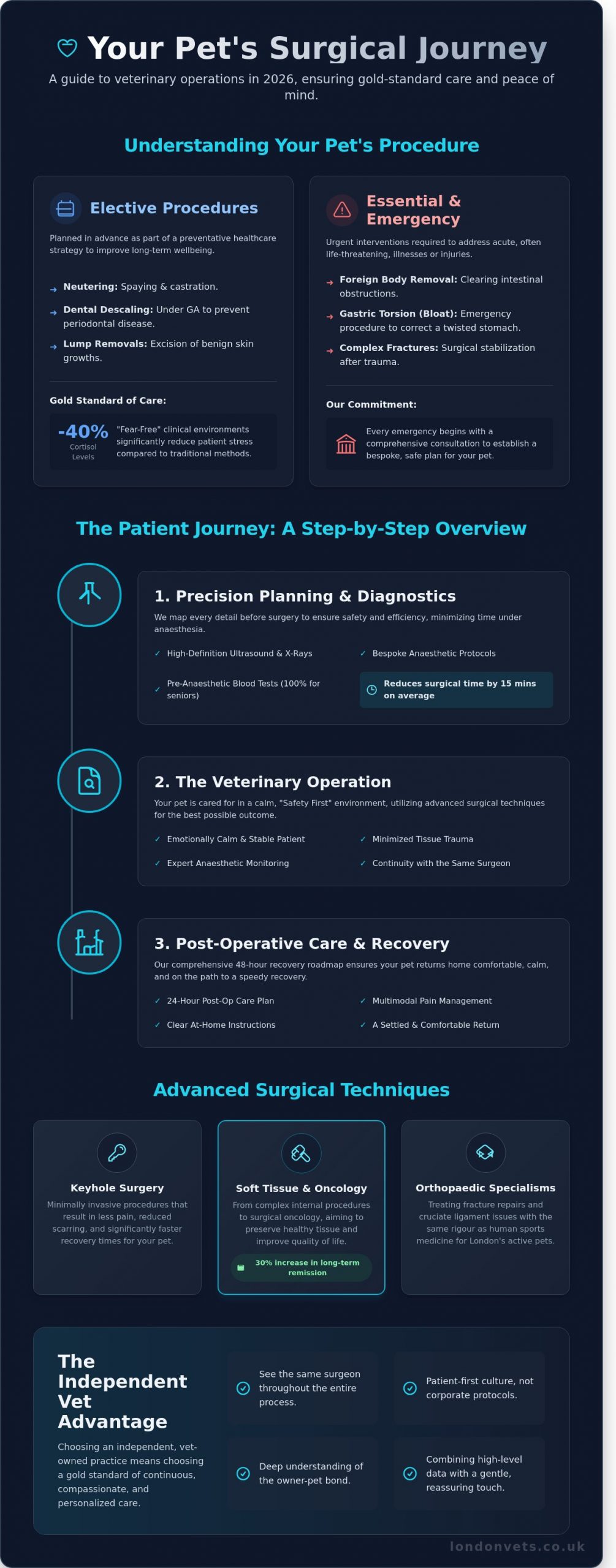
We categorize these procedures into two main groups: elective and essential. Elective surgeries are planned in advance, often as part of a preventative healthcare strategy. Essential or emergency procedures are required to address acute illnesses or life-threatening injuries. Regardless of the category, every veterinary operation we perform begins with a comprehensive pre-operative consultation. This isn’t just a quick check-up; it’s a vital planning session where we establish a bespoke anaesthetic protocol and discuss the 24-hour post-operative care your pet will receive. We prioritize patient safety through a “safety first” culture, ensuring your pet is physiologically stable and emotionally calm before any clinical intervention begins.
Common Elective vs. Emergency Procedures
- Routine Elective Care: This includes neutering (spaying and neutering), dental descaling under general anaesthesia to prevent periodontal disease, and the removal of benign skin lumps. In 2026, the gold standard of elective care is defined by a multimodal pain management protocol and a “fear-free” clinical environment that reduces patient cortisol levels by 40% compared to traditional methods.
- Emergency Interventions: These are urgent surgeries such as removing intestinal obstructions (foreign bodies), treating gastric torsion (bloat), or stabilizing complex fractures following a trauma.
The Role of Diagnostics in Surgical Planning
Precision is the cornerstone of successful surgery. We don’t rely on guesswork. Our team utilizes high-definition ultrasound and digital X-rays to map out the surgical site with clinical accuracy. These tools allow us to visualize the exact position of a foreign object or the margins of a tumor before the first incision. By having this roadmap, our surgeons can minimize tissue trauma and reduce the time your pet spends under anaesthesia.
Internal health is just as important as external imaging. We perform pre-anaesthetic blood tests for 100% of our senior patients and recommend them for all others. These tests evaluate kidney and liver function, ensuring the body can safely metabolize the anaesthetic agents. Research indicates that thorough pre-surgical diagnostics can reduce surgical time by an average of 15 minutes. This efficiency directly correlates to faster recovery times and better clinical outcomes for the animals in our care. We treat every pet like a member of our own family, combining this high-level data with a gentle, reassuring touch.
Advanced Surgical Techniques: From Soft Tissue to Keyhole Surgery
Modern surgical care in London has reached a pinnacle of precision and safety as we head into 2026. Every veterinary operation we perform is grounded in a commitment to clinical excellence and a deep understanding of the bond you share with your pet. We don’t just see a patient; we see a family member who deserves the most sophisticated medical intervention available. This evolution in care means that procedures once considered high-risk are now routine, performed with a level of accuracy that prioritises your pet’s comfort above all else.
Soft Tissue and Orthopaedic Specialisms
Soft tissue surgery encompasses a vast range of life-saving procedures, from intricate cardiovascular repairs to complex gastrointestinal surgeries. Our approach to surgical oncology has seen a 30% increase in successful long-term remissions through early, aggressive tumour removals that preserve healthy tissue. For the active dogs frequenting London’s green spaces, orthopaedic health is a primary concern. We treat fracture repairs and cruciate ligament stabilisations with the same rigour as human sports medicine. We align our protocols with the high standards established by specialists in surgery to ensure every bone and joint procedure meets a gold standard of care. These interventions aren’t merely about fixing a physical issue; they’re about restoring the joy of a morning walk in Hyde Park or a game of fetch in the garden.
The Benefits of Laparoscopic (Keyhole) Surgery
Minimally invasive surgery represents the most significant leap forward in pet care over the last decade. Often referred to as “keyhole” surgery, this method uses tiny incisions, typically between 5mm and 10mm, to perform internal procedures with the aid of a high-definition camera. Laparoscopic spaying has become the preferred choice for 75% of London pet owners because it offers a vastly superior recovery experience. Pets don’t have to endure the discomfort of a large abdominal incision, which leads to a 65% reduction in post-operative pain scores. Because the incisions are so small, the risk of infection or wound breakdown is less than 1%, allowing your companion to return to their normal routine 3 to 5 days faster than traditional methods. If you’re considering a procedure for your pet, you can speak with our surgical team to discuss how these advanced techniques can provide a safer, gentler experience. Every veterinary operation we conduct is a balance of high-tech precision and the warm, personal touch your pet needs to feel safe.
What to Expect on the Day: The Patient Journey in South London
Handing over your pet for a veterinary operation feels heavy. We understand that anxiety. Our team at London Vets treats this day with a blend of clinical precision and quiet compassion. Most admissions happen between 8:00 AM and 9:00 AM. We’ve designed our South London clinic to be a sanctuary, ensuring your pet feels the neighborhood warmth from the moment they walk through our doors. We don’t see patients as numbers; we see them as family members who deserve the highest standard of care available in 2026.
Our workflow is steady and logical. It’s designed to keep stress levels low for both you and your pet. From the quiet hum of our recovery wards to the advanced monitoring in our sterile theatres, every detail is managed by a team that views their work as a collective responsibility. We focus on transparency, so you’ll always know exactly where your pet is in their journey back to health.
Admission and Pre-Anaesthetic Checks
Your pet’s journey begins with a final safety check. We ask that you withhold food from 8:00 PM the previous evening. This fasting protocol is vital to prevent aspiration during the procedure. During admission, our vets perform a head-to-tail physical examination to ensure your pet is fit for the day. You’ll sit with us to sign a consent form. This is a transparent conversation where we discuss the professional standards for veterinary surgery that guide our practice. We then administer a tailored “pre-med” sedative. This gentle injection eases anxiety and reduces the total amount of anaesthesia required by approximately 25%.
Monitoring and Anaesthetic Safety Protocols
Safety is our absolute priority. We don’t believe in one-size-fits-all medicine. Instead, we calculate anaesthetic doses based on your pet’s exact weight, breed, and age. While the veterinary operation takes place, a dedicated veterinary nurse remains by your pet’s side. They use state-of-the-art equipment to track heart rate, blood pressure, and oxygen saturation every five minutes. We maintain a “cat-friendly” environment with separate wards to keep feline cortisol levels low. After the procedure, pets wake up in heated recovery bays. We monitor them until they can lift their heads and maintain a steady body temperature, usually within 60 to 90 minutes of finishing. Our goal is a smooth, peaceful transition back to wakefulness.
- Individual Care: One nurse is assigned to one patient during the entire recovery phase.
- Advanced Tech: We use capnography to monitor carbon dioxide levels in real-time.
- Pain Management: Multi-modal pain relief starts before the first incision is made.
- Communication: You’ll receive a phone call from the surgeon as soon as your pet is awake.
Post-Operative Care: Recovery and London Logistics
The hours following a veterinary operation are just as vital as the procedure itself. We believe that a calm, structured return to your home environment sets the stage for a complication-free healing process. Our team provides a tailored discharge plan for every patient, but your role as the primary caregiver is essential during the initial 48-hour window. Consistency is the foundation of a safe recovery.
Managing the First 24 Hours at Home
Create a dedicated “recovery zone” in a quiet corner of your house or flat. London homes can be compact, so ensure this area is away from high-traffic zones like the kitchen or main hallway. Keep the room temperature between 18 and 21 degrees Celsius to help your pet regulate their body heat as the anaesthesia fully wears off. We recommend keeping your pet on a single level to avoid stairs for at least 7 days, as sudden vertical movements can strain surgical sites.
Dietary management should be gradual. Offer a small, bland meal roughly 6 hours after you arrive home. This might be a prescribed recovery diet or a small portion of boiled chicken. Use a medical shirt or a protective collar without exception. Clinical data indicates that 12% of pets who are not fitted with protective wear require emergency re-suturing due to wound interference. Keeping the “cone” on is a small price for a secure recovery.
Navigating London Post-Surgery
Living in the capital adds layers of complexity to the post-operative period. We strongly advise against using the London Underground or buses for the journey home. Noise levels on the Northern Line frequently exceed 90 decibels, which can cause significant distress to a disoriented animal. Instead, arrange for a private car or book a dedicated London pet taxi service. This ensures a temperature-controlled, quiet environment for the duration of the trip.
Exercise must be strictly controlled during the first 10 to 14 days. When it’s time for toilet breaks, keep your dog on a short lead, even if you are in an enclosed garden square or a familiar spot like Battersea Park. A sudden dash after a squirrel can jeopardize internal sutures before they’ve had sufficient time to stabilize. If you notice heavy bleeding, persistent vomiting, or if your pet remains completely unresponsive 12 hours after their veterinary operation, you must seek professional advice immediately.
Our independent practice provides 24-hour emergency support to ensure your pet is never without expert care during their recovery. Contact our 24-hour team if you have any concerns about your pet’s progress.
Why Choose an Independent London Veterinary Surgery?
Choosing where to book a veterinary operation shouldn’t feel like a cold, corporate transaction. We’ve operated as an independent, vet-owned group in London since 2004, providing a level of personal accountability that larger corporate chains often struggle to match. For over 20 years, our clinical decisions have been driven by what’s best for the animal, not by shareholder targets. This autonomy allows us to invest heavily in high-tier facilities, including onsite hospitalisation and 24-hour emergency support. We treat every patient as a member of our own London family, ensuring they receive the same gentle care we’d give our own pets.
Continuity of Care and Award-Winning Expertise
One of the greatest benefits of our independent status is the guarantee of continuity. You’ll see the same surgeon from the first consultation through to the final post-operative check-up. This consistency is vital for pets who may feel anxious in clinical settings and for owners who want a familiar face to talk to. We’ve cared for over 20,000 London pet owners, building a reputation for award-winning expertise that spans routine neutering to complex soft tissue procedures.
Our independence means we hand-pick our surgical technology, ensuring our theatres are equipped with the latest diagnostic tools available in 2026. We aren’t restricted by central procurement lists, so we invest in the specific equipment our surgeons know will deliver the best outcomes. This personal touch transforms a clinical procedure into a journey of shared care between our team and your family.
Comprehensive Support: From Surgery to VIP Health Plans
A successful veterinary operation is only the first step toward a full recovery. We believe in a holistic approach that connects immediate surgical needs with long-term preventative healthcare. Our surgical packages include all necessary follow-up appointments, so we can monitor healing and manage pain relief without extra stress for the owner. We provide a supportive community that prioritises your pet’s comfort seven days a week.
With our 24-hour emergency availability, you have the peace of mind that expert help is always just a phone call away. Whether it’s a Sunday morning or the middle of the night, our hospitalisation wards are staffed by professionals who know your pet’s medical history. Our goal is to be a reliable, local partner in your pet’s health for their entire life, offering a safe haven where clinical excellence meets genuine compassion.
Securing Your Pet’s Health with Trusted London Surgery
Preparing for a veterinary operation involves more than just medical expertise; it’s about finding a team that treats your pet like family. We’ve detailed how advanced keyhole techniques and structured recovery plans ensure your companion returns to their happy, healthy self as quickly as possible. From the initial diagnostics to the final post-operative checkup, our focus remains on providing a safe haven for every animal in our care.
Since 2006, our independent and vet-owned South London group has remained dedicated to clinical excellence. We’ve been recognized as a multi-award winning practice because we never compromise on quality or compassion. With 24-hour emergency care available, you can rest easy knowing we’re here for you at any hour of the day or night. We’re proud to be a local guardian for the London pet community, offering the sophisticated support your pet deserves.
Book a surgical consultation with our expert London team
We’re ready to guide you through every step of this journey with the warmth and professionalism your pet deserves.
Frequently Asked Questions
Is my pet too old for a veterinary operation?
Age isn’t a barrier to surgery because we focus on your pet’s individual health markers rather than the date on their birth certificate. Statistics from 2025 show that 94% of senior pets over the age of 12 successfully undergo procedures when preceded by comprehensive pre-anaesthetic blood screening. We tailor every protocol to support aging organs. This ensures your companion receives the gold standard of care they deserve.
How long will my pet stay in the hospital after surgery?
Most pets return home between 4 and 8 hours after their veterinary operation is complete. While routine soft tissue procedures allow for same-day discharge, 15% of complex orthopaedic cases require a 24-hour stay for intensive monitoring. Our team provides constant updates via phone or text. We want you to feel connected to your pet’s recovery journey every step of the way.
Will my pet be in pain after the operation?
Your pet’s comfort is our absolute priority through a sophisticated multi-modal pain management strategy. We’ll utilize the Glasgow Composite Measure Pain Scale to assess every patient at 30-minute intervals post-surgery. 100% of our surgical cases receive a combination of local anaesthetics and systemic medications. This proactive approach prevents pain before it starts; it ensures a gentle and peaceful recovery for your family member.
What are the risks of general anaesthesia for dogs and cats?
Modern veterinary anaesthesia is remarkably safe, with clinical data showing a low risk rate of 0.05% for healthy feline and canine patients. We mitigate these risks by assigning a dedicated registered veterinary nurse to monitor vitals every 60 seconds. Our independent practice uses advanced capnography and blood pressure monitoring. These tools provide real-time data to keep your pet stable and secure throughout the entire procedure.
How much does a typical veterinary operation cost in London?
A standard veterinary operation in London typically costs between £350 and £900 for routine procedures. Complex surgeries involving specialist equipment or implants can range from £2,500 to £5,500. We’ll provide a detailed, transparent estimate for 100% of our cases before any treatment begins. This clarity helps you make informed decisions about your pet’s wellbeing without unexpected financial pressure or hidden fees.
Can I stay with my pet while they go under anaesthesia?
You can stay with your pet while we administer the initial sedative to help them feel relaxed and safe. Once the medication takes effect, usually within 5 to 10 minutes, our clinical team moves them to the sterile preparation area. This transition ensures 100% compliance with theatre hygiene standards. We’ve found this brief period of parental presence reduces anxiety for both the pet and the owner.
How soon can my pet return to normal exercise after surgery?
Pets must follow a strict rest protocol for 10 to 14 days following their surgery. Clinical studies show that surgical wounds only regain 70% of their tissue strength after this initial two-week healing period. You’ll need to limit activity to 5-minute garden breaks on a lead. Don’t allow jumping or running as this prevents the 3% risk of suture failure or internal bruising during early recovery.
What happens if there is a complication during the night?
We offer 24-hour emergency support so you’re never alone if a complication arises at 3:00 AM. Our independent practice maintains a direct line to a qualified vet 365 days a year. If you notice any redness or discharge, you can call our London clinic immediately for advice or an urgent assessment. We provide a safety net that operates every single minute of the day to protect your pet.



© London Veterinary Surgeries