
Date: 09 Mar 2026
The endless scratching may have started last spring. At first, you thought it was just seasonal shedding, but now the frantic licking and red, irritated paws have become a constant, worrying soundtrack in your home. It’s a scene we see often in our London practice, and we understand how distressing it is to watch your beloved companion in discomfort, feeling unsure of the next step.
That’s why we’ve created this guide. We want to empower you to confidently identify the key animal allergy symptoms and understand how our unique urban environment, from the pollen in Regent’s Park to city pollutants, can impact your pet’s health. In this article, you will discover a clear checklist of signs to monitor, learn to distinguish between food and environmental triggers, and know precisely when an allergy becomes a veterinary emergency. We’re here to help you restore comfort and peace of mind for your pet, every step of the way.
Key Takeaways
- Understand why persistent itching is the primary sign of an allergic reaction in pets, which differs significantly from the respiratory issues common in humans.
- Learn to confidently distinguish between animal allergy symptoms and other common South London skin conditions, such as fox mange, to ensure correct care.
- Discover practical at-home strategies, including post-walk wipe-downs and bathing tips for London’s hard water, to help manage your pet’s daily comfort.
- Explore the modern veterinary diagnostics and treatments, from advanced skin testing to innovative injections, that can provide long-term relief for your pet.
What Are Animal Allergy Symptoms and Why Do They Occur?
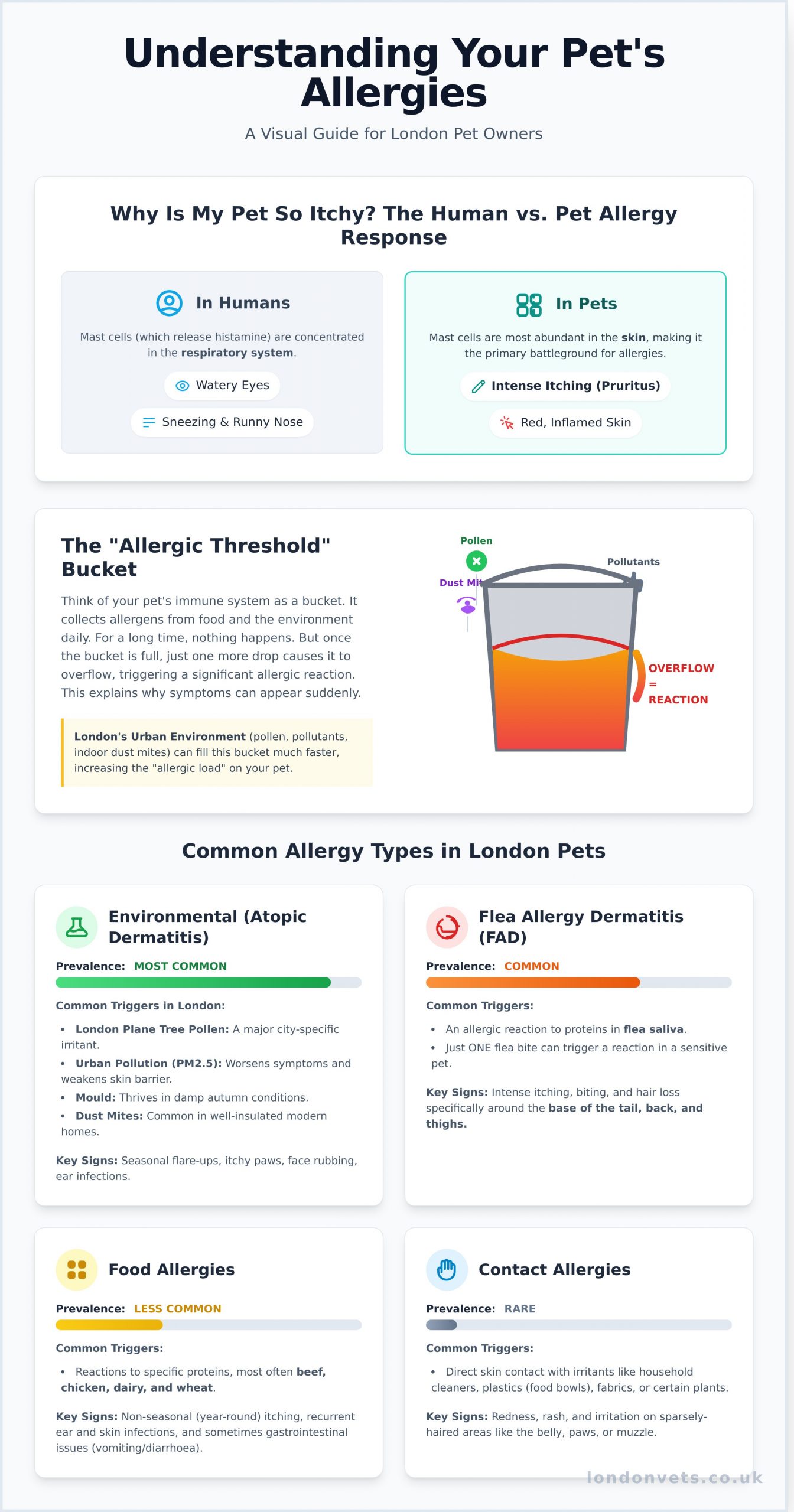
Seeing your beloved pet uncomfortable is distressing for any owner. When that discomfort stems from relentless itching and scratching, it’s often a sign of an allergy. At its core, a pet allergy is an overreaction of the immune system to substances that are normally harmless, such as pollen, dust mites, or certain food proteins. Unlike humans who typically sneeze or develop watery eyes, the most common of all animal allergy symptoms is intense itching, a condition we call pruritus. This single symptom is the starting point for understanding your pet’s distress.
It’s helpful to think of your pet’s immune system like a bucket. Day-to-day, it collects small amounts of different allergens from the environment and their food. A bit of pollen here, a house dust mite there. For a long time, nothing happens. But once the bucket is full, even one more drop will cause it to overflow, triggering a significant allergic reaction. This is the “allergic threshold,” and it explains why symptoms can appear suddenly, even if your pet has been exposed to the same triggers for years.
Here in London, we see how the urban environment can contribute to filling that bucket faster. Higher concentrations of airborne pollutants from traffic can act as irritants, while enclosed city gardens can trap pollen. Our modern, well-insulated homes also create perfect conditions for indoor allergens like dust mites to thrive, increasing the overall “allergic load” on our pets throughout the year.
The Biological Mechanism of Pet Allergies
Allergens can enter your pet’s body in three primary ways: through inhalation (like pollens), ingestion (food ingredients), or direct skin contact. Once inside, the immune system mistakenly identifies the allergen as a threat and releases a chemical called Histamine. This powerful compound is responsible for the inflammation, redness, and intense itchiness you see in your pet’s skin and, sometimes, their digestive tract. For a deeper look into the various triggers, the article on Common Types of Allergies in Dogs offers a comprehensive overview. Atopy is a chronic skin condition triggered by environmental allergens, representing a genetic predisposition to these reactions.
Why Your Pet’s Symptoms Differ from Yours
You might wonder why your hay fever results in sneezing while your dog’s allergy results in frantic chewing of their paws. The answer lies in where your bodies store the majority of their mast cells; the immune cells that release histamine. In humans, they are concentrated in the respiratory system. In dogs and cats, they are most abundant in the skin. This is why their primary reaction is dermatological; they literally feel their allergies on their skin.
The integrity of your pet’s skin barrier is their first line of defence. In London, our notoriously hard water can compromise this barrier. The high mineral content can dry out the skin and disrupt its protective layer, making it easier for allergens to penetrate and trigger a reaction. Because of this, it’s crucial to recognise the very first signs of trouble. Look for subtle redness between their toes, around their ears and muzzle, or in their armpits. Catching these early indicators is the first step toward providing them with the comfort they deserve.
Common Types of Allergies in London Dogs and Cats
As an independent practice rooted in the heart of London, we see firsthand how the urban environment shapes the health of our beloved pets. Understanding the common culprits behind their discomfort is the first step toward providing relief. While the list of potential allergens is long, most of the animal allergy symptoms we diagnose fall into four main categories: environmental, flea, food, and contact allergies. Identifying the specific trigger is crucial, as it dictates the most effective and compassionate course of treatment.
Environmental Triggers in the Capital
Environmental allergies, or atopic dermatitis, are by far the most common cause of allergic reactions we treat in South London dogs and cats. Our unique city landscape presents specific challenges. The iconic London Plane tree, which makes up over 10% of the capital’s tree canopy, releases a fine pollen that is a significant skin irritant for many pets. This is often compounded by urban pollution; high levels of particulate matter (PM2.5) in the air can worsen respiratory symptoms and compromise the skin’s natural barrier, making pets more susceptible to allergens. These allergies often follow a seasonal pattern, with flare-ups of itchy paws and skin during the spring pollen season in parks like Brockwell Park, or in autumn when damp conditions encourage mould growth.
Food vs. Flea Allergies
Differentiating between food and flea allergies can be tricky, as both cause intense itchiness. However, they present with distinct patterns that help us pinpoint the cause. We find that a targeted approach, based on careful observation, provides the fastest path to your pet’s comfort.
- Food Sensitivities: A true food allergy involves an immune response, typically to a protein like chicken or beef, whereas an intolerance is a digestive issue. The tell-tale signs often include chronic ear infections, which occur in over 50% of dogs with food allergies, alongside gastrointestinal upset like vomiting or diarrhoea. Itchy skin is also a common symptom, but it tends to be persistent year-round.
- Flea Allergy Dermatitis (FAD): This is an extreme allergic reaction to flea saliva, where just a single bite can trigger a severe response. The classic sign is frantic itching and hair loss at the base of the tail, creating what’s known as a “hot spot.” Because London’s homes are centrally heated, fleas can thrive all year. This isn’t a seasonal problem; it’s a constant threat that requires consistent, year-round preventative treatment to protect your pet.
Finally, contact allergies are less common but can cause significant localised irritation. These reactions occur when a pet’s skin touches an irritant, such as certain household cleaning products, chemicals used on lawns, or even specific types of grasses found in local parks. Distinguishing between these triggers requires a careful diagnostic process. While online guides on Managing Pet Allergy Symptoms can provide useful background information, a professional evaluation is essential for an accurate diagnosis. If you’re struggling to identify the source of your pet’s distress, our comprehensive allergy testing services can offer the clarity and relief your family deserves.
Is It an Allergy? Distinguishing Symptoms from Other Conditions
When your pet is relentlessly scratching, it’s natural to suspect an allergy. However, several other conditions common in London can present with very similar signs. Distinguishing between these lookalikes is the critical first step toward providing your pet with effective relief. At our independent practice, we see pets every week whose discomfort is caused by something other than a classic allergy, which is why a precise diagnosis is paramount.
The challenge is that many issues cause inflammation and itching. Without identifying the root cause, you risk treating the wrong problem, which can prolong your pet’s suffering. Below, we explore some of the most frequent culprits we encounter that can mimic animal allergy symptoms.
Allergies vs. Fox Mange
In densely populated areas like South London, with its robust urban fox population, Sarcoptic Mange is a significant concern. Caused by a microscopic mite, it’s highly contagious and intensely itchy. While its symptoms overlap with allergies, there are key differences we look for:
- Location and Appearance: Mange often causes frantic scratching concentrated on the ear edges, elbows, and chest, leading to thick, yellow-grey crusts. Allergies typically present as more generalised redness and inflammation, especially on the paws, belly, and face.
- Speed of Onset: Fox mange appears to strike with alarming speed, with a pet going from perfectly fine to unbearably itchy in just 7-10 days. Allergic reactions, particularly to environmental triggers like pollen, tend to build more gradually with the seasons.
A simple skin scrape viewed under a microscope can often confirm the presence of mange mites. Attempting to treat this parasitic infection with allergy medication will not work; a vet consultation with a trusted local London vet is essential to get your pet the correct anti-parasitic treatment and bring them comfort.
Secondary Infections: The “Scratch-Itch” Cycle
Whether the initial trigger is an allergy or another irritant, constant scratching inevitably damages the skin’s protective barrier. This opens the door for opportunistic bacteria and yeast to invade, creating a vicious “scratch-itch” cycle where the infection makes the itching even worse. We often see two tell-tale signs of this progression:
- “Elephant Skin” (Lichenification): After weeks or months of chronic inflammation, the skin can become thickened, leathery, and darkened. This is a physical sign of long-term irritation.
- A Distinctive Smell: If your dog’s paws have a scent reminiscent of corn chips or damp biscuits, it’s a strong indicator of a yeast infection (Malassezia dermatitis).
Sometimes, this cycle escalates quickly. If you notice raw, open sores or rapidly developing “hot spots”-angry, weeping patches of skin-it’s time for urgent care. These lesions are painful and can lead to severe systemic infections if left untreated.
Beyond mange, other parasites like ear mites can cause intense head shaking and dark, coffee-ground-like debris in the ears. Even a persistent cough, sometimes mistaken for a respiratory allergy, could be a sign of Lungworm, a serious parasite found across London. Furthermore, we must also consider the unique pressures of city life. The “London Itch” can be a behavioural response to stress or boredom in pets with limited space, manifesting as compulsive licking that creates sores. A thorough diagnostic process is crucial to differentiate these conditions from a true hypersensitivity, which is why we follow gold-standard protocols for Professional Allergy Testing and Treatment. Only by confirming the true cause can we create a plan that brings lasting relief.
Managing Animal Allergy Symptoms at Home in London
While professional veterinary diagnostics form the cornerstone of allergy management, the daily actions you take at home are fundamental to your pet’s comfort and wellbeing. In a bustling city like London, environmental and dietary triggers are everywhere. Creating a proactive home care plan can significantly reduce the severity of your pet’s reactions and improve their quality of life between vet visits. We believe that empowering you with the right knowledge is a crucial part of our partnership in your pet’s health.
Post-Walk Protocols for London Owners
A walk through Streatham Hill or a run on Tooting Common exposes your dog to more than just fresh air. Their coat acts like a magnet for urban pollutants, from diesel particulates to seasonal pollen, which can be absorbed through the skin or inhaled. We recommend a simple “Paws and Face” wipe-down with a damp cloth or pet-safe wipe after every walk. This five-minute routine removes a significant allergen load. Don’t forget to check between their toes and in their ears for grass seeds, especially from spring through late summer, as these can burrow into the skin and cause painful abscesses.
Dietary Management Basics
If we suspect a food sensitivity is contributing to your pet’s animal allergy symptoms, a carefully managed dietary trial is the gold standard for diagnosis. This isn’t about just switching brands; it’s a precise process. We often recommend a diet based on a novel protein, which is a protein source your pet has likely never eaten before. Options can include venison, duck, or even sustainable insect-based formulas. The key is strict adherence for a minimum of 8 to 12 weeks. This period, known as the “8-week rule,” gives the body enough time to calm the allergic response. During this trial, it’s absolutely vital to avoid all other food sources, including common pet treats, dental chews, and even table scraps, which often contain hidden allergens like chicken or beef.
Alongside diet, managing the home environment is just as critical. Regular bathing with a vet-recommended hypoallergenic or medicated shampoo can wash away surface allergens and soothe irritated skin. Given London’s notoriously hard water, it’s important to use a formula that won’t strip natural oils, potentially making dryness worse. Inside your home, dust mites are a primary trigger. You can minimise their impact by:
- Washing your pet’s bedding weekly in water at least 60°C.
- Vacuuming floors and furnishings frequently, preferably with a vacuum that has a HEPA (High-Efficiency Particulate Air) filter, which can capture over 99.9% of microscopic allergens.
- Considering an air purifier in the room where your pet sleeps most often.
These consistent, practical steps form a powerful defence against the triggers that cause discomfort. They complement veterinary treatments and give your pet the best possible chance at a comfortable, itch-free life. If you’re struggling to get on top of your pet’s skin issues, schedule an allergy consultation with our veterinary team today.
Professional Allergy Testing and Treatment at London Veterinary Surgeries
Watching your pet suffer from persistent itching and discomfort is distressing. At London Veterinary Surgeries, we want you to know that a diagnosis is not the end of the road; it’s the beginning of a clear, manageable path forward. Our dedicated team combines gold-standard diagnostics with compassionate, long-term care to control your pet’s animal allergy symptoms and restore their quality of life. We don’t just treat the itch; we investigate the cause to create a sustainable plan for your pet’s wellbeing.
Our diagnostic approach is thorough and methodical. We often start with simple, in-house tests like skin scrapes or cytology to check for parasites or secondary infections. For more complex cases, we progress to advanced testing. This can include:
- Intradermal Skin Testing: Considered the most accurate method for identifying environmental allergens, this test involves injecting tiny amounts of common allergens into the skin to observe the reaction.
- Modern Treatments: We utilise the latest advancements in veterinary medicine, including Cytopoint injections (a biological therapy that targets the itch-specific pathway, providing relief for 4-8 weeks) and daily oral tablets like Apoquel.
- Immunotherapy: For pets with confirmed environmental allergies, we can formulate bespoke immunotherapy, or “allergy shots.” These are tailored specifically to desensitise your pet to London’s unique pollen profile, offering a long-term solution rather than just managing symptoms.
Advanced Diagnostics in South London
To pinpoint the exact triggers causing your pet’s reaction, we often use specific blood tests that measure antibody levels against a wide panel of environmental allergens, from dust mites to local grasses. As an independent vet practice, we have the freedom to create truly personalised allergy plans that aren’t dictated by corporate protocols. Your pet’s comfort is our only priority. The first step is a thorough examination. Book a Health Check with our team to start your pet’s diagnostic journey today.
Long-term Support and Preventative Care
Consistent, preventative care is the cornerstone of managing chronic animal allergy symptoms. Our Dog VIP Plan is designed to make this simple and affordable, covering the year-round, vet-approved flea and parasite prevention that is essential for every itchy pet. Our veterinary nurses also play a vital role, working with you to provide ongoing skin and coat management, dietary advice, and support between vet visits.
We understand that living with an allergic pet can feel overwhelming, but you are not alone. The constant worry can take a toll on owners too, and for those seeking support in managing this stress, you can visit London Hypnotherapy & NLP. With our team by your side, these conditions are manageable, not just endurable. We are committed to finding a solution that brings comfort and happiness back to your pet and your family.
A Clear Path to Your Pet’s Comfort and Wellbeing
Navigating your pet’s sensitivities begins with recognising the signs, from persistent scratching to digestive upset. While home management can offer some relief, a professional diagnosis is vital for creating a truly effective long-term plan. At London Vets, we understand how distressing it can be to see your companion in discomfort from persistent animal allergy symptoms. As an independent, vet-owned practice, our multi-award winning team has proudly served the community for over 20 years, earning the trust of more than 20,000 local pet owners.
We are here to provide clarity and a tailored treatment strategy for your beloved pet. Book a consultation at one of our South London surgeries today. With our dedicated support, including 24-hour emergency vet care for severe reactions, a happier, itch-free life for your pet is well within reach.
Frequently Asked Questions About Animal Allergy Symptoms
How can I tell if my dog has a food allergy or an environmental allergy?
Distinguishing between food and environmental allergies requires a careful, systematic approach as their symptoms often overlap. Food allergies typically cause year-round itching and can be accompanied by gastrointestinal issues like vomiting or diarrhoea. Environmental allergies, however, are often seasonal. A strict elimination diet, guided by our veterinary team, is the only reliable way to diagnose a food allergy. It’s a process, but it provides the clear answers needed for your pet’s long-term comfort.
What are the most common seasonal allergy triggers for pets in London?
In London, the most common seasonal triggers are tree pollens, grass pollens, and various moulds. We see a significant rise in allergy cases from March to May due to birch and oak tree pollens. This is followed by a peak from late May through July when grass pollens are at their highest. In autumn, mould spores from damp leaves can become a problem. These allergens often cause intense itching of the skin, paws, and ears.
Can I give my cat or dog human antihistamines for their symptoms?
You should never give your pet human antihistamines without direct veterinary instruction. While some of these medicines are used in veterinary practice, the required dosage for pets is very different from that for humans. Furthermore, many over-the-counter products contain additional ingredients like pseudoephedrine or xylitol, which are highly toxic to animals. Please consult us first; we can prescribe safer, pet-specific medications that are proven to be effective and safe.
Why does my pet keep getting ear infections? Is it an allergy?
Yes, recurrent ear infections are one of the most common signs of an underlying allergy. Allergies trigger inflammation within the ear canal, creating the perfect warm, moist environment for yeast and bacteria to thrive. If your pet has suffered from more than two ear infections within a 12-month period, it strongly indicates an allergic cause. By identifying the root trigger, we can help break this painful cycle and prevent future infections.
How much does allergy testing for pets cost in London?
The cost for comprehensive pet allergy testing in London generally ranges from £500 to £900. This typical cost includes the initial consultation, blood sample collection for a serology test, and the detailed laboratory analysis which screens for dozens of environmental allergens like pollens and dust mites. We believe in complete transparency, so we will always provide a clear, itemised estimate before proceeding with any diagnostic tests for your pet.
Is fox mange common in South London, and does it look like an allergy?
Fox mange, or sarcoptic mange, is unfortunately quite common in the urban fox populations across South London and its symptoms can easily be mistaken for a severe allergic reaction. Mange is caused by mites and results in frantic itching and significant hair loss, particularly on the ears and elbows. While these are also classic animal allergy symptoms, mange is intensely contagious to other dogs. If you notice a sudden and severe itch, please see us immediately for an accurate diagnosis.
What is a “hot spot” and how should I treat it?
A “hot spot” is the common term for acute moist dermatitis, a painful and rapidly appearing skin infection. It looks like a red, wet, and raw area on your pet’s skin, often caused by constant licking or chewing at an itchy spot from an allergy or flea bite. Home treatment is not recommended. We treat them by carefully clipping the fur, cleaning the area with a medical-grade antiseptic, and often prescribing topical creams, antibiotics, or anti-inflammatory medication to heal the skin and provide immediate relief.
Can my pet suddenly develop allergies later in life?
Absolutely. It’s quite common for a pet to develop new allergies in adulthood or their senior years, even to something they have been exposed to for a long time. Most allergies appear between one and three years of age, but a pet’s immune system can change over time. If your older dog or cat suddenly starts showing classic animal allergy symptoms like scratching or skin irritation, it’s important to schedule a consultation to investigate the cause and create a new care plan.




© London Veterinary Surgeries