
Date: 12 Mar 2026
Last month, a client from Clapham faced an unexpected £5,200 bill for their cat’s emergency surgery after a fall from a second-story window. It’s a situation we see all too often, a stark reminder of the unique risks our city pets face every day.
We understand that feeling of dread when confronted with a quote for specialist care. As a London pet owner, you’re not just worried about your companion’s health; you’re also navigating the ‘London premium’ that can make essential treatment feel financially overwhelming. Trying to find the best pet insurance UK policy amidst confusing jargon and hidden clauses only adds to the stress.
This guide is our commitment to bringing you clarity and peace of mind for 2026. We’ll help you demystify the difference between ‘Lifetime’ and ‘Maximum Benefit’ policies, identify coverage that truly protects against urban dangers, and show you how to align your insurance with a preventative care plan. Together, we can ensure your pet has access to gold-standard treatment, whenever they may need it.
Key Takeaways
- Understand why London’s access to world-class specialist care makes comprehensive insurance an essential safeguard for your pet’s wellbeing.
- Confidently compare the four main types of pet insurance UK policies to determine why Lifetime cover is the gold standard for chronic conditions.
- Learn the crucial difference between insurance for unexpected illness and a Pet Health Plan for budgeting routine preventative care.
- Accurately assess your ideal vet fee limit by seeing how a £3,000 policy compares to the £12,000+ cost of advanced treatments in London.
- Discover how partnering with an independent vet simplifies the claims process, providing your family with dedicated support when you need it most.
What is Pet Insurance in the UK and Why is it Essential for Londoners?
As veterinary professionals in the heart of London, we view our role as a partnership with you in safeguarding your pet’s wellbeing. A crucial part of that is preparing for the unexpected. At its core, pet insurance is a financial safety net designed to cover the costs of unforeseen accidents and illnesses. It is not a savings plan for routine care like vaccinations or flea treatments; instead, it’s a vital tool for managing the high costs of non-routine veterinary medicine. To understand the fundamentals of what is pet insurance, it’s best to see it as a shield that allows you to make decisions based on your pet’s health needs, not your bank balance.
For London pet owners, this shield is less of a “peace of mind” luxury and more of a financial necessity. Our city is home to some of the world’s leading veterinary specialists and 24-hour hospitals, offering a gold standard of care. This access is a huge advantage, but it comes at a significant cost. Imagine a late-night emergency; the initial out-of-hours consultation alone at a London veterinary hospital can cost upwards of £250 before any diagnostics or treatment even begin. This is where a robust insurance policy becomes your most important ally.
The “London Premium”: Why Geography Affects Your Quote
When you get a quote for pet insurance uk, your postcode plays a surprisingly large role. Insurers know that veterinary costs in Central London and affluent postcodes like those in SW3 or W8 are substantially higher than in other parts of the country. This isn’t arbitrary; it reflects the higher overheads we face, from clinic rent to staff wages. Consequently, the cost of a claim for the exact same procedure is higher here, and your premium reflects that risk. A policy with a £2,000 annual limit might seem adequate elsewhere, but in London, that sum can be exhausted in less than 48 hours by an intensive hospital stay. A complex fracture repair involving a specialist orthopaedic surgeon, for example, can easily reach £5,000 or more.
Urban Risks: Why London Pets Need Better Protection
Life in the capital presents a unique set of hazards for our animal companions, elevating the need for comprehensive cover. We regularly treat conditions directly linked to the urban environment:
- Road Traffic Accidents (RTAs): The sheer density of traffic in London means the risk of an accident is a constant and serious threat, especially for cats who roam or dogs who might slip a lead near a busy road.
- Urban Parasites: London’s beautiful parks and gardens are, unfortunately, ideal habitats for parasites like lungworm, which is carried by slugs and snails. A lungworm infection can be fatal if not diagnosed and treated promptly, often requiring intensive care.
- The “Fox Factor”: Our city has a large and bold urban fox population. While fascinating, encounters can lead to serious bite wounds and abscesses for curious cats and dogs, requiring urgent veterinary attention and sometimes complex surgery.
Ultimately, having the right insurance in place means you are always prepared to provide the best possible care for your pet, no matter what challenges London life throws your way.
Comparing UK Pet Insurance Policy Types: Which is Right for You?
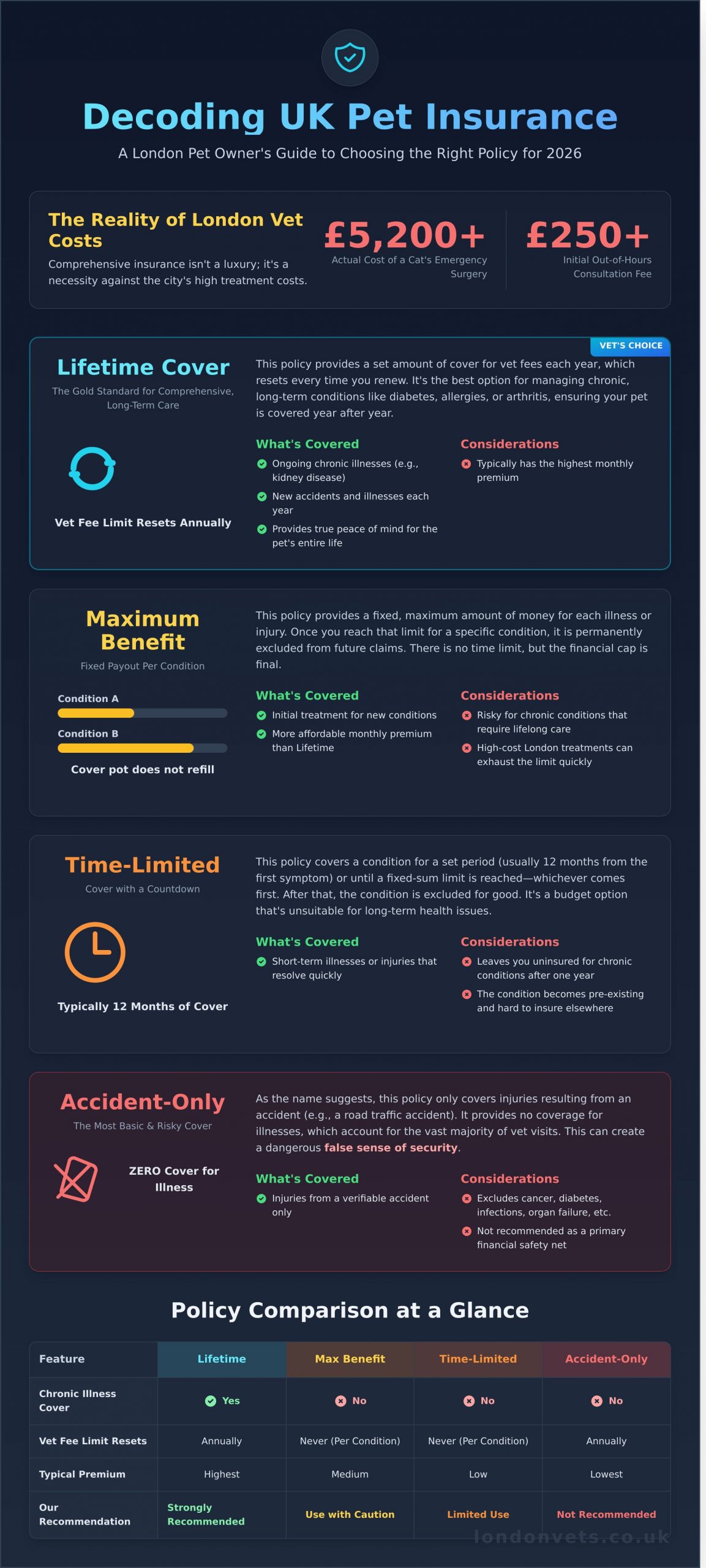
Choosing the right policy can feel overwhelming. The market for pet insurance UK is filled with jargon and complex options that can be difficult to decipher. Understanding the fundamental differences is crucial, and independent resources for Comparing pet insurance policies can provide a helpful starting point. From our clinical perspective at London Veterinary Surgeries, we see firsthand how the right cover can transform an owner’s ability to provide the best care. The four main types of policies available are:
- Lifetime Cover: The most comprehensive option, which we strongly recommend.
- Maximum Benefit Cover: Provides a fixed amount of money per condition.
- Time-Limited Cover: Covers a condition for a set period, typically 12 months.
- Accident-Only Cover: The most basic policy, covering only injuries from an accident.
While budget is a key factor, we urge pet owners to look beyond the monthly premium. The true value of a policy is revealed when you need it most. An Accident-Only policy, for example, might seem affordable, but it offers a false sense of security. Illnesses like cancer, diabetes, or kidney disease account for the vast majority of veterinary visits and are completely excluded from this type of cover, leaving you with potentially thousands of pounds in unexpected bills.
Lifetime Cover: The Clinical Recommendation
This is the gold standard of pet insurance. A Lifetime policy provides a set amount of cover for vet fees each year (e.g., £5,000), which resets annually when you renew. This is vital for managing chronic conditions we frequently treat in London, such as skin allergies, arthritis, or diabetes, which require ongoing medication and consultations. Lifetime cover is the only way to ensure continuous, uninterrupted care for a chronic illness throughout your pet’s life.
The Small Print: Excesses and Co-payments
Understanding your contribution to a claim is essential. Most policies have a fixed excess, a set amount like £100 that you pay per condition each year. However, many insurers introduce a co-payment for older pets, often from age 8. This means you’ll also pay a percentage, typically 10-20%, of the remaining vet bill. It’s also important to know that unlike car insurance, claims-free years don’t guarantee lower premiums; they will almost certainly rise as your pet ages. Finally, always check if your policy allows for Direct Claims. This feature lets us handle the payment directly with the insurer, easing your financial and emotional burden during a stressful time. You can speak with our team to learn which insurers we work with for direct claims.
Insurance vs. VIP Health Plans: The Hybrid Care Model
One of the most common and costly misunderstandings we encounter from London pet owners is the belief that their insurance policy is an all-encompassing shield. The truth is, it isn’t. The vast majority of pet insurance uk policies are designed for accidents and illnesses, the unforeseen and often expensive events. They explicitly exclude the routine, preventative care that forms the foundation of your pet’s long-term health, such as annual vaccinations, flea treatments, and worming protocols.
This is where a proactive approach becomes essential. Instead of viewing preventative care as a separate, unpredictable expense, a Pet Health Plan allows you to budget for it effectively. It transforms routine care from a series of lump-sum payments into a manageable, predictable monthly cost, ensuring your pet never misses out on the fundamentals of wellbeing.
What Our London Vets VIP Plans Cover
Our VIP Health Plans are designed to perfectly complement your insurance. They are a subscription to your pet’s wellness, covering all the predictable and essential treatments that keep them happy and healthy throughout the year. For a simple monthly fee, you spread the cost of this vital care. Crucially, VIP plans have no “excess” to pay; the benefits are available to you immediately. Your membership ensures your pet receives:
- Annual health check and booster vaccinations
- A full year’s supply of vet-reccomended flea, tick, and worm prevention
- A comprehensive six-month health check with a vet
- Discounts on neutering, dental work, and pet food
Why You Need Both for Total Protection
Think of it this way: insurance is for the unpredictable, while a VIP plan is for the predictable. You need your insurance policy to cover the cost of a sudden fracture repair, which can exceed £3,000, or complex diagnostic imaging for an unexpected illness. You need your VIP Health Plan to cover the annual booster vaccination and parasite control, which together can cost over £250 upfront in London.
Combining the two creates a seamless, 360-degree safety net. The regular check-ups included in our VIP plans allow our clinical team to monitor your pet’s health closely. This proactive monitoring can catch developing issues like dental disease or arthritis in their earliest stages. Early diagnosis not only leads to better health outcomes for your pet but can also reduce the likelihood of needing a complex and expensive insurance claim down the line. At London Veterinary Surgeries, we offer tailored VIP options for dogs, cats, and rabbits, ensuring every pet has access to this gold standard of comprehensive care.
Calculating Your Coverage: How Much Vet Fee Limit Do You Need?
Choosing a vet fee limit is the single most important decision you’ll make when selecting a policy. In London, where access to world-class veterinary specialists comes at a premium, the gap between an adequate limit and an insufficient one can be vast. A policy with a £3,000 limit might seem cost-effective initially, but it can be exhausted by a single diagnostic procedure, leaving you to cover the rest. A higher limit, such as £12,000 or more, provides the peace of mind that you can always choose the gold-standard treatment for your pet, without financial constraint.
We often see the devastating consequences of under-insurance. When a pet’s treatment costs exceed their policy limit, their family is faced with an impossible choice: find thousands of pounds unexpectedly or stop life-saving care. It’s a heart-breaking situation that comprehensive coverage is designed to prevent.
This kind of financial pressure highlights the importance of managing overall household expenses. For busy professionals, especially in the medical field, reviewing major outgoings like a mortgage can create crucial financial breathing room. To see what options might be available, you can visit Doctors Mortgages.
The Cost of Advanced Diagnostics in London
When your pet needs more than a routine check-up, costs escalate quickly. A referral to a specialist centre in South London for an MRI or CT scan to investigate neurological signs or complex internal issues typically costs between £2,500 and £3,500. This single step can consume an entire low-limit policy. Similarly, we advocate for keyhole (laparoscopic) spaying as it involves less pain and a much faster recovery. While a traditional spay may cost around £400, a laparoscopic procedure costs closer to £750, reflecting the advanced equipment and surgical skill required. During a crisis, 24-hour hospitalisation at an emergency centre can accumulate costs of over £1,000 per night for intensive monitoring, fluids, and medication. One serious accident or illness could easily surpass a £7,000 limit before treatment has even concluded.
Choosing Your Limit Based on Breed and Risk
Your pet’s breed is a significant factor in determining their potential healthcare needs. London’s beloved French Bulldogs, Pugs, and other brachycephalic (flat-faced) breeds are highly susceptible to Brachycephalic Obstructive Airway Syndrome (BOAS). Corrective surgery to improve their breathing is a common necessity, with costs ranging from £2,000 to £4,000. For larger breeds like Labradors or German Shepherds, orthopaedic conditions are a primary concern. A cruciate ligament repair (TPLO surgery) can cost between £5,000 and £7,000 per leg. These are not rare occurrences; they are predictable risks for which you must be prepared. The right pet insurance uk policy is your financial safeguard.
To help you assess a policy, here is our checklist for “London-proof” coverage:
- Vet Fee Limit: Is it at least £10,000 per year? For high-risk breeds, we recommend £15,000.
- Lifetime Cover: Does the policy renew the full vet fee limit each year? This is crucial for managing chronic conditions like arthritis or diabetes.
- Diagnostics Included: Does it explicitly cover advanced imaging like MRI and CT scans without a separate, lower limit?
- Specialist Care: Are referrals to veterinary specialists and 24-hour hospitals fully covered?
If you’re unsure which policy is right for your pet, our team can discuss your pet’s specific health needs and risks with you during your next visit.
Choosing London Veterinary Surgeries as Your Care Partner
Making the right financial and healthcare decisions for your pet is a profound responsibility. As an independent, vet-owned practice, our sole focus is on the long-term wellbeing of your animal companion. This independence is at the heart of everything we do. It means our clinical recommendations are driven purely by your pet’s individual needs, not by corporate targets, allowing us to build a genuine partnership with you founded on trust and continuity of care.
We understand that navigating the world of pet insurance uk policies and health plans can feel complex. That’s why we created our VIP Health Plan as the perfect complement to traditional insurance. While your insurance provides a crucial safety net for accidents and unexpected illnesses, our health plan makes preventative care simple and affordable. It covers all the routine essentials that keep your pet healthy, including:
- Annual vaccinations and health consultations
- Year-round flea, tick, and worming treatments
- Microchipping
- Exclusive 10% discounts on neutering, dental procedures, and pet food
For London residents, this offers a predictable, budget-friendly way to manage essential healthcare costs. This proactive approach is backed by our unwavering commitment to be there when you need us most. With our 24-hour veterinary hospital in Streatham Hill and seven-day availability across our South London branches, you have constant access to compassionate, expert care.
We Help with Your Insurance Claims
When your pet is unwell, the last thing you should worry about is paperwork and payments. Our dedicated client care team is here to reduce that administrative burden. We have extensive experience working with all major UK insurers and can process direct claims on your behalf. This means we liaise with your insurance company, so you only need to settle your policy excess at the time of treatment. It’s a seamless process designed to let you focus completely on your pet’s comfort and recovery.
Join the London Vets Community
We believe the best veterinary care starts with a strong, trusting relationship. We warmly invite you to visit our state-of-the-art Streatham Hill surgery or your local branch to meet the team and see our community-focused approach for yourself. By engaging with our preventative clinics for puppies, kittens, and senior pets, you take a proactive role in securing a long, happy life for your companion. We are more than just a surgery; we are your local partner in pet health.
Ready to give your pet the comprehensive protection they deserve? Explore our VIP Health Plans and book a consultation today.
Protecting Your Pet’s Future: Your Next Steps
Choosing the right protection for your pet in London doesn’t have to be overwhelming. Remember that selecting a lifetime policy and setting an adequate vet fee limit are two of the most critical decisions for covering long-term conditions. The best approach often combines robust pet insurance uk for unexpected accidents or illnesses with a proactive health plan for routine wellness. This hybrid model ensures your companion receives gold-standard care, from essential vaccinations to emergency surgery, without causing financial strain.
As an independent, vet-owned practice for over 20 years, we’ve guided thousands of local families through these choices. Our multi-award winning South London practices are trusted by over 20,000 pet owners to provide that vital, day-to-day preventative care. Take the first step towards comprehensive wellbeing for your beloved companion. Secure your pet’s future with our VIP Health Plan and partner with a team that treats your pet like family.
Frequently Asked Questions About Pet Insurance and Health Plans
Is pet insurance worth it in London given the high premiums?
Yes, we believe it is essential. While London premiums can be 20-30% higher than the national average, a single emergency procedure like surgery for a fracture can cost upwards of £4,000. Comprehensive pet insurance UK policies provide a crucial financial safety net against these significant, unexpected costs. This allows you to make decisions based on your pet’s wellbeing, not your bank balance, which is the gold standard of care we always advocate for our patients.
Does UK pet insurance cover dental cleaning and extractions?
Most policies exclude routine, preventative dental care like a scale and polish. However, dental treatment required due to an accident, such as repairing a fractured tooth, is often covered. Some comprehensive lifetime policies will also cover extractions for dental illnesses that develop after you take out the policy, provided your pet has had regular vet check-ups. Always check your specific policy documents to ensure you have the right cover for your family member.
What is the best pet insurance for older dogs in London?
For senior dogs, a ‘lifetime’ policy is almost always the best choice as it covers chronic conditions year after year. While many insurers impose an age limit for new policies, typically around 8 or 9 years old, specialist providers like Petplan or Agria often have no upper age limit for joining. We recommend securing insurance while your dog is young to avoid future exclusions, but these specialist options provide vital cover for our older companions.
Can I get pet insurance for a pet with a pre-existing condition?
It is challenging, as nearly all standard policies exclude pre-existing conditions. This means any illness or injury your pet had before the policy started won’t be eligible for a claim. A few specialist insurers may offer cover for a condition after a set period has passed without symptoms or treatment, for example, 24 months. We always advise being completely transparent with your insurer about your pet’s medical history to ensure your policy is valid.
How much does the average pet insurance cost per month in the UK?
The cost varies significantly based on breed, age, and location. According to 2023 data from the Association of British Insurers (ABI), the average annual premium was £327, which is about £27 per month. In London, and for certain breeds prone to health issues, you can expect this to be higher. A comprehensive lifetime policy in the capital could realistically range from £40 to over £70 per month for a dog.
What is the difference between a pet health plan and pet insurance?
The two serve very different purposes. Pet insurance is designed to cover unexpected costs from accidents and illnesses, like a sudden infection or a broken bone. In contrast, a pet health plan, which many vets offer, is a subscription service that spreads the cost of routine, preventative care. This typically includes annual vaccinations, flea and worm treatments, and health checks, helping you budget for predictable and essential healthcare expenses for your pet.
Will my insurance pay the vet directly at London Veterinary Surgeries?
Many insurers offer a direct payment option, and as an independent practice, we are happy to facilitate this where possible to ease your burden during a stressful time. This arrangement requires pre-authorisation from your insurer before treatment. You would typically pay us your policy excess, and we claim the remaining balance directly. Please speak to our reception team, and we can guide you through the process for your specific provider.
Does pet insurance cover the cost of a pet passport or travel advice?
No, standard pet insurance UK policies do not cover the administrative costs of preparing your pet for travel. This includes issuing an Animal Health Certificate (the replacement for the pet passport for travel to the EU), microchipping, or preventative treatments like tapeworming. However, some policies offer an add-on for emergency vet fees incurred while you are abroad with your pet, which provides a valuable safety net when travelling with your companion.



© London Veterinary Surgeries