
Date: 15 Mar 2026
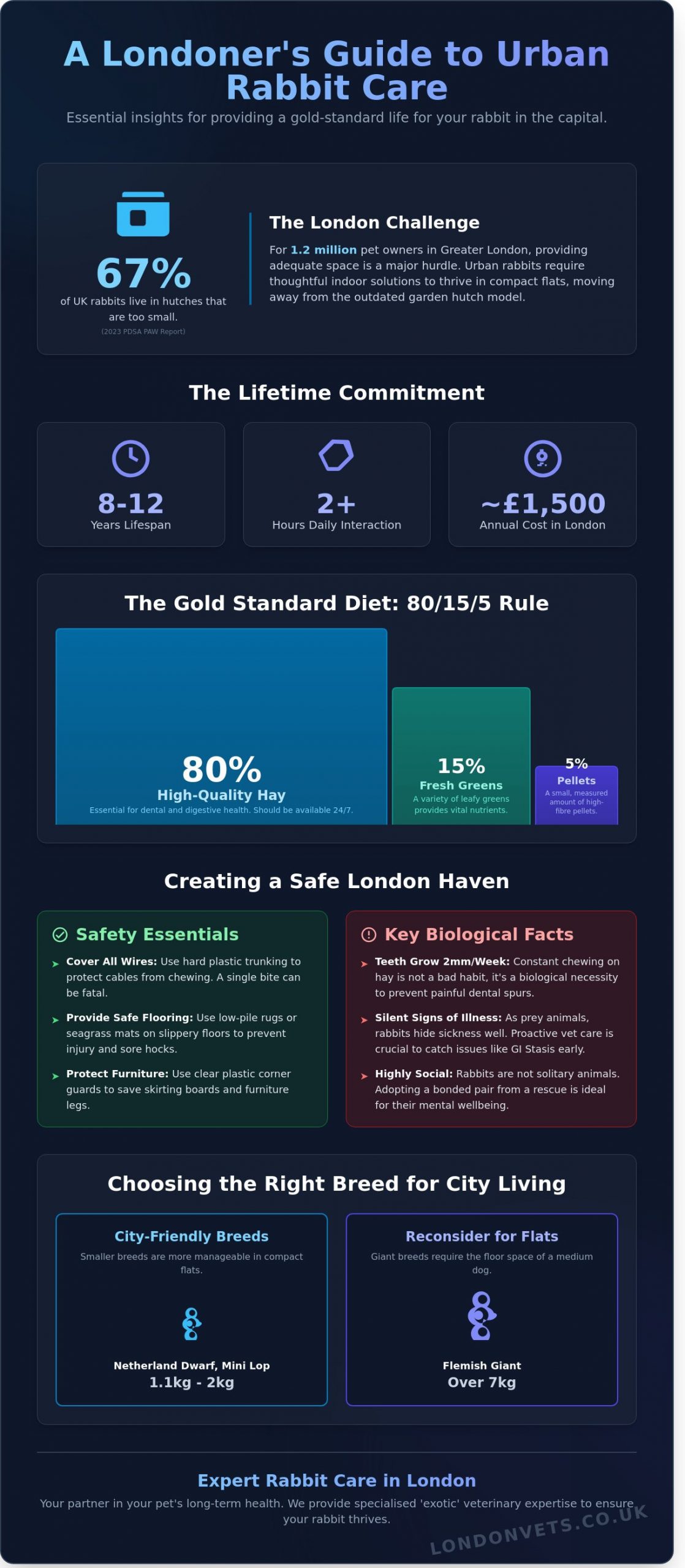
The 2023 PDSA Animal Wellbeing (PAW) Report found that nearly 67% of rabbits in the UK live in hutches that are too small, a challenge that’s magnified for the 1.2 million pet owners living in the compact quarters of Greater London. We know that providing a high quality of life for your bunny in the capital feels like a constant balancing act between limited square footage and the rising costs of city living. It’s perfectly natural to feel anxious about whether your garden-less flat can truly meet their complex needs. As an independent practice, we see these challenges every day. We believe every urban rabbit deserves a safe haven.
We’ll show you exactly how to provide the gold standard of care for your companion right here in London, from maximising indoor enrichment to identifying the specific local health risks that can impact urban rabbits. You’ll gain a clear understanding of how to protect your pet’s wellbeing while managing the estimated £1,500 annual cost of responsible rabbit ownership in the city. We’re going to explore essential space-saving habitat tips, local forage safety, and how to access the specialist veterinary support your rabbit needs to thrive in the heart of the capital.
Key Takeaways
- Learn how to effectively bunny-proof your London flat to create a safe, enriching environment for your long-eared companion.
- Discover the “silent” signs of illness in prey animals and why proactive preventative healthcare is essential for their long-term wellbeing.
- Master the 80/15/5 nutritional rule and find the best local sources for high-quality hay and fresh greens within the capital.
- Explore the benefits of specialised “exotic” veterinary expertise and how our tailored care plans make gold-standard treatment affordable.
- Understand the complex social needs and intelligent personality traits that make rabbits such unique and rewarding family members.
What is a Bunny? Understanding Your New Family Member
While the word “bunny” often evokes images of soft, juvenile creatures found in children’s stories, it’s actually an affectionate term for the Domestic rabbit. At our independent practice, we recognise that these animals are far more than just “cute” additions to a household. They possess complex cognitive abilities and a social hierarchy that requires a deep level of understanding from their owners. A bunny is an intelligent, sentient individual with a distinct personality that can range from cheeky and demanding to shy and affectionate.
South London professionals are increasingly choosing rabbits as companions. Residents in areas like Battersea and Greenwich often find that these animals fit well into an urban lifestyle. They are quiet, can be litter-trained, and don’t require the outdoor walking schedule that dogs do. However, they aren’t a “low-maintenance” option. A healthy bunny requires a significant commitment, often living between 8 and 12 years. You’ll need to dedicate at least 2 hours every day to social interaction and supervised exercise to ensure their mental wellbeing.
Our team sees many first-time owners who are surprised by how much space and attention these animals need. They aren’t pets to be left in a hutch at the bottom of the garden. They thrive when they’re treated as part of the family, ideally living indoors where they can interact with their humans. This level of integration allows you to witness their fascinating behaviours, such as “binkies,” which are joyful leaps and twists that signal a very happy pet.
Rabbit Biology 101 for New Owners
Understanding rabbit physiology is the first step toward providing a gold standard of care. Their digestive system is designed for a constant intake of fibre; 80% of their diet must consist of high-quality hay or fresh grass. This 24/7 grazing keeps their gut moving and prevents GI stasis, a life-threatening condition. Their teeth are equally unique, growing up to 2 millimetres every week. Without constant grinding on fibre, these teeth can develop painful spurs. Beyond digestion, their large ears and 360-degree vision make them highly sensitive to their environment, requiring a calm, predictable home atmosphere.
Choosing the Right Breed for London Living
Selecting the right breed is vital for harmony in a city flat. Mini Lops and Netherland Dwarfs are popular choices for Londoners because they typically weigh between 1.1kg and 2kg, making them manageable in smaller spaces. Conversely, giant breeds like the Flemish Giant can weigh over 7kg and require the same floor space as a medium-sized dog. We always encourage prospective owners to visit a London-based animal rescue centre. Adopting a bonded pair from a rescue not only gives a home to animals in need but also ensures your bunny has a constant companion, which is essential for this social species.
If you’re considering adding a rabbit to your South London home, our team is here to provide the clinical expertise and warm support you need. From nutritional advice to preventative healthcare, we view ourselves as your partner in your pet’s long-term health. We recommend booking a pre-purchase consultation to discuss the specific needs of your future family member.
The London Bunny Lifestyle: Space, Safety, and Urban Challenges
Living in the capital presents unique hurdles for rabbit owners. While the 2023 PDSA PAW Report indicates that 48% of UK rabbits now live primarily indoors, London’s specific architectural landscape requires a tailored approach. Whether you’re in a Victorian conversion in Fulham or a modern apartment in Canary Wharf, your bunny needs a curated environment to thrive. We see many families successfully transitioning to the “house bunny” lifestyle, which offers increased social interaction and protection from the elements, though it demands meticulous preparation of your living space.
Bunny-Proofing Your Urban Home
Your rabbit’s 28 teeth grow up to 2mm every single week, making chewing a biological necessity rather than a naughty habit. In a compact London flat, exposed cables and wooden skirting boards are prime targets. We recommend using hard plastic trunking for all electrical leads; a single bite can be fatal. To protect your rental deposit, consider fitting clear plastic corner guards to furniture legs. Flooring is equally vital. Rabbits lack paw pads, so slippery laminate or hardwood can cause “sore hocks” or spinal injuries during a panicked dash. Providing low-pile rugs or seagrass mats ensures they can perform their joyful “binkies” without losing traction. For more detailed advice on creating a suitable environment, the RSPCA rabbit care guide provides an excellent framework for indoor housing standards.
Outdoor Access in the City
London’s fox population is estimated at roughly 10,000 individuals, meaning urban gardens are never truly private. If your rabbit enjoys time on the grass, security is paramount. Standard chicken wire is insufficient against a determined predator; you need 1.2mm gauge weld-mesh. Never leave your pet unattended in communal gardens or squares, as the sudden sound of a siren or a passing bus can trigger a dangerous flight response. Noise levels in the city often peak above 80 decibels, which is stressful for a prey species with such sensitive hearing. You should also audit your garden for toxic plants like ivy, foxglove, or ragwort, which frequently sprout in untended city soil. If you’re unsure about your garden’s safety, our team can help you assess your pet’s lifestyle needs during a routine wellness check.
Temperature regulation is a critical but often overlooked urban challenge. The London “urban heat island” effect means city temperatures stay significantly higher than the surrounding countryside. During the record-breaking 40°C heatwave in July 2022, we treated numerous cases of heatstroke. Rabbits cannot sweat and begin to struggle once ambient temperatures exceed 25°C. In a top-floor flat, this can happen quickly. We suggest using ceramic tiles for cool lounging spots and keeping frozen water bottles wrapped in towels available during the summer months. Providing a “safe zone” or home base, perhaps a quiet corner with a darkened hideaway, allows your bunny to retreat when the city buzz or the midday sun becomes too much.
Essential Health Milestones: Preventative Care in the Capital
Preventative healthcare is the cornerstone of a long, happy life for your pet. In the wild, rabbits are prey animals. This means they’ve evolved to hide signs of illness or pain until a condition is quite advanced. By the time a bunny looks unwell, the situation is often an emergency. At our independent London surgeries, we focus on spotting these “silent” indicators during regular wellness exams. We see it as our collective responsibility to act as your pet’s voice. Our clinicians look for subtle changes in weight, dental alignment, and gut motility that might escape even the most attentive owner’s eye.
Our 24-hour emergency support is always standing by, but our goal is to prevent those urgent visits through proactive care. During a typical 20-minute consultation, we examine the scent glands, check for molar spurs, and assess body condition scores. Many owners believe that because their pet lives indoors in a city apartment, they’re safe from traditional “countryside” diseases. This is a dangerous misconception. Local vectors like fleas, mosquitoes, and even contaminated hay supplies can carry life-threatening viruses into the heart of London. Regular health checks at our Streatham Hill surgery provide a consistent baseline for your pet’s health. We recommend a full clinical assessment every 6 to 12 months to ensure your companion stays on the right track. For more detailed advice on maintaining your pet’s environment, you can refer to this comprehensive rabbit care guide from the RWAF.
Vaccinations: RVHD and Myxomatosis
Vaccinations are non-negotiable for London rabbits. Rabbit Viral Haemorrhagic Disease (RVHD1 and the more recent RVHD2 strain) can be fatal within 48 hours of infection. Myxomatosis is equally devastating, often causing prolonged suffering. Even house-dwelling pets are at risk because biting insects easily enter city homes. We follow a strict annual vaccination protocol to provide 365 days of protection. Our team uses the latest combined vaccines to ensure your bunny receives maximum immunity with a single, gentle injection during their annual check-up. This proactive approach is the only way to safeguard against these highly contagious pathogens.
Neutering and Long-term Health
Neutering is about much more than preventing unwanted litters. For female rabbits, it’s a life-saving procedure. Data shows that up to 80% of unspayed females develop uterine cancer by the age of 4. Spaying eliminates this risk entirely, granting your pet a much higher chance of reaching their senior years. For males, neutering significantly reduces aggressive or territorial behaviours, such as spraying or biting. This makes them much better companions for both humans and other rabbits. Most procedures take place when the rabbit is between 4 and 6 months old. You can book a pre-surgical consultation at our Streatham Hill surgery to discuss the process. We use advanced monitoring equipment and tailored anaesthesia protocols to ensure every patient remains safe and comfortable throughout their stay with us.
Diet and Behaviour: Keeping Your South London Rabbit Thriving
Feeding your pet correctly is the most effective way to prevent costly veterinary interventions. We recommend the 80/15/5 rule as the gold standard for nutritional health. This means 80% of their intake must be high-quality hay or fresh grass. The remaining 15% should consist of fresh leafy greens, while the final 5% is reserved for high-fibre pellets. For owners in South London, sourcing these components is straightforward. Local farmers’ markets in areas like Brixton, Marylebone, or Crystal Palace provide excellent access to pesticide-free kale, spring greens, and fresh herbs like parsley and mint.
Companionship is just as vital as nutrition. Rabbits are highly social creatures that thrive on interaction. The Rabbit Welfare Association & Fund (RWAF) states that rabbits kept in pairs or groups are significantly less likely to suffer from stress-related illnesses. A lonely pet can become withdrawn or even aggressive. We always encourage owners to consider a bonded pair to ensure their emotional wellbeing is supported when you aren’t at home. Seeing two friends groom each other is a sign of a truly content household.
Feeding for Dental and Gut Health
Hay isn’t just bedding; it’s the engine of your rabbit’s health. Their teeth grow continuously, sometimes by as much as 3mm every single week. Constant chewing on long-stem hay provides the necessary abrasion to keep teeth at a safe length. We strongly advise against “muesli” style foods. These mixes allow for selective feeding, where the bunny only eats the sugary, starchy pieces. This habit leads to painful dental spurs and dangerous digestive slowdowns. Stick to uniform, high-fibre nuggets to ensure every mouthful is balanced.
Interpreting Bunny Body Language
Understanding what your pet is trying to tell you builds a deeper bond and helps you spot health issues early. A happy bunny will often express their joy through a “binky”, which is a sudden, energetic twist and jump in the air. If you see your pet perform a “bunny flop”, where they suddenly roll onto their side and lie still, don’t be alarmed. This is the ultimate sign of relaxation and trust in their environment. It shows they feel completely safe in your care.
However, you must also recognize signs of distress. Thumping a hind leg is a loud, clear warning that they feel threatened or annoyed. More subtle signs of pain include sitting hunched up, squinting their eyes, or refusing a favourite treat. Because rabbits are prey animals, they hide illness until it’s often quite advanced. If your pet stops eating or passing droppings for more than six hours, it’s a medical emergency. Our independent practice provides 24-hour support to ensure you always have access to expert help when these critical situations arise.
Maintaining this balance of diet and social interaction creates a foundation for a long, healthy life. If you’re looking for tailored advice on your pet’s specific nutritional needs, we’re here to help. Register for our London Rabbit Plan to access comprehensive health checks and professional dietary consultations as part of our dedicated care package.
Expert Rabbit Care at London Veterinary Surgeries
Choosing a vet for your small furry companion shouldn’t feel like a gamble. At London Veterinary Surgeries, we’ve spent the last 20 years refining our approach to exotic pet medicine. Because we’re an independent, vet-owned practice, our clinical team has the autonomy to prioritise your pet’s welfare over corporate profit margins. This independence allows us to invest in the specific equipment and training necessary for high-level lagomorph care. We understand that a bunny requires a different medical perspective than a dog or a cat; their physiology is delicate and their symptoms are often subtle.
Our South London animal hospital acts as a sanctuary for these sensitive animals. We’ve designed our facilities to minimise stress, ensuring a calm environment from the moment you walk through our doors. Providing 24-hour emergency support is a cornerstone of our commitment to the local community. If your pet stops eating at 3:00 am, you won’t be redirected to a distant call centre. You’ll have access to our dedicated emergency team who understand the urgency of conditions like GI stasis. This constant availability provides the peace of mind that London pet owners deserve.
Our Bunny VIP Health Plan
Preventative medicine is the most effective way to ensure a long, happy life for your pet. Our Bunny VIP Health Plan simplifies this process by bundling essential treatments into a manageable monthly subscription. For just £14.50 per month, your pet receives comprehensive protection that would cost significantly more if purchased individually. We’ve already welcomed over 20,000 pets into our health schemes, proving that Londoners value both quality and affordability. The plan includes:
- Annual vaccinations against Myxomatosis, VHD1, and VHD2.
- Bi-annual health checks with a vet or qualified nurse to monitor weight and dental health.
- Year-round parasite prevention tailored to the specific risks in urban London.
- Exclusive discounts on dental procedures and long-term medications.
Joining is a straightforward process that takes less than five minutes online. By spreading the cost, you ensure your bunny never misses a vital health milestone. These regular check-ups allow us to catch 85% of potential health issues before they become life-threatening emergencies. It’s about proactive care that fits seamlessly into your London lifestyle. We believe that world-class veterinary medicine should be accessible to every family in our city.
Specialised Rabbit Services
Rabbits are masters at hiding pain, which is why advanced diagnostics are vital. Our surgeries are equipped with high-definition ultrasound and digital X-ray machines specifically calibrated for smaller patients. We can identify bladder stones or heart conditions with incredible precision. If surgery is required, we offer minimally invasive keyhole options. Using 5mm laparoscopes reduces recovery time by up to 40% compared to traditional open surgery. This is particularly beneficial for delicate species where reducing post-operative stress is a clinical priority.
Dental health remains the most frequent reason for veterinary visits among small furries. Our specialist rabbit dentistry suite features high-speed burrs and endoscopic cameras to treat molar spurs and root issues. We don’t just treat the symptoms; we work with you to adjust diets and prevent recurrence. You can book a consultation at our South London animal hospital today to discuss your pet’s specific needs. Whether it’s a routine check or a complex surgical referral, our team provides a gold standard of care that remains accessible and empathetic.
Give Your Urban Rabbit the Best Start in London
Providing a high standard of care in the city requires more than just a hutch. It’s about understanding specific needs, from managing urban space constraints to establishing a strict routine of preventative healthcare. We’ve spent over 20 years supporting families across South London. Our team offers a stable hand and expert clinical knowledge to keep your long-eared friends thriving. As an independent, vet-owned practice, we prioritise personal connections and tailored treatment plans that respect your pet’s unique personality. Whether it’s a routine check-up or a late-night worry, our 24-hour emergency care ensures you’re never alone in a crisis. Your bunny is a vital member of your family. They deserve the reassurance of a dedicated local guardian who understands the nuances of London life.
Protect your rabbit with our Bunny VIP Plan today
We look forward to welcoming you into our community, where your peace of mind remains our absolute priority.
Frequently Asked Questions
Do bunnies in London really need vaccinations if they live indoors?
Yes, every indoor bunny requires annual vaccinations to protect against Myxomatosis and RHD1 and RHD2. These viruses aren’t just spread by direct contact; biting insects like fleas or mosquitoes can carry them through open windows even in high-rise flats. Research from the Rabbit Welfare Association & Fund shows these diseases are often fatal without protection. We recommend a single annual injection to provide comprehensive coverage for your pet’s health and safety.
How much does it cost to neuter a rabbit in London?
Neutering costs in London typically range from £150 to £280 depending on the sex of your pet and specific surgical requirements. At our independent practice, this procedure includes a full pre-operative assessment and post-operative checks to ensure a gentle recovery. We provide transparent pricing during your initial consultation so you can plan for your pet’s long-term wellbeing without any hidden surprises or extra fees.
Can I keep a bunny in a flat without a garden?
You can absolutely keep a bunny in a London flat without garden access. Over 65% of our city clients successfully house “house rabbits” by providing a minimum of 12 square feet of living space plus daily exercise time. You’ll need to pet-proof your home by covering electrical cables and providing enrichment like tunnels. Indoor rabbits often form closer bonds with their families because they spend more time interacting with people daily.
What should I do if my bunny stops eating?
If your pet stops eating for more than 12 hours, treat it as a medical emergency and contact us immediately. This often indicates Gastrointestinal (GI) Stasis, a condition where the digestive system slows down or stops. Since 80% of a rabbit’s diet should be hay, any sudden loss of appetite is serious. Our 24-hour emergency support ensures your pet receives the urgent care and gut stimulants they need to recover.
How do I protect my bunny from foxes in London?
Protecting your pet from London’s urban fox population requires a secure, high-quality hutch with 1.2mm thick weld mesh rather than thin chicken wire. Foxes are determined predators that can chew through wood or dig under enclosures. We recommend using heavy-duty bolts instead of simple turn-buttons on all doors. If your pet lives outdoors, ensure their run is fully enclosed with a mesh floor to prevent 100% of digging attempts.
Is a “bunny” different from a rabbit?
There’s no biological difference between the two terms; both refer to the same species, Oryctolagus cuniculus. Taxonomists categorised this single species in 1758. One is simply an affectionate name often used for younger animals or as a pet name. Regardless of the label you use, they require the same high standard of clinical care. Our team treats every rabbit with professional expertise, ensuring they live long, healthy lives.
What is the Bunny VIP Plan at London Veterinary Surgeries?
Our Rabbit VIP Plan is a comprehensive preventative healthcare package designed to make gold-standard care affordable. For a fixed monthly fee, it covers annual vaccinations, bi-annual health checks, and a 10% discount on over 15 other treatments. This plan ensures your pet receives regular professional attention, allowing us to catch potential health issues early. It’s our way of partnering with you to provide the best possible life for your companion.
How often should I take my rabbit for a health check?
We recommend a professional health check at least every 6 months. Because rabbits are prey animals, they’re experts at hiding signs of illness or pain until a condition is advanced. During these visits, we examine their teeth, weight, and general condition to ensure they stay in peak health. Regular check-ups help us identify 80% of potential health issues before they become life-threatening for your pet.




© London Veterinary Surgeries