
Date: 07 Mar 2026
What if you could forecast your pet’s healthcare costs in London for the next year, removing the financial guesswork that so often comes with being a devoted owner? We know that loving a pet in this city comes with unique pressures. You’re balancing a demanding lifestyle and the high cost of living with the unwavering desire to provide the absolute best for your furry family member. The worry about unexpected vet bills or finding trusted care in an emergency is a real and constant concern for many.
This is precisely why we’ve created this guide. We’re here to give you the clarity and confidence you need to master your pet’s wellbeing. We’ll demystify proactive animal health care, showing you how to manage city-specific risks and make informed financial decisions without ever compromising on quality. Together, we’ll explore everything from essential preventative treatments and the true difference between pet insurance and health plans, to securing gold-standard 24/7 emergency support from London’s leading independent vets.
Key Takeaways
- Learn how to shift from reactive “sick care” to proactive wellness, ensuring your pet thrives with a modern approach to veterinary medicine.
- Master the essential vaccination and year-round parasite control protocols specifically required to protect your pet from common UK diseases.
- Identify and manage London-specific health threats, including why the South East is a lungworm hotspot and how to safely navigate urban fox encounters.
- Clarify the key differences between pet insurance and health plans to find the most cost-effective way to budget for comprehensive animal health care with a trusted vet.
What is Animal Health Care? Moving Beyond Reactive Medicine
For generations, a visit to the vet was often prompted by an obvious problem: a sudden limp, a worrying cough, or a change in appetite. This reactive approach, or “sick care,” addresses issues only after they’ve taken hold. At our independent London practice, we believe true animal health care is a far more profound commitment. It’s a continuous, proactive partnership between you, your pet, and our clinical team, dedicated to nurturing a lifetime of wellbeing. This modern philosophy is at the core of Veterinary medicine, which has evolved to prioritise prevention as the most effective path to a longer, happier life for your companion.
The fundamental shift is from treating sickness to cultivating wellness. Think of it as building a strong foundation of health brick by brick, rather than repairing a crumbling wall. Proactive monitoring allows us to identify subtle changes in your pet’s health long before they become serious, often painful, and expensive problems. You are your pet’s most important advocate; you see them every day and are the first to notice when something isn’t quite right. Our role is to combine your invaluable insights with our medical expertise to create a complete picture of their health.
The Four Pillars of Comprehensive Wellness
A truly holistic approach to your pet’s health rests on four essential pillars. We integrate these into every wellness plan to ensure we are caring for the whole animal, not just treating isolated symptoms. This comprehensive framework is the gold standard for preventative care.
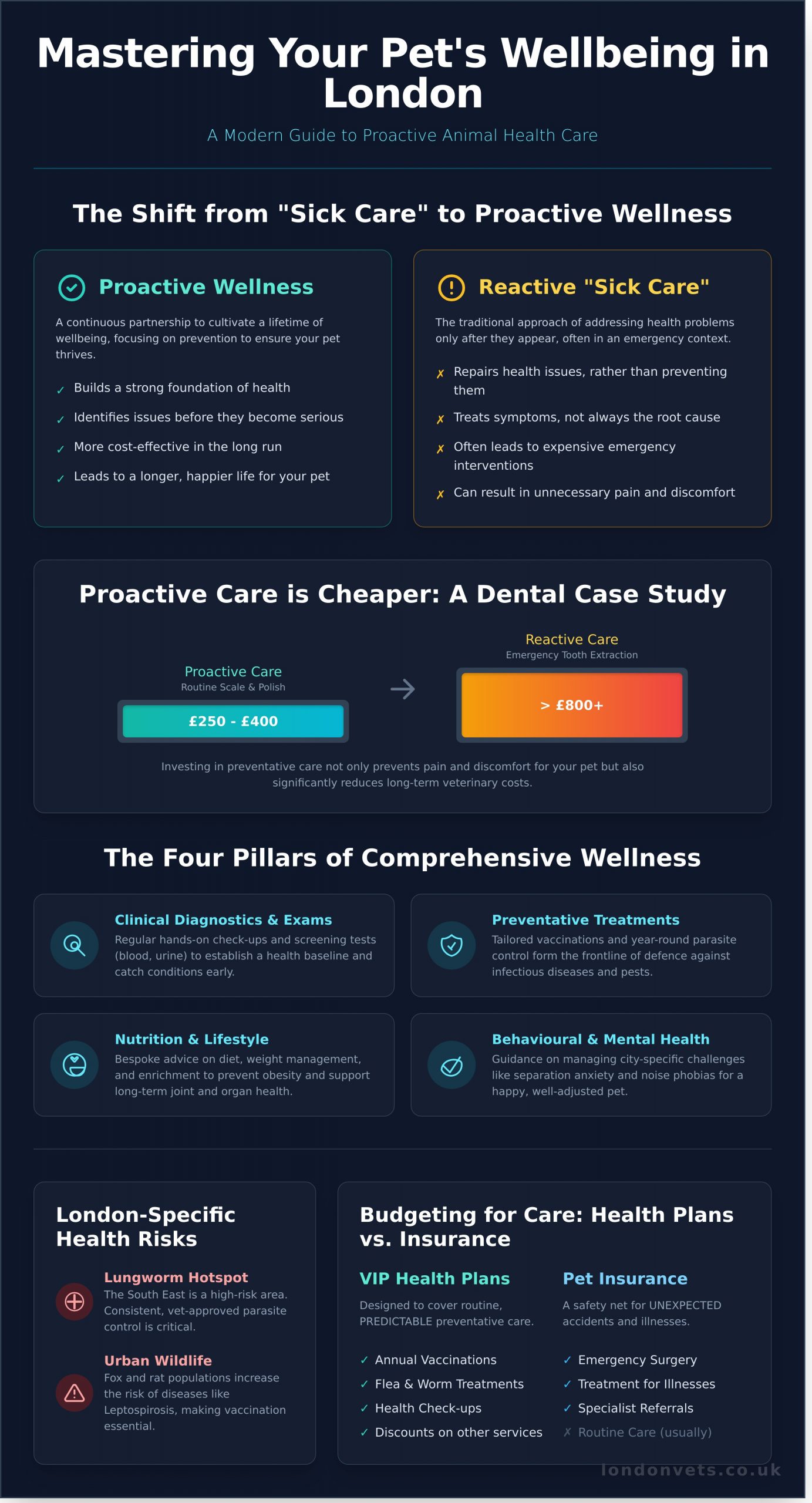
- Clinical Diagnostics & Regular Examinations: A hands-on physical exam at least once a year gives us a vital baseline. We combine this with diagnostic tools like blood tests and urine analysis to screen for underlying conditions like kidney disease or diabetes, which often show no early symptoms.
- Preventative Treatments: This is the frontline of defence. A tailored vaccination schedule protects against serious infectious diseases, while year-round parasite control is essential for preventing fleas, ticks, and worms that thrive in London’s parks and green spaces.
- Nutritional & Lifestyle Management: What your pet eats and how they exercise directly impacts their long-term health. We provide bespoke advice on diet, weight management, and enrichment to prevent obesity and support joint health.
- Behavioural & Mental Health Support: Anxious or stressed pets are not happy pets. For our urban companions, the challenges of city living can be significant. We offer gentle guidance on managing separation anxiety, noise phobias, and other behavioural issues to ensure their mental wellbeing is as robust as their physical health.
Why Proactive Care is Cheaper than Emergency Treatment
Investing in preventative care isn’t just an act of love; it’s a financially sound decision. The logic is simple: early detection and management of health issues are consistently less expensive than emergency intervention. A condition identified in its initial stages can often be managed with medication or minor lifestyle changes, costing a fraction of the complex surgery or intensive care required later on.
Consider a clear case study: dental hygiene. A routine professional scale and polish to prevent periodontal disease might cost between £250 and £400. This proactive step prevents pain and infection. In contrast, waiting until a pet has a severely abscessed tooth that requires emergency anaesthesia and surgical extraction could result in a bill exceeding £800, not including the cost of antibiotics and follow-up care. This same principle applies to everything from managing arthritis to detecting heart murmurs. Regular check-ups catch problems early, reducing your pet’s discomfort and your long-term veterinary spend significantly.
The Essentials of Preventative Healthcare for London Pets
Proactive health management is the cornerstone of a long, happy life for your pet, especially within the unique environment of London. It’s about more than just reacting to illness; it’s a commitment to their daily wellbeing. A robust preventative strategy rests on four key pillars: vaccinations, parasite control, dental hygiene, and weight management. Mastering these areas provides a powerful defence against common urban health threats and forms the foundation of excellent animal health care.
Vaccinations and Boosters: Your First Line of Defence
A tailored vaccination plan is your pet’s first and most critical shield. Core vaccines for dogs protect against potentially fatal diseases like parvovirus, distemper, and infectious hepatitis. In London, we also consider leptospirosis a core vaccine due to the urban fox and rat populations. Beyond these, lifestyle vaccines are essential. Does your dog attend daycare in Islington or socialise frequently on Clapham Common? A kennel cough vaccine is non-negotiable. For cats, core jabs cover feline panleukopenia, herpesvirus, and calicivirus, with feline leukaemia (FeLV) recommended for any cat with outdoor access. Veterinary science continuously evolves, and we anticipate that by 2026, guidelines will further refine puppy and kitten schedules to offer even more precise protection from their very first weeks.
This isn’t just about individual immunity. In densely populated boroughs like Lambeth or Wandsworth, high vaccination rates create “herd immunity.” When over 90% of the local pet population is immunised, it significantly reduces the spread of disease, protecting vulnerable animals who are too young or medically unable to be vaccinated.
Parasite Prevention in the Urban Jungle
London’s parks, gardens, and even our centrally heated homes create a year-round haven for pests. Fleas are a constant threat, while ticks are increasingly found in green spaces like Richmond Park and Hampstead Heath. The most serious urban parasite concern is often lungworm, carried by the slugs and snails in our gardens. Relying on over-the-counter treatments can provide a false sense of security. A 2022 veterinary study in the South East confirmed that some flea populations show resistance to older insecticides common in shop-bought products. These treatments often lack the broad-spectrum efficacy needed to tackle the specific combination of parasites your pet might encounter. A cat living in a Battersea high-rise has a vastly different risk profile from a terrier who explores Epping Forest. Our vets can help you design a personalised parasite prevention plan that provides comprehensive, prescription-strength protection tailored to your companion’s specific London lifestyle.
Often overlooked, dental disease is a silent crisis affecting a huge number of pets. By the age of three, over 80% of dogs and 70% of cats in the UK show signs of periodontal disease. This is far more than just bad breath; it’s a chronic, painful condition that can lead to tooth loss and systemic infections impacting the heart and kidneys. Preventing such discomfort is a fundamental part of an owner’s legal duty of care to their animals. Regular check-ups and a consistent at-home cleaning routine are vital components of your pet’s long-term health plan.
Finally, we must address the pet obesity epidemic. The PDSA’s 2023 PAW Report revealed that 46% of UK dogs are now overweight or obese. City living, with its smaller apartment spaces and sometimes limited opportunities for off-lead exercise, can make weight management a challenge. This extra weight places enormous strain on your pet’s joints, leading to arthritis, and dramatically increases their risk of developing diabetes and heart disease. For some breeds, this can shorten their lifespan by as much as two years. The most effective first step is simple: use a digital scale to measure your pet’s food precisely at every meal. This single change can make all the difference to their future health and vitality.
The London Factor: Navigating Unique Urban Health Risks
Living with a pet in London offers incredible experiences, from walks in our beautiful Royal Parks to finding a new favourite dog-friendly café. However, this unique urban environment also presents specific health challenges that require a vigilant and informed approach. As your local veterinary team, we are here to help you navigate these risks, ensuring your companion enjoys a safe and healthy city life. A proactive strategy is the cornerstone of excellent animal health care in a bustling metropolis like ours.
The city’s density, climate, and wildlife create a distinct set of potential health issues, from invisible parasites to environmental stressors. Understanding these London-specific factors is the first step towards protecting the wellbeing of your pet.
Lungworm and the South London Environment
London and the South East have become known hotspots for Lungworm (Angiostrongylus vasorum), a parasite that can cause serious, and sometimes fatal, disease in dogs. Our mild, damp climate creates a perfect breeding ground for slugs and snails, which act as hosts for the parasite. Dogs can become infected by accidentally or intentionally ingesting them. Symptoms are often subtle and easily missed, including a persistent cough, lethargy, or unusual bleeding, making preventative care absolutely critical. Standard over-the-counter wormers do not protect against lungworm; a prescription-strength, monthly preventative from our team is the only guaranteed way to keep your dog safe.
Safety in the City: From Traffic to Toxins
Navigating London’s streets requires constant awareness. A secure lead and a well-fitted harness are non-negotiable for keeping your dog safe from traffic. Beyond the obvious dangers, our pavements can hide less visible threats. Common urban toxins include antifreeze leaking from cars, which is highly poisonous but has a sweet taste that attracts pets, and rock salt used during winter, which can burn paws and cause illness if licked off. Discarded takeaway food also poses a risk, with high-fat items potentially leading to pancreatitis. In a city of over 9 million people, it’s also tragically easy for a pet to get lost. Microchipping is a legal requirement for dogs (since 2016) and cats (from June 2024) and is your pet’s best chance of being returned home safely, but preventing an escape in the first place is crucial. For total peace of mind, ensuring your home’s locks are secure is a simple step, and you can check out London Locks for professional services in the East London area. The cost of treating an injury from an accident can be substantial, which is why comprehensive Pet insurance is something we strongly advise all owners to consider for peace of mind.
Beyond parasites and physical hazards, the urban landscape presents other challenges. The constant background noise of sirens and traffic, combined with crowded public spaces, can cause significant stress and anxiety for sensitive pets. This is often compounded by life in smaller homes or flats with limited outdoor space. We can help you create enrichment strategies, from puzzle feeders to safe socialisation, that help your pet cope with the sensory demands of city living. Furthermore, London’s air quality, particularly the levels of particulate matter near busy roads, can aggravate or contribute to respiratory conditions, especially in flat-faced (brachycephalic) breeds like French Bulldogs and Pugs. Choosing walking routes through parks and away from congested streets can make a real difference to their long-term respiratory health.
Finally, our thriving urban fox population, while a beloved part of London’s character, can be a source of health risks. They are significant carriers of parasites like sarcoptic mange, which can be transmitted to dogs, causing intense itching and skin infections. By being aware and prepared, we can ensure these unique elements of London life don’t compromise your pet’s wellbeing. A tailored preventative animal health care plan is your strongest defence.
Budgeting for Care: VIP Health Plans vs. Pet Insurance
Providing the gold standard of care for your pet in London requires a smart financial strategy. Many owners feel confused by the options available, often believing that pet insurance covers everything. The reality is that comprehensive animal health care requires two distinct tools: a health plan for predictable, routine treatments and insurance for unexpected emergencies. Think of it like this: your health plan is for your pet’s annual MOT and servicing, while insurance is the breakdown cover you hope you’ll never need.
Understanding how they work together is the key to managing costs without compromising on your companion’s wellbeing, especially given the “London Premium” that can increase vet bills by up to 25% compared to other UK regions. As your local, independent veterinary partner, we want to bring clarity to this crucial aspect of pet ownership.
Understanding the VIP Health Plan
Our VIP Health Plan isn’t insurance. It’s a simple, affordable subscription designed to spread the cost of all the essential preventative care your pet needs throughout the year. For a fixed monthly fee, you get peace of mind knowing their core health needs are covered. A typical plan for a London dog can save you over £185 annually on routine costs.
- What’s included: Annual vaccinations and health checks, a full year’s supply of flea and worming treatments, microchipping, and discounts on other services like neutering and dental care.
- The peace of mind factor: Many plans, including ours, offer unlimited nurse consultations and access to 24/7 vet helplines, ensuring expert advice is always just a phone call away.
Choosing the Right Insurance for London Living
While a health plan covers the expected, insurance protects you from the financial shock of an accident or sudden illness. A procedure like a TPLO surgery for a ruptured cruciate ligament can cost upwards of £6,000 in a London specialist centre. This is where a robust insurance policy is invaluable. When looking for a policy for 2026, consider these points:
- Lifetime vs. Maximum Benefit: A Maximum Benefit policy sets a fixed limit per condition. Once you reach it, that condition is no longer covered. A Lifetime policy renews the financial limit each year, making it essential for breeds prone to chronic conditions like diabetes or allergies, such as Labradors or West Highland Terriers.
- Why you need both: A VIP plan manages your yearly budget for essentials, while insurance acts as a critical safety net. Together, they form a complete financial shield for your pet’s health, ensuring you never have to choose between your finances and the best course of treatment. This dual approach is the bedrock of responsible modern animal health care.
- Reducing premiums: Consider a slightly higher excess, check for multi-pet discounts (often 5-10%), and always ensure your pet’s microchip details are up to date, as some insurers offer small reductions for this.
By combining a preventative health plan with the right insurance, you can confidently manage the costs of pet ownership in the capital. It’s a proactive approach that ensures your beloved family member receives the exceptional care they deserve, from their first kitten or puppy check-up to their golden years. Explore how our VIP Health Plans can save you money and provide peace of mind today.
The Independent Advantage: Why Your Choice of Clinic Matters
Choosing a veterinary practice in London is one of the most significant decisions you’ll make for your pet. In a city with countless options, the distinction between a corporate chain and an independent, vet-owned clinic can profoundly impact your pet’s long-term wellbeing. The core difference often lies in continuity of care. At a large chain, you may see a different vet at each visit, which can make it challenging to build a trusting relationship. An independent practice, however, fosters a partnership where your dedicated vet understands your pet’s unique history, personality, and health patterns. This familiarity is invaluable for early diagnosis and effective, personalised treatment.
For over 20 years, London Veterinary Surgeries has been an integral part of the South London community. We are not just a clinic; we are a dedicated team of professionals who live in and love the communities we serve. This deep-rooted connection allows us to provide a level of personal commitment that is simply different. When your pet is unwell, especially during an emergency, the last thing you need is the stress of being referred to an unfamiliar out-of-hours facility. Our 24-hour care and on-site hospitalisation mean that should your pet need us, they will remain under our roof, looked after by the team they already know and trust.
Award-Winning Care in the Heart of London
Our Streatham Hill veterinary hospital has been a safe haven for pets since 2006, equipped with advanced diagnostic tools like ultrasound and keyhole surgery to ensure the highest standard of care. Because we are proudly vet-owned and operated, every decision we make is guided by clinical excellence, not corporate targets. This independence ensures our recommendations for your pet’s animal health care are always based purely on what is medically best for them, providing you with complete peace of mind.
Your Next Steps to Better Pet Health
Transitioning to a new vet should be a smooth and reassuring process. When you’re ready to join us, we’ll guide you every step of the way. For your first consultation, we recommend you come prepared to build a comprehensive picture of your pet’s health.
- Bring Previous Records: Any vaccination history, notes on past illnesses, or current medications will help us get up to speed quickly.
- Prepare Your Questions: Ask us about our approach to preventative care, our emergency protocols, or anything else that’s on your mind. We believe in open communication.
- Discuss Your Pet’s Lifestyle: Tell us about their diet, exercise routine, and temperament. The more we know, the better we can tailor our care.
To make proactive care even simpler, you can explore and register for one of our VIP Health Plans online, which helps spread the cost of routine treatments throughout the year. We invite you to experience a more personal, dedicated approach to veterinary medicine. Join the London Veterinary Surgeries family today.
Your Partner in Proactive Pet Care for 2026 and Beyond
The future of your pet’s wellbeing in London isn’t a matter of chance; it’s a commitment to proactive care. As we’ve explored, shifting from reactive treatment to a preventative strategy is the single most effective way to manage urban health risks and ensure a long, vibrant life for your companion. This forward-thinking approach to animal health care is the foundation of our philosophy.
As a multi-award winning independent practice, we are dedicated to being your local partner in this journey. It’s a responsibility trusted by over 20,000 London pet owners, who rely on our team and our unwavering commitment to 24-hour emergency care, available 7 days a week. We make gold-standard care accessible and affordable.
Take the definitive step towards securing their health for years to come. Protect your pet with our VIP Health Plan – Join Today and let’s build a healthier future together.
Frequently Asked Questions
What is the most important part of animal health care for a new pet owner?
The most important step is registering with a local vet you trust. This initial consultation allows us to create a personalised preventative plan covering vaccinations, microchipping, and parasite control right from the start. Building this relationship early provides a foundation for your pet’s lifelong wellbeing and gives you a dedicated partner in their complete animal health care journey, ensuring they have the best possible start in their new home.
How often should my pet see a vet for a health check in London?
Healthy adult dogs and cats should have a comprehensive health check at least once a year. For puppies and kittens, we recommend visits every 3-4 weeks until their initial vaccination course is complete. Senior pets, typically those over 7 years old, benefit greatly from six-monthly check-ups. These regular visits are vital for early detection of potential health issues and keeping their preventative care up to date.
Is lungworm really a big problem for dogs in South London?
Yes, lungworm is a genuine and increasing risk for dogs across Greater London, with a high concentration of cases reported in South London boroughs. A 2022 survey confirmed the parasite’s prevalence in the region. Since it’s spread by common slugs and snails found in our parks and gardens, consistent, year-round preventative treatment is the only reliable way to protect your dog from this potentially fatal parasite.
What is the difference between a pet health plan and pet insurance?
A pet health plan covers the expected, routine preventative treatments, while pet insurance is for unexpected accidents and illnesses. Our health plans are designed to spread the cost of essential services like annual vaccinations, flea treatments, and worming. Insurance provides a crucial safety net for unforeseen events, such as emergency surgery or diagnostics. The two work together to provide complete financial and medical peace of mind.
Do indoor cats in London still need flea and worm treatment?
Yes, we strongly recommend regular flea and worm treatment for all cats, even those living exclusively indoors in London. Flea eggs can easily be carried into your home on shoes or clothing, and certain types of worms can be transmitted by insects that get inside. Consistent prevention is a simple and effective way to ensure your indoor companion remains comfortable, healthy, and free from parasites in their urban environment.
How much does an average vet consultation cost in London?
An average initial vet consultation in London typically costs between £60 and £90. This fee covers a thorough physical examination by one of our experienced veterinarians and a detailed discussion about your pet’s health. Please remember this cost is for the consultation itself. Any further diagnostics, medication, or treatments would be additional, and we will always provide a clear estimate before proceeding.
What should I do if my pet has a health emergency in the middle of the night?
If your pet has a health emergency at night, you must contact a 24-hour emergency veterinary service immediately. As a dedicated local practice, we partner with a trusted 24/7 emergency hospital to ensure your pet receives seamless, gold-standard care at any hour. We recommend saving their number in your phone so you can get immediate advice and they can prepare for your arrival in a critical situation.
Are independent vets more expensive than large corporate chains?
The pricing between independent vets and corporate chains is often very similar, so one isn’t automatically more expensive than the other. The value of an independent, owner-operated model is recognized across healthcare; for example, the patient-focused approach is a cornerstone for practices like The Village GP Black Rock in human medicine. At our independent practice, we focus on providing highly personalised and continuous care, allowing you to build a lasting relationship with our team. We believe this tailored approach offers exceptional value, and we are always transparent about our fees, prioritising your pet’s wellbeing above all else.


© London Veterinary Surgeries