
Date: 11 Mar 2026
Last Tuesday, a new dog owner from our Islington community called us. She was feeling quite anxious after receiving two spaying quotes for her Cocker Spaniel puppy that were over £250 apart, and she didn’t know why. It’s a story we hear often, and we completely understand that navigating the costs of veterinary care in London can be a source of real stress, especially when you’re unsure what those prices actually include.
That’s precisely why we’ve created this transparent 2026 guide to answer the crucial question: how much to spay a dog? We promise to give you a clear, honest breakdown of the costs, from traditional surgery to the advanced benefits of our keyhole procedures, so you can make an informed choice for your beloved pet. Together, we’ll explore average prices across the capital, demystify the options available, and show you how our Pet Health for Life plans can make this vital step in your dog’s care both affordable and stress-free.
Key Takeaways
- Understand the key factors that determine how much to spay a dog in London, including why city prices differ from the UK average.
- Compare the benefits and cost implications of traditional surgery versus advanced keyhole (laparoscopic) procedures for a gentler recovery.
- Learn how your dog’s specific breed and weight directly influence the surgical plan and final quote for their procedure.
- Discover practical advice for managing your dog’s post-operative healing in an urban environment and find ways to budget for their essential care.
Understanding the Cost of Dog Spaying in London
Deciding to spay your dog is one of the most responsible choices you can make for her long-term health and wellbeing. Clinically known as an ovariohysterectomy, this routine surgical procedure involves removing the ovaries and uterus, which prevents unwanted pregnancies and offers significant preventative health benefits. When London pet owners first ask how much to spay a dog, they often find that prices are higher than the UK national average. This difference directly reflects the capital’s unique operational costs, from higher rents for state-of-the-art facilities to the salaries required to retain our city’s highly skilled veterinary surgeons and nurses.
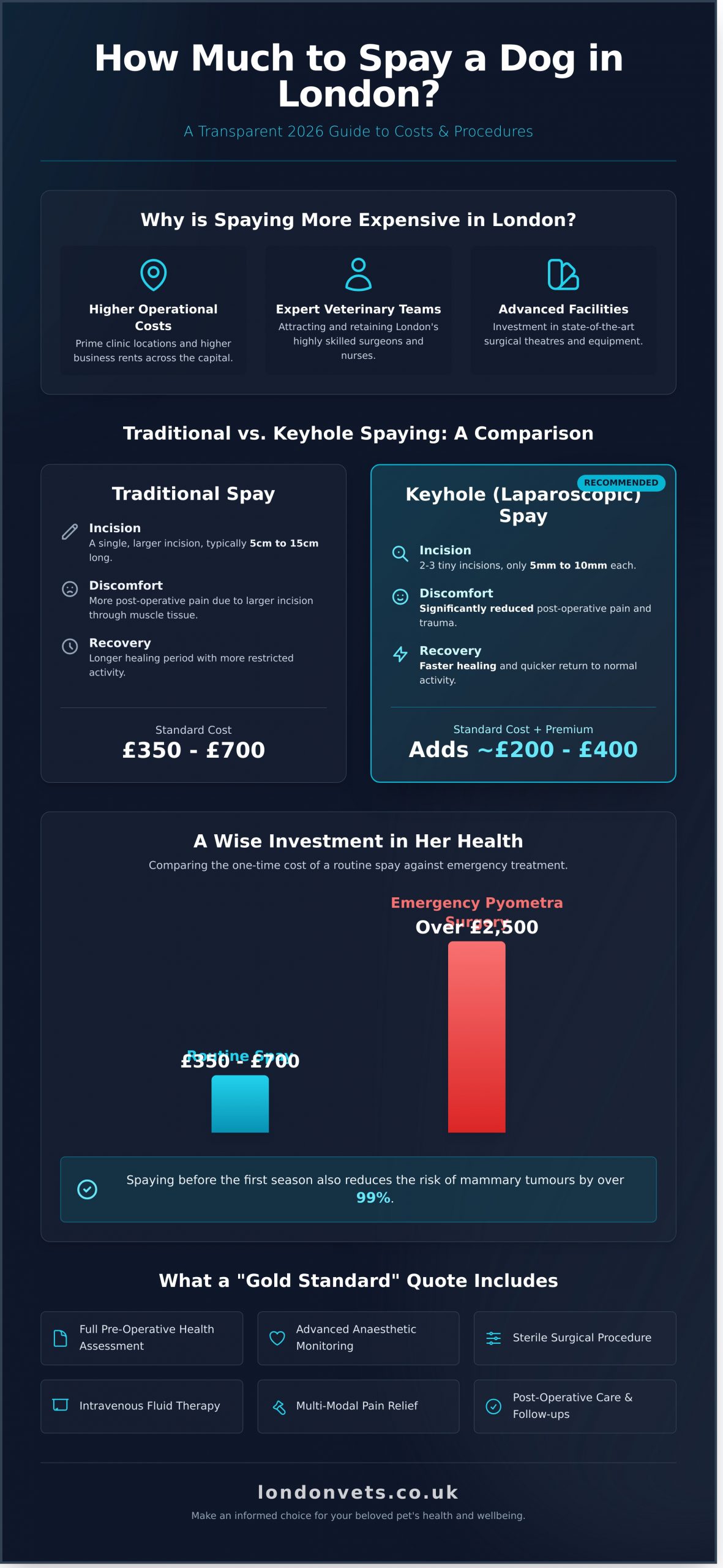
A professional veterinary quote is far more than just a price; it’s a promise of comprehensive, “gold standard” care for a beloved member of your family. At our independent practice, we believe in complete transparency. A detailed quote for spaying should always include:
- A full pre-operative health assessment by a qualified veterinarian.
- Intravenous fluid therapy to maintain stable blood pressure and hydration during surgery.
- Advanced anaesthetic monitoring by a dedicated Registered Veterinary Nurse (RVN).
- Multi-modal pain relief administered before, during, and after the procedure for optimal comfort.
- The surgical procedure itself, performed in a fully sterile operating theatre.
- Comprehensive post-operative care and all necessary follow-up appointments.
The Clinical Value of a Professional Spay
Your dog’s safety under general anaesthesia is our highest priority. That is why a dedicated RVN monitors her vital signs continuously from induction to recovery. For older dogs or breeds with known sensitivities, we strongly recommend pre-operative blood tests to confirm their liver and kidneys can safely process the anaesthetic. As an independent practice, we provide a personalised surgical plan tailored to your dog’s specific needs, a level of detail you can explore further by Understanding Spaying and Neutering in greater depth.
Long-term Savings vs. Initial Surgical Cost
The initial surgical cost is a fraction of the expense for emergency treatment down the line. A routine spay in London may cost between £350 and £700, whereas emergency surgery for a uterine infection can easily exceed £2,500. Spaying before her first season also reduces the risk of mammary tumours by over 99%, helping you avoid complex and costly oncology treatments. Pyometra is a life-threatening uterine infection that costs significantly more to treat than a routine spay.
Ultimately, understanding the factors that influence how much to spay a dog in London helps clarify why this procedure is a crucial one-time investment. It’s not just about preventing litters; it’s about proactively protecting your dog from painful, expensive, and potentially fatal conditions. If you’re also considering the broader picture of dog neutering in London, including breed-specific timing and long-term health benefits, our complete 2026 owner’s guide covers everything you need to know. The peace of mind that comes from safeguarding her future wellbeing is, for many London dog owners, priceless.
Traditional vs. Keyhole Spaying: Comparing Costs and Benefits
When you decide to spay your dog, one of the most important choices you’ll make is the type of surgical procedure. In London, veterinary medicine has advanced significantly, and as an independent practice committed to the highest standards of care, we’ve seen a clear shift towards minimally invasive techniques. The two primary options available are the traditional open surgery and the more modern laparoscopic, or ‘keyhole’, spay.
A traditional spay involves a single, larger incision, typically between 5 to 15 cm long, through which the surgeon removes the ovaries and often the uterus. In contrast, a keyhole spay is performed through two or three tiny incisions, each only 5 to 10 mm in length. A high-definition camera and specialised instruments are inserted, allowing our vets to perform the procedure with enhanced precision and minimal disruption to the body. This difference in technique has a profound impact on everything from recovery time to overall comfort for your dog.
Naturally, this advanced approach affects the final cost. Understanding how much to spay a dog in London requires factoring in the surgical method. Laparoscopic surgery carries a premium, typically adding between £200 to £400 to the total cost compared to a traditional procedure. This reflects the significant investment in technology and the extensive post-graduate training our team undertakes to master this delicate technique.
Why Choose Keyhole Surgery for Your Dog?
For many London dog owners, the benefits of keyhole surgery represent a valuable investment in their pet’s wellbeing. The advantages are clear and compelling, especially for dogs living an active, urban lifestyle.
- Reduced Post-Operative Pain: The smaller incisions cause significantly less trauma to the muscle and tissue, resulting in a more comfortable recovery.
- Faster Healing: With only tiny wounds to heal, the risk of post-operative complications like infection is lower, and most dogs are back to their usual selves much faster. This often means less time spent wearing the dreaded “cone of shame.”
- Quicker Return to Activity: A traditional spay requires 10-14 days of strict rest. With keyhole, gentle lead walks can often resume in just a few days, a crucial benefit for energetic dogs in city apartments.
Managing your dog’s recovery in a busy city environment can be challenging. A faster, more comfortable healing process, as facilitated by keyhole surgery, simplifies this crucial period. The importance of proper post-operative care is well-documented in every scientific review of spaying, and a smoother recovery makes it easier for owners to follow veterinary advice effectively.
The Investment in Specialized Equipment
The premium price of a keyhole spay is a direct reflection of the advanced resources required to perform it safely and effectively. This isn’t just about a different technique; it’s about a different calibre of medical technology. Our practice has invested heavily in the same state-of-the-art endoscopic equipment used in human hospitals, including high-definition cameras for crystal-clear visualisation and specialised surgical instruments that allow for precise, gentle handling of internal tissues. This commitment to providing gold-standard care is fundamental to our ethos. Learn more about our Keyhole Surgery services and the technology we use to ensure your pet’s comfort and safety.
Ultimately, while the initial figure for how much to spay a dog via keyhole is higher, many owners find the value in a gentler procedure and a significantly faster, less painful recovery. Every dog is an individual, and the best choice depends on their health, temperament, and your family’s lifestyle. We warmly invite you to schedule a pre-operative consultation with our veterinary team to discuss the right path for your beloved companion.
Calculating Your Quote: Weight, Breed, and London Location
When you ask, “how much to spay a dog in London?”, the answer is rarely a single, fixed number. The final cost is a tailored figure based on your dog’s unique needs. At London Veterinary Surgeries, we believe in complete transparency, so let’s break down the three primary factors that determine your quote: your dog’s weight, their specific breed, and even your London postcode.
The Weight Factor in Veterinary Pricing
A dog’s size is the most significant variable in the cost of spaying. This isn’t arbitrary; it’s based on precise medical requirements. Crucially, the dosages for anaesthetics and pain relief medications are calculated per kilogram of body weight, meaning a Great Dane will require substantially more than a Chihuahua. The procedure itself also scales with size. A larger dog means a longer surgery, more suture materials, and a greater need for dedicated nursing support during the anaesthetic and recovery periods.
- Small Breeds (under 10kg): For dogs like Dachshunds or Pugs, you can expect prices to start from approximately £350.
- Medium Breeds (10-25kg): For dogs such as Springer Spaniels or Beagles, costs typically range from £400 to £500.
- Large & Giant Breeds (over 25kg): For Labradors, German Shepherds, and larger breeds, the price will generally start from £500 and increase with weight.
Specialist Breed Requirements
Not all breeds are created equal when it comes to anaesthesia. Brachycephalic (flat-faced) breeds like French Bulldogs, English Bulldogs, and Pugs require a higher level of care. Their compressed anatomy can lead to Brachycephalic Obstructive Airway Syndrome (BOAS), which presents a greater risk during surgery. Our team is highly experienced in managing these risks, employing advanced monitoring equipment and specialised anaesthetic protocols to ensure their safety and comfort. For these beloved breeds, a pre-operative assessment is a key part of our gold standard of care. To ensure the highest level of safety, we may recommend a pre-surgical evaluation at our dedicated BOAS Grading Clinic to assess their specific needs.
The geography of London itself plays a role in veterinary pricing. Clinics located in Central London postcodes (e.g., W1, SW1) face significantly higher operational costs, including rent and business rates. Consequently, you may find their prices are 15-25% higher than a practice in South London or an outer borough. While location is a factor, it’s vital to balance it with the clinic’s reputation, level of care, and the experience of their surgical team.
Finally, always ask for an itemised quote. A lower headline price can sometimes hide additional costs that appear on the final bill. A comprehensive quote should be clear about what’s included. Does it cover a pre-anaesthetic health check, intravenous fluids during surgery for hydration and safety, and take-home pain relief? What about post-operative check-ups? This comprehensive approach aligns with the best practice outlined in the RSPCA advice on neutering, which emphasizes the importance of a safe procedure and a comfortable recovery. At our independent practice, we provide clear, all-inclusive quotes so you can make an informed decision for your pet without any surprises.
Managing Your Dog’s Recovery in a Busy City Environment
The spaying procedure itself is just one part of your dog’s journey. Her safe and comfortable recovery is paramount, and navigating this in a bustling city like London presents unique challenges. The cost of the surgery is a key consideration, but understanding the post-operative commitment ensures your investment in her health pays off. A smooth recovery period, free from complications, is the final, crucial step.
For the first 24-48 hours, your dog will likely be groggy and disoriented from the anaesthetic. Your primary role is to provide a warm, safe, and quiet space for her to rest. We will provide detailed post-operative instructions, but your calm presence is the most reassuring thing for your pet during this initial period.
The First Week: Rest and Protection
Creating a peaceful sanctuary is vital, especially with the constant hum of city life. Designate a recovery zone away from street-facing windows to minimise noise from sirens and traffic. Use a comfortable bed or crate in a quiet corner. We often recommend a medical pet shirt over a traditional plastic collar (the “cone of shame”). These are far more comfortable for navigating tight London flats and prevent your dog from licking the incision site without the added stress and clumsiness of a cone.
London-Specific Recovery Challenges
Strict rest is non-negotiable for the first 10-14 days. This means no off-lead running in Regent’s Park or boisterous play with other dogs on Hampstead Heath. Short, calm lead walks for toileting purposes only are essential. You must avoid muddy riverbanks along the Thames, as keeping the incision clean and dry is critical to prevent infection. If you live in a flat or terraced house, carrying your dog up and down stairs for the first few days can prevent strain on her stitches.
While the total figure for how much to spay a dog includes the procedure, it’s your vigilance that ensures a complication-free outcome. You are the first line of defence in spotting any issues. It’s vital to know when to seek immediate professional help. As an independent practice, we believe in providing unwavering support, which is why our care extends around the clock.
Contact your vet immediately if you notice any of the following signs:
- Lethargy or Depression: Significant listlessness more than 24 hours after surgery.
- Discharge or Swelling: Any unusual redness, swelling, or oozing from the incision site.
- Loss of Appetite: Refusing to eat for more than one day post-surgery.
- Vomiting or Diarrhoea: Persistent stomach upset after the first 24 hours.
- Changes in Breathing: Any laboured or shallow breathing.
Your dog will have a follow-up appointment, typically 10-14 days after her operation, for us to check the wound and remove any external stitches. This visit is included in your surgical package and is essential for giving her the final all-clear. Should you have any concerns before this date, please don’t hesitate to reach out. Our 24-hour emergency care team is always here to help and provide the peace of mind you and your pet deserve.
Affordable Excellence: London Veterinary Surgeries’ Approach
We understand that for many London pet owners, the question of ‘how much to spay a dog’ is a significant financial consideration that must be balanced with the need for exceptional care. As an independent, vet-owned group, our priority has always been the health and wellbeing of your pet, not corporate targets. This freedom allows us to focus on providing personalised care that is both accessible and transparent. We believe that no pet should miss out on essential procedures due to prohibitive costs, which is why we’ve built our entire approach around offering outstanding value without ever compromising on our rigorous safety and quality standards.
Our commitment to your dog’s safety is absolute. Every spaying procedure at our clinics adheres to a ‘Gold Standard’ of surgical care. This isn’t just a marketing phrase; it’s a clinical promise backed by strict protocols. It means every patient receives a thorough pre-operative health assessment, tailored anaesthetic protocols monitored by state-of-the-art equipment, and dedicated one-to-one nursing care throughout their recovery. We provide multi-modal pain relief before, during, and after the surgery to ensure your dog is as comfortable as possible. This meticulous, evidence-based approach minimises risks and promotes a smoother, faster recovery for your beloved companion.
The Dog VIP Plan: Budgeting Made Simple
To make preventative care more affordable, our Dog VIP Health Plan allows you to spread costs through a simple monthly subscription. This plan not only covers routine essentials like annual vaccinations and year-round flea and worming treatments but also provides a significant discount on neutering procedures. It’s the smartest way to manage your dog’s health budget while ensuring they receive the very best care. Join our Dog VIP Plan and start saving today.
Why Trust London Veterinary Surgeries?
Since opening our doors in 2006, we have become a cornerstone of the South London pet community. Our multi-award-winning team is trusted by over 20,000 pet owners to provide compassionate, expert care. We know that pet health concerns don’t stick to a 9-to-5 schedule, which is why our clinics are open 7 days a week, backed by 24-hour emergency support. Your peace of mind is our priority, day and night.
Choosing the right clinic for your dog’s spaying surgery is a decision built on trust and confidence. We invite you to experience our compassionate, professional approach firsthand. The best way to get a personalised answer to how much to spay a dog at our clinics and to discuss the procedure in detail is by scheduling a pre-operative consultation. Our friendly veterinary team will walk you through every step, answer all your questions, and provide a clear, all-inclusive quote with no hidden fees. Your dog is a member of your family, and we’re here to treat them like one of our own.
Ready to take the next step? Contact us today to book a consultation at our Streatham Hill clinic or any of our other convenient South London locations. We look forward to welcoming you and your dog into the London Veterinary Surgeries family.
Taking the Next Step for Your Dog’s Health
Navigating the decision to spay your dog in London involves careful consideration of both cost and care. As we’ve detailed, understanding how much to spay a dog in 2026 depends on your companion’s specific needs, including their weight, breed, and your choice between traditional or keyhole surgery. It’s an investment in their long-term health, and choosing the right veterinary partner is the most important part of the process.
At London Vets, we’re here to provide that partnership. As an independent and vet-owned practice, we’ve delivered award-winning care to London’s pets since 2006. We combine transparent pricing with a gold standard of treatment, ensuring your dog feels safe and comfortable. For a personalised quote and to discuss the best options for your beloved companion, we invite you to book a neutering consultation for your dog at our South London clinic.
You’re making a wonderful decision for their future, and with our 24-hour emergency support, you’ll never be alone on this journey.
Frequently Asked Questions About Spaying Your Dog in London
How much does it cost to spay a dog in London on average in 2026?
In 2026, the projected average cost to spay a dog in London will range from £275 to £660. This price is influenced by your dog’s size and weight, the specific veterinary practice, and the type of procedure performed. For example, a small breed like a Chihuahua will be at the lower end of the scale, while a large breed such as a Great Dane will be at the higher end. We always provide a clear, itemised quote before any procedure so you understand exactly how much to spay a dog at our clinic.
Is keyhole spaying worth the extra cost for my dog?
For many dogs, the benefits of keyhole (laparoscopic) spaying can certainly justify the additional cost, which is typically 25-50% higher than traditional surgery. This minimally invasive technique involves much smaller incisions, leading to up to 65% less post-operative pain and a significantly faster recovery time of just a few days. It’s a gentle option that we often recommend to enhance your dog’s comfort and wellbeing, helping them return to their happy selves much sooner.
Does pet insurance in the UK cover the cost of spaying?
No, nearly all standard UK pet insurance policies do not cover the cost of spaying. Insurance is designed to help with unexpected accidents and illnesses, whereas spaying is considered a routine, preventative procedure that owners can plan for. While some premium wellness plans might offer a small contribution towards routine care, this is not common. It’s always best to check your specific policy documents for confirmation.
At what age should I have my dog spayed at a London clinic?
We generally recommend spaying most female dogs from six months of age, before their first season. However, for some large and giant breeds weighing over 25kg, there is evidence to suggest waiting until they are 12-18 months old may benefit their joint development. Our veterinary team will provide a tailored recommendation based on your dog’s individual breed, size, and health, ensuring the decision is made with their long-term wellbeing in mind. For a deeper understanding of dog neutering timing and breed-specific considerations in London, our complete 2026 guide provides detailed guidance to help you make the most informed choice.
What is the difference between spaying and neutering?
Spaying is the surgical sterilisation for a female animal, while neutering is the general term for sterilisation in either sex but is most often used to describe the procedure for males. The technical term for spaying is an ovariohysterectomy, where we remove the ovaries and uterus. For males, the procedure is a castration, which involves removing the testicles. Both are common procedures that prevent reproduction and offer many health benefits.
Can I get help with the cost of spaying if I am on benefits in London?
Yes, several registered UK charities offer financial assistance for spaying if you are on certain benefits. Organisations like the RSPCA, Dogs Trust, and other animal welfare charities operate low-cost neutering schemes across London. To qualify, you will typically need to provide proof of receiving means-tested benefits, such as Universal Credit or Council Tax Support. We recommend contacting your local branch of these charities directly to enquire about their specific eligibility criteria.
How long does the spaying procedure take and will my dog stay overnight?
The surgical procedure itself is quite efficient, typically lasting between 20 and 90 minutes depending on your dog’s size and age. Your dog will be admitted to our clinic in the morning for pre-operative checks and will be ready to go home the very same afternoon to recover in the comfort of your home. An overnight stay is extremely rare and would only be recommended if our veterinary team had a specific medical concern for post-operative monitoring.
What are the risks of not spaying my female dog?
Not spaying your dog carries significant health risks that we strongly advise against. Unspayed females have a 1 in 4 chance of developing mammary tumours, and 50% of these are malignant. They are also highly susceptible to pyometra, a severe and life-threatening infection of the womb that affects nearly 25% of unspayed dogs before they turn 10. Spaying is a preventative measure that protects your beloved family member from these painful and dangerous conditions.



© London Veterinary Surgeries