
Date: 10 Mar 2026
Deciding to neuter your cat is one of the most responsible choices a pet owner can make. But in London, that simple decision can feel overwhelmingly complex and expensive.
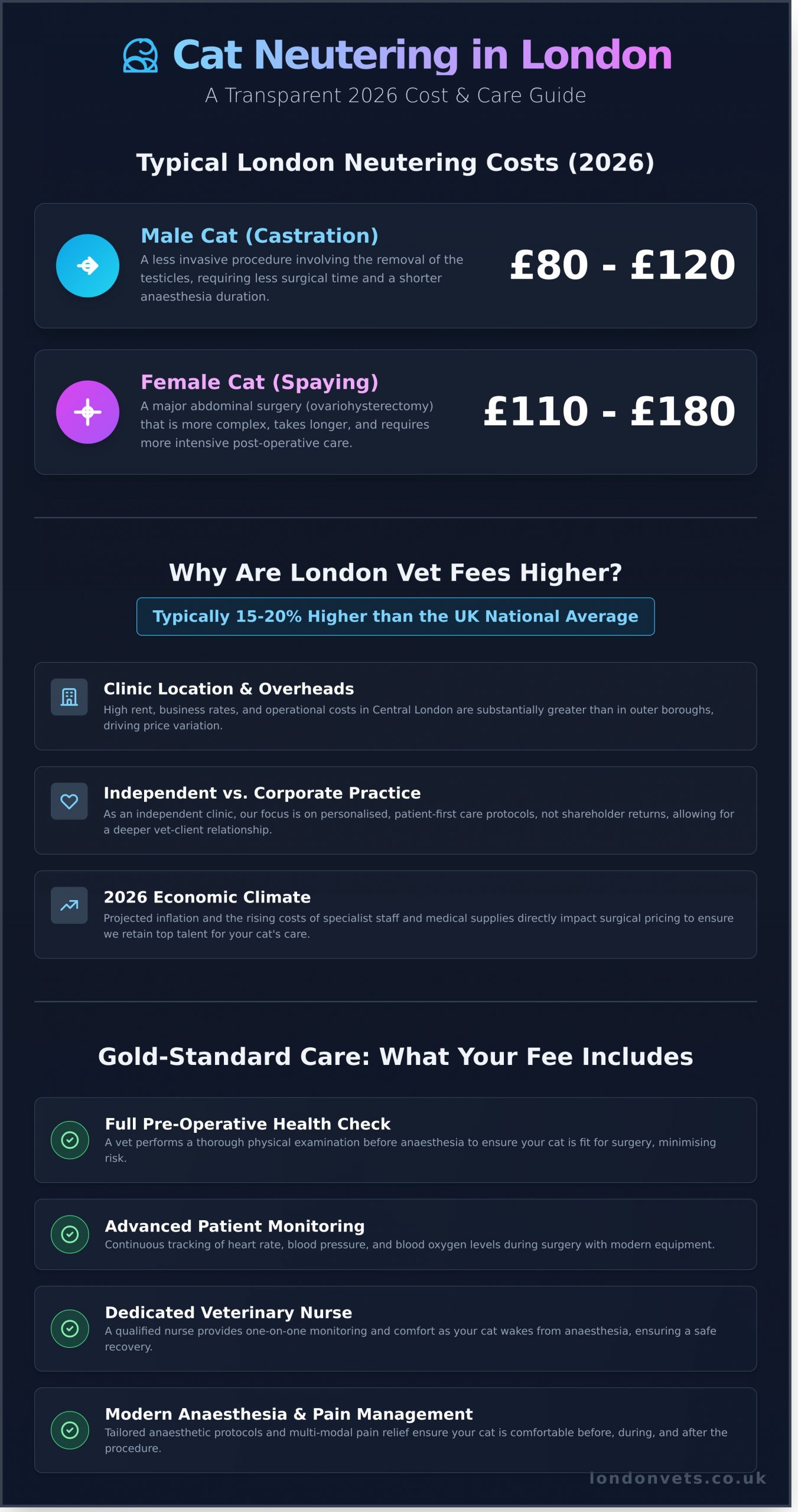
We understand that when you’re researching how much to neuter a cat, the variation in pricing across the city can be confusing, and the thought of your beloved companion undergoing surgery can be a source of genuine anxiety. It’s natural to worry about their safety and want clarity on the investment you’re making in their long-term health. That’s why we’ve created this transparent 2026 guide. Here, you will discover the clear, upfront costs for both male and female cat neutering at our independent London clinics, learn exactly what influences the final price, and see how our gold-standard surgical care ensures your cat’s absolute comfort and wellbeing.
We’ll walk you through the entire process, from pre-operative checks to post-operative care, and explain how our preventative health plans can make this essential procedure more affordable for your family.
Key Takeaways
- Discover how much to neuter a cat in London with our 2026 price guide, and understand why costs in the capital are typically higher.
- Learn what is included in a comprehensive neutering fee to ensure your cat receives the highest standard of surgical care and anaesthetic safety.
- Compare the different spaying techniques available for female cats and find out which method is best suited for a smooth and rapid recovery.
- Get a practical checklist to prepare your cat for their big day and explore how our health plans can help you manage the cost.
How Much Does Cat Neutering Cost in London (2026)?
Understanding the cost of your cat’s care is a crucial part of responsible pet ownership. As a dedicated, independent London practice, we believe in providing complete transparency. For 2026, the cost of cat neutering in London typically ranges from £80 to £120 for male castration and £110 to £180 for female spaying. Cat neutering is a vital preventative surgery that directly supports the wellbeing of individual pets and helps manage the city’s large feline population, promoting better urban cat health. These prices reflect a comprehensive standard of care that includes pre-operative checks, anaesthesia, the surgical procedure itself, and post-operative pain relief.
It’s important to recognise that veterinary fees in London are generally 15-20% higher than the UK national average. This premium is driven by the significantly higher operational costs in the capital. While lower-cost options are available through charities like the RSPCA or Cats Protection for those on specific benefits, the prices we’ve outlined reflect the level of dedicated, personalised care you can expect from a private independent practice. If you’re also considering dog neutering in London, our complete 2026 owner’s guide covers breed-specific timing, surgical options, and costs for your canine companion.
Factors Influencing London Vet Fees
The final price on your invoice is shaped by several key local factors. At our practice, we ensure every cost contributes directly to the gold-standard care your cat deserves. These factors include:
- Clinic Location and Overheads: The cost of running a veterinary surgery in Central London, with its high rent and business rates, is substantially greater than in outer boroughs like Croydon or Bexley. This overhead is a primary driver of price variation across the city.
- Independent vs. Corporate Practices: As an independent practice, we have the autonomy to tailor our care protocols to each individual patient. Unlike some large corporate chains, our focus isn’t on shareholder returns but on the long-term health of your pet, allowing for more personalised attention and a deeper vet-client relationship.
- 2026 Economic Climate: Projected inflation and the rising costs of specialist veterinary staff and medical supplies directly impact surgical pricing. We are committed to fair compensation for our expert team to ensure we retain the best talent for your cat’s care.
Male vs. Female: Why the Price Difference?
You’ll notice a clear price difference between neutering male and female cats. This variation is based entirely on the complexity of the two distinct surgical procedures. Knowing how much to neuter a cat involves understanding what the surgery entails for both sexes. For a deeper clinical overview, you can explore What is cat neutering? to understand the terminology and methods involved. The key differences are:
- Castration (Male): This is a less invasive procedure involving the removal of the testicles. It requires less surgical time, a shorter duration of anaesthesia, and fewer materials, which is reflected in the lower cost of £80-£120.
- Spaying (Female): A spay (ovariohysterectomy) is a major abdominal surgery to remove the ovaries and uterus. It is more complex, takes longer, and requires more intensive anaesthetic monitoring and post-operative care, hence the higher price point of £110-£180.
What Is Included in Your Cat’s Neutering Fee?
The question of how much to neuter a cat in London often reveals a surprising range of prices. It’s tempting to simply choose the lowest quote, but the fee you pay is a direct reflection of the quality of care, safety protocols, and professional attention your beloved pet will receive. A comprehensive surgical fee isn’t just for the 15-minute procedure; it’s an investment in your cat’s safety and comfort from the moment they arrive until they are fully recovered at home.
At our independent London practice, we believe in complete transparency. Your fee covers a gold-standard level of care that ensures your cat’s wellbeing is the absolute priority. This includes:
- A Full Pre-Operative Health Check: Before any anaesthetic is administered, one of our vets performs a thorough physical examination to ensure your cat is perfectly fit for surgery. This is a critical step in minimising risk.
- Advanced Patient Monitoring: During the procedure, your cat’s vital signs are never left to chance. We use modern equipment to continuously track their heart rate, blood pressure, and blood oxygen levels, allowing us to respond instantly to any changes.
- A Dedicated Veterinary Nurse: A qualified nurse is assigned to monitor your cat one-on-one as they wake up from anaesthesia. This gentle, dedicated supervision during the crucial recovery phase provides immense comfort and safety.
Anaesthesia and Pain Management Standards
We use modern anaesthetic protocols tailored specifically to your cat’s age, breed, and health status. This isn’t a one-size-fits-all approach. Furthermore, we practice multimodal pain relief, which means we provide pain medication before, during, and after the surgery to keep your cat as comfortable as possible. Lower-cost options may cut corners by using older anaesthetics or skipping crucial pre-operative pain relief, which we consider an unacceptable compromise.
Post-Operative Care and Follow-Ups
Our duty of care extends far beyond the operating theatre. The fee includes all post-operative check-ups at our London surgeries to monitor the wound and ensure a smooth healing process. You’ll also be sent home with the necessary pain relief medication and clear instructions. Our commitment to your cat’s welfare aligns with the best practices detailed in the official UK cat welfare guidelines. Most importantly, we provide access to 24-hour emergency support, giving you complete peace of mind knowing that professional help is always just a phone call away. If you have any concerns after you get home, our team is here for you. To discuss our specific surgical and aftercare protocols, you can always speak with our compassionate team.
Spaying Techniques: Flank vs. Midline vs. Keyhole Surgery
When you decide to spay your female cat, you’re making a deeply responsible choice for her long-term health. But the decision-making process doesn’t stop there. In London, veterinary practices offer several surgical approaches, and understanding the differences is key to providing the best possible care for your pet. At our independent practice, we believe in empowering you with clear, honest information so you can make a confident choice alongside our clinical team.
The three primary spaying techniques you’ll encounter are the flank spay, the midline spay, and the advanced keyhole (laparoscopic) spay. Each has specific benefits tailored to a cat’s individual needs, lifestyle, and anatomy.
- Flank Spay: This is the most common approach in the UK. The procedure involves a small incision on your cat’s left side, or flank. Its main advantage is that the wound is easy for you to monitor. For cats who love to explore the outdoors, a flank spay means the wound is less likely to get dirty from contact with the ground. Recovery is typically straightforward, and it remains the standard of care in many clinics.
- Midline Spay: A midline incision is made along the cat’s abdomen, on her tummy. This approach is standard in the US and is preferred here in specific situations. For instance, if a cat is pregnant, a midline approach provides better access for the surgeon. It’s also often chosen for certain pedigree breeds, like Siamese or Burmese, as a flank scar can sometimes cause the fur to regrow in a different colour.
- Keyhole (Laparoscopic) Spay: This is the gold standard in minimally invasive surgery. Instead of one larger incision, the surgeon makes two or three very small incisions (typically just 5mm each). A tiny camera and specialised instruments are used to perform the procedure with incredible precision. The result is significantly less pain, a dramatically reduced risk of complications, and a much faster recovery.
Is Keyhole Neutering Worth the Extra Cost?
Laparoscopic surgery is a significant advancement in veterinary medicine, directly benefiting your cat’s comfort and wellbeing. The tiny incisions mean there is far less trauma to the muscle and tissue, leading to a recovery that is often measured in days, not weeks. While a standard spay may cost between £120 and £200 in London, a keyhole procedure can start from around £350. This higher price reflects the advanced training and specialised equipment required. We are proud to offer this premium service at our South London animal hospital, ensuring your cat receives the most gentle care possible. The same minimally invasive keyhole approach is also available for dog neutering in London, where it can reduce post-operative discomfort significantly compared to traditional methods.
Choosing the Right Method for Your London Cat
The right choice depends on a conversation between you and your vet. Our Streatham Hill veterinary team will help you weigh the critical factors: your cat’s lifestyle, her temperament, and your budget. An active, outdoor cat might be an ideal candidate for a flank spay, while a very anxious or delicate cat would benefit immensely from the faster, less painful recovery of a keyhole procedure. The primary goal, as reinforced by RSPCA guidance on cat neutering, is to ensure the long-term health of your pet. Ultimately, understanding how much to neuter a cat involves looking beyond the initial price to the long-term value of a smoother, safer recovery for a cherished member of your family.
Budgeting for Care: The London Vets Cat VIP Plan
We at London Veterinary Surgeries understand that for many Londoners, the upfront cost of neutering is a primary concern. That’s why we created our Cat VIP Health Plan. It’s designed not just to manage expenses, but to provide a clear, predictable path to giving your cat the very best preventative care. By bundling essential treatments into a simple monthly payment, you can spread the cost of routine health needs, making it far easier to budget for one-off procedures like neutering.
Our VIP members receive a 10% discount on all neutering procedures, directly reducing the financial barrier. This plan also includes annual vaccinations and a full year’s supply
Preparing Your Cat for Surgery: A London Owner’s Checklist
Once you’ve explored the factors that determine how much to neuter a cat and chosen a trusted practice, the next step is preparing for the day itself. We understand that leaving your beloved pet for a surgical procedure can be an anxious experience. That’s why our team at London Veterinary Surgeries provides comprehensive support, ensuring you and your cat feel as calm and prepared as possible. This checklist is designed to guide you through the process, from the night before to their safe return home.
The most critical pre-operative step is fasting. We will ask you to withhold food from your cat from 10 PM the evening before their surgery. This “nil by mouth” instruction is vital for their safety. General anaesthetic relaxes the muscles in the body, including the oesophagus, which can allow stomach contents to be regurgitated. Fasting prevents this, eliminating the risk of aspiration into the lungs, a serious complication. You can, however, leave their water bowl down overnight.
On the morning of the surgery, focus on a calm departure. The London commute can be stressful for a cat, so a secure and comfortable carrier is essential. To ease their anxiety, you can spray a Feliway classic calming spray inside the carrier 30 minutes before you leave. Placing a familiar item, like a small blanket or an old t-shirt with your scent on it, can also provide immense comfort. When you arrive, please bring any relevant medical records if your cat is new to our practice.
The Day of the Procedure
Upon arrival, one of our dedicated veterinary nurses will admit your cat. They will guide you through the consent form, answer any final questions, and confirm the best contact number to reach you on. We promise to keep you informed. You will receive a phone call or a text message from our team as soon as your cat is safely awake and resting in recovery. At the end of the day, a nurse will conduct a discharge appointment, providing a personalised post-operative care plan and any necessary pain medication.
Recovery at Home in an Urban Environment
Creating a peaceful recovery space is key, even in a compact London flat. A quiet room, away from other pets and household noise, is ideal. Ensure they have easy access to a clean litter tray, fresh water, and their food once we give you the go-ahead. Your cat will be sent home with a buster collar (an “e-collar”) or a medical recovery suit. This is crucial for preventing them from licking the incision site, which can lead to infection. While they may seem unhappy, it’s for their own protection during the 7-10 day healing period.
Please call us immediately if you notice any of the following signs in the first 24-48 hours:
- Extreme lethargy or lack of responsiveness
- Vomiting after their first small meal
- Refusal to eat for more than 24 hours post-surgery
- Significant redness, swelling, or discharge from the wound
Navigating your cat’s neutering journey, from understanding the costs to managing their recovery, is a partnership. Our team is here to provide gold-standard care every step of the way. Book your cat’s neutering consultation at London Veterinary Surgeries today and let us give your pet the gentle, expert care they deserve.
Your Next Step for a Healthier, Happier Cat
Navigating the decision to neuter your cat involves understanding the full scope of care that ensures their safety and wellbeing. As you’ve seen, the question of how much to neuter a cat in London goes beyond a simple figure; it encompasses everything from pre-surgical checks and advanced anaesthesia to dedicated post-operative support. Making an informed choice about surgical techniques and budgeting with plans like our Cat VIP Plan empowers you to provide the very best for your pet.
As an independent, vet-owned practice since 2006, our multi-award winning team is trusted by over 20,000 London pet owners to deliver this gold standard of care. We are here to answer all your questions with the empathy and expertise you and your cat deserve.
If you’re ready to discuss the best path forward, we invite you to book a consultation for your cat at our award-winning London surgeries. Taking this step is one of the most loving investments you can make in their long and happy future with you.
Frequently Asked Questions About Cat Neutering
At what age should I neuter my cat in London?
We recommend neutering kittens from four months of age. This professional guidance is supported by leading UK animal charities, including Cats Protection and the RSPCA. Neutering before your cat reaches sexual maturity prevents unwanted litters and significantly reduces the risk of certain cancers and other health problems. It’s a safe and routine procedure for a young, healthy kitten, ensuring their long-term wellbeing as a cherished member of your family.
Will my cat’s personality change after being neutered?
Your cat’s fundamental personality will remain the same, but you will likely see a reduction in hormone-driven behaviours. For example, male cats are far less likely to roam, fight, or spray urine inside your home. Female cats will no longer experience the stress of being in heat. Many owners find their cats become more affectionate and settled after the procedure. Their unique, playful character will shine through without the difficult instinctual urges.
Does pet insurance cover the cost of neutering in the UK?
No, the vast majority of standard UK pet insurance policies do not cover neutering. Insurance is designed for unexpected illnesses or accidents, whereas neutering is considered a routine, preventative treatment. When you’re researching how much to neuter a cat, it’s vital to budget for this as a separate, one-off cost. While some high-tier wellness plans may offer a contribution, this is not a feature of most standard insurance products.
How long does the cat neutering surgery take?
The surgical procedure itself is completed very quickly by our skilled veterinary team. A male castration typically takes 5-10 minutes, while a female spay is slightly more complex and may take around 15-20 minutes. Your cat will, however, be with us for most of the day. This allows ample time for pre-operative health checks, the safe administration of anaesthesia, and a calm, carefully monitored recovery before they are ready to return home to you.
Can I get financial help for neutering if I live in South London?
Yes, several well-regarded charities offer financial support for cat neutering in South London. Organisations like Cats Protection, the RSPCA, and Blue Cross provide subsidised or low-cost neutering schemes for pet owners who are on certain benefits or a low income. For instance, the C4 Scheme covers many London postcodes, offering the procedure from as little as £5. We encourage you to contact your local branch directly to confirm your eligibility.
Is it better to let my female cat have one litter before spaying?
No, this is a persistent myth and there are no documented health or welfare benefits to letting a cat have a litter before she is spayed. In fact, the opposite is true. Spaying your cat before her first heat cycle almost eliminates her risk of developing mammary cancer and prevents potentially fatal uterine infections like pyometra. As a practice committed to preventative care, we strongly advise spaying early for a long and healthy life.
What happens if I don’t neuter my male cat in an urban area?
An unneutered male cat in a dense urban environment like London faces significantly higher risks. Driven by hormones, he will be compelled to roam large territories to find a mate, increasing his chance of being hit by a vehicle. He is also more likely to get into aggressive fights with other cats, leading to infected wounds and the transmission of serious diseases like Feline Immunodeficiency Virus (FIV). Neutering is the kindest decision for his safety.
How soon after surgery can my cat go outside again?
Your cat must be kept strictly indoors for a minimum of 7-10 days following their surgery. This is a critical period for healing and helps prevent the surgical site from becoming infected or the stitches from tearing. Restricting their activity ensures they don’t jump or climb excessively. After their post-operative check-up with us, our team will give you the all-clear for them to safely resume their outdoor adventures, usually after the 10-day mark.



© London Veterinary Surgeries