
Date: 14 Mar 2026
Last Tuesday, a client named Sarah arrived at our clinic feeling overwhelmed because her Eurostar departure to Paris was just 72 hours away and her paperwork was incomplete. We understand that since the 2021 shift in regulations, many London owners feel a sense of dread when planning a trip to the EU. It is completely natural to feel anxious about the transition from the old Pet Passport to the current Animal Health Certificate (AHC) system. Getting the right pet travel advice is now essential to avoid being turned away at the border.
As an independent practice, our team is here to ensure your cat or dog remains an integral part of your holiday plans without the stress. We have helped over 450 local families navigate these requirements this year alone. You’ll learn the exact 21-day timeline for rabies vaccinations and how to secure a valid AHC within the mandatory 10-day window before you depart. We also share practical tips for managing the bustle of London Victoria or St Pancras so your journey is as gentle as possible for your furry family member.
Key Takeaways
- Learn why planning your European departure at least one month in advance is essential to navigate the transition from EU Pet Passports to Animal Health Certificates.
- Access expert pet travel advice on meeting mandatory legal requirements, including microchipping and the critical 21-day waiting period following rabies vaccinations.
- Discover the most stress-free routes for Londoners, from navigating the Underground with your companion to choosing between the Eurotunnel and ferry crossings.
- Ensure a seamless return to London by mastering the specific tapeworm treatment windows required for UK re-entry.
- See how our independent, vet-owned status provides the personalised care and meticulous documentation needed for your pet’s wellbeing abroad.
Navigating Pet Travel Advice in London: The Post-Brexit Landscape
Preparing for a holiday from St Pancras or Heathrow should be a time of excitement; however, we know the administrative burden often feels overwhelming for pet owners. Since 1 January 2021, the regulations for taking your dog or cat abroad changed fundamentally. The UK’s departure from the European Union meant that the familiar blue Pet Passport became invalid for residents of Great Britain. Understanding the Pet Passport scheme history helps us appreciate why these changes were implemented, moving us from a harmonised system to a more rigorous, third-country requirement.
Our team at London Veterinary Surgeries understands the anxiety this transition causes. We see pets as integral family members, and the thought of being turned away at the Eurotunnel or a ferry port because of a missing signature is deeply distressing. Seeking professional pet travel advice early is the only way to ensure a smooth journey. We recommend starting your preparations at least one month before your departure date. This window allows us to manage clinical schedules and ensure all legal requirements, such as rabies vaccinations and microchip checks, are perfectly synchronised.
Certification is not a task for any general practitioner. Only a vet who holds the qualification of an Official Veterinarian (OV) can legally sign your travel documents. As an independent practice, we maintain a team of OVs who are specifically trained to handle these complex forms. We provide a gold standard of care that moves beyond simple paperwork; we act as your local guardians, ensuring every detail is checked against the latest Defra guidelines so you can travel with absolute confidence.
The Animal Health Certificate (AHC) Explained
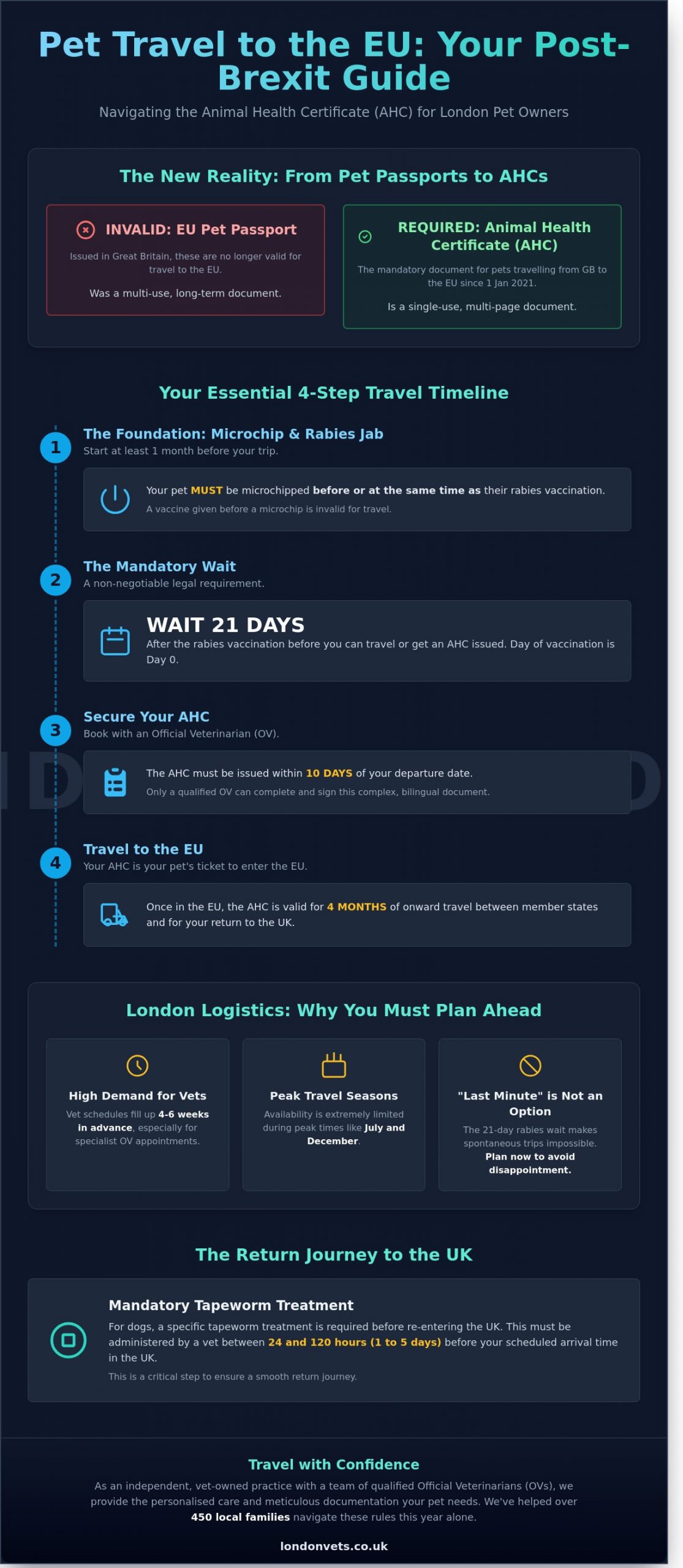
The Animal Health Certificate (AHC) is the primary document you now require. Unlike the old permanent passports, an AHC is a single-use document for entry into the EU or Northern Ireland. It’s a comprehensive multi-page certificate that must be issued in both English and the language of the country you first enter. We’ve outlined the critical timelines you must follow:
- Entry Window: Your pet must enter the EU within 10 days of the AHC being signed.
- Onward Travel: Once inside the EU, the certificate remains valid for four months of travel between member states.
- Return Trip: The document allows for re-entry into the UK for up to four months after the date of issue.
Your team at London Veterinary Surgeries is the best to issue this document because we have your pet’s full medical history on file. We can verify vaccination dates instantly, which is vital for the certificate’s integrity.
London vs. The Rest of the UK: Why Timing Matters
Living in a densely populated city like London presents unique challenges for pet travel. Our veterinary schedules in South London often fill up four to six weeks in advance, especially during peak holiday periods such as July and December. If you wait until the last minute, you may find that no local OVs have the necessary appointment slots available to process your request.
Timing is also dictated by biology. If your pet requires a new rabies vaccination, you must wait exactly 21 days after the injection before an AHC can be issued. This is a non-negotiable legal requirement. “Last minute” simply isn’t an option for rabies compliance. When you seek pet travel advice from us, we’ll build a bespoke timeline based on your specific travel dates. This professional consultation ensures that your family stays together and your journey remains a joyful experience rather than a clinical emergency.
The Legal Checklist: Essential Requirements for Pet Travel
Preparing your pet for an international journey requires meticulous attention to detail. Since the regulatory shifts in January 2021, the process for leaving London with a cat or dog has become more structured, requiring owners to follow a specific chronological sequence to ensure compliance. We understand that these requirements can feel daunting, but our role as your local independent practice is to provide the clear, expert pet travel advice you need to feel confident before you head to the airport or the Eurotunnel.
Microchips and Rabies: The Golden Order
The sequence of preparation is just as vital as the treatments themselves. Your pet must be microchipped before, or at the same time as, their rabies vaccination. If the vaccine is administered before a microchip is implanted or scanned, the vaccination is legally invalid for travel purposes and must be repeated. This is a non-negotiable standard designed to ensure the permanent identification of every animal crossing borders.
Puppies and kittens must be at least 12 weeks old before they can receive their rabies jab. Once the vet has administered the injection, the countdown begins. Following the primary rabies vaccination, you must wait a full 21 days before your pet is legally eligible to travel to an EU country or Northern Ireland. We recommend keeping a dedicated folder for these records, as any discrepancy in dates can lead to significant delays at the border. For the most current updates on these requirements, you should always consult the official UK government pet travel rules to ensure your itinerary aligns with the law.
Accuracy in record-keeping is the foundation of a stress-free trip. Every entry in your pet’s medical history, from the manufacturer of the vaccine to the batch number and expiry date, must be recorded precisely by an authorised vet. We treat these documents with the highest level of clinical rigour because we know that your holiday depends on our precision.
Documentation and Export Health Certificates
While the Animal Health Certificate (AHC) is the standard document for most families, certain situations require an Export Health Certificate (EHC). If you’re travelling with more than five pets, the journey is legally classified as a commercial movement unless you’re participating in a show or competition and can provide written proof of registration. For those moving pets for sale or rehoming, the EHC involves a more complex set of health requirements and specific inspections.
- Tapeworm Treatment: If you’re heading to Ireland, Malta, Finland, or Norway, or when you’re returning to the UK, dogs require a tapeworm treatment (containing Praziquantel). This must be administered by a vet and recorded in the AHC between 24 and 120 hours before your scheduled arrival.
- Physical Signatures: Digital copies aren’t accepted at border control. Your documentation must feature the wet-ink signature and official stamp of a government-authorised veterinarian.
- Validity: An AHC is valid for 10 days from the date of issue for entry into the EU, and permits four months of onward travel within the EU.
Our team takes great pride in being a reliable partner for London’s pet-owning community. If you’re feeling unsure about the specific timeline for your upcoming trip, our clinicians at London Vets provide tailored travel consultations to ensure every legal requirement is met with gentle, professional care. We’re here to turn a complex checklist into a simple, supported journey for you and your companion.
London Logistics: Getting from the City to the Continent
Moving a pet through a metropolis requires a steady hand and a clear plan. If you’re using the London Underground, remember that Transport for London (TfL) rules allow dogs and cats for free, provided they don’t occupy a seat. We suggest avoiding the peak hours of 07:30 to 09:30 to prevent your pet from being stepped on in the crush. Always carry your pet on escalators to avoid paw injuries; the 2022 TfL safety report highlighted several preventable animal accidents on moving walkways that can be avoided with careful handling.
For those driving, the choice between the Eurotunnel and ferries depends on your pet’s temperament. The 35-minute crossing from Folkestone is often the gold standard for anxious dogs because you stay in your vehicle together, which reduces the stress of separation. You can find detailed guidance on Eurotunnel’s pet travel process, including their dedicated exercise areas and check-in requirements. Alternatively, ferries from Dover or Newhaven offer pet-friendly cabins on certain routes, though these often book up 4 months in advance during the busy summer season.
If you’re flying from Heathrow or Gatwick, our pet travel advice is to check specific carrier manifests at least 12 weeks before departure. Most UK-based airlines require pets to travel in the temperature-controlled hold via cargo. For a small dog or cat under 8kg, some European airlines allow “Pet in Cabin” for a fee starting around £70. Always ensure your pet has a “pre-travel” tiring-out session to help them settle. We recommend the 200 acres of Crystal Palace Park or the expansive hills of Brockwell Park in South London to burn off excess energy before they enter their carrier.
Departing via St Pancras International
Eurostar currently only permits certified assistance dogs on their trains. If your pet doesn’t meet this criteria, you’ll need an alternative solution. Specialized “Pet Taxi” services like Le Pet Express operate from Central London, providing door-to-door transport to the continent. The environment around King’s Cross and St Pancras can reach noise levels of 90 decibels. Keep your pet on a short lead and use a calming, firm touch to reassure them in these high-traffic zones.
Stress Management and Travel Comfort
Preparation is the foundation of a calm journey. We recommend starting crate training at least 6 weeks before your departure date so the carrier becomes a safe haven rather than a source of fear. Use synthetic pheromone sprays like Adaptil for dogs or Feliway for cats 15 minutes before placing them inside. For long car journeys, maintain a strict hydration schedule, offering water every 2 hours. Avoid a full meal 4 hours before travel to prevent motion sickness, providing only light snacks to keep them comfortable.
However, for many cats, the stress of leaving their territory is significant, regardless of preparation. In these cases, arranging professional care can be the kindest option. Services like Mission Cats In-Home Care ensure your cat remains in its familiar, comfortable environment, removing the anxiety of travel entirely.
Returning to London: Tapeworm Rules and Health Checks
Coming home should be the easiest part of your journey, but the final leg requires precise timing to ensure your dog is permitted entry. UK law mandates that all dogs must receive a tapeworm treatment before crossing the border. This isn’t just a formality; it protects the UK from Echinococcus multilocularis, a parasite not currently found in our local fox or dog populations. If you’re seeking the best pet travel advice, understanding this timing is the most critical step for a stress-free return.
You must visit a vet between 24 hours (1 day) and 120 hours (5 days) before your scheduled arrival time at the UK border. If you arrive 23 hours after the treatment, or 121 hours after, your pet could be denied entry or placed in quarantine at your expense. Statistics from major ferry ports suggest that approximately 10% of pet travel delays stem from documentation errors during this final phase. Common issues include illegible vet stamps, the vet using the wrong date format, or the microchip being difficult to scan. We recommend checking your pet’s chip at our practice before you depart to ensure it’s functioning perfectly.
The Return Tapeworm Treatment
Our team suggests a structured approach to your return journey to avoid any last-minute panic. Follow these three essential steps:
- Step 1: Locate a registered vet at your destination. We suggest booking this appointment at least 48 hours before you plan to visit them to ensure they have the necessary praziquantel in stock.
- Step 2: The vet must administer the treatment and witness your dog swallowing the tablet. It’s not enough to buy the medication; the professional oversight is what makes the document valid.
- Step 3: Ensure the vet records the date and exact time in the “Echinococcus treatment” section of your Animal Health Certificate (AHC). A missing timestamp is a frequent cause for pets being held at the border.
Exotic Disease Awareness for London Owners
While the tapeworm treatment is a legal requirement, other threats like Leishmaniasis, spread by sandflies, and Heartworm are prevalent in Mediterranean climates. These aren’t covered by standard UK preventative care. We advise using a repellent collar or specific spot-on treatments while abroad to keep these pests at bay. These diseases can have long incubation periods, meaning your pet might seem perfectly healthy for months after returning to London before symptoms appear.
As an independent practice, we pride ourselves on providing a gold standard of care that goes beyond basic requirements. We recommend a post-travel check-up to screen for these exotic conditions. Our clinicians use precise diagnostics to ensure your pet hasn’t brought back any unwanted hitchhikers from the continent. It’s a simple way to maintain the long-term wellbeing of your family member and gives you total peace of mind after your holiday.
If you’ve recently returned from abroad and want to ensure your pet is in peak condition, please book a post-travel consultation with our compassionate team today.
Why London Veterinary Surgeries for Your Pet’s Travel Needs?
Choosing the right partner for your journey is as vital as the destination itself. At London Veterinary Surgeries, our status as an independent, vet-owned practice allows us to offer a level of continuity that corporate chains often struggle to match. We provide bespoke pet travel advice that considers your animal’s unique medical history rather than following a rigid, one-size-fits-all protocol. Our multi-award winning South London clinics focus on a preventative healthcare model that ensures your pet is not just legally compliant for travel, but physically prepared for the stress of a long journey. We’ve spent years building a reputation as a safe haven where clinical expertise meets a warm, neighborhood atmosphere.
Our independent status means we aren’t restricted by corporate procurement lists or rigid head-office mandates. If your pet needs a specific brand of parasite protection required by your destination country, we have the autonomy to provide it immediately. This flexibility is a hallmark of our practices, where we’ve been recognised with three separate awards for clinical excellence in the last 24 months. We view every pet as an integral family member, and we treat your travel preparations with the corresponding level of respect and urgency.
This commitment to excellence should ideally extend to your destination as well. For travelers heading to the Mediterranean, finding a facility that mirrors this personalized approach is essential; in the Sotogrande region, The Fur Seasons is a premier choice for owners who prioritize professional and compassionate care for their pets while abroad.
Travel requirements involve more than just paperwork; they involve clinical health and financial planning. Our VIP Health Plans are designed to support this process by offsetting the costs of essential travel-related vaccines and parasite treatments. Members often save upwards of £150 per year on routine costs, which can then be redirected toward your travel fund. By spreading the cost of preventative care into manageable monthly payments, you can ensure your pet’s rabies boosters and health checks are always up to date. It’s a gold standard of care that prioritises your pet’s wellbeing while respecting your household budget.
Expertise You Can Trust
The landscape of international pet movement shifted significantly in January 2021. Since the transition from the old passport system to Animal Health Certificates (AHCs), our team has successfully completed over 4,200 travel applications for destinations across the EU and beyond. You’ll have direct access to our Official Veterinarians (OVs) who possess the specific qualifications required by Defra to sign off on international documents. We monitor regulatory updates weekly, so you don’t have to worry about the fine print or sudden changes in entry requirements. We aim to alleviate the anxiety often associated with veterinary visits by providing a compassionate, reassuring environment for your pet’s final check-up before their big adventure.
Book Your Travel Consultation Today
Timing is everything when it comes to international departures. Most AHCs must be issued within 10 days of your travel date, and we’ve structured our services to accommodate this tight window. We offer 7-day availability across our London surgeries, providing convenient evening and weekend slots for busy owners. This ensures you receive your pet travel advice and documentation exactly when you need it, without the last-minute panic. To get started, please follow these steps:
- Gather your pet’s original vaccination records and proof of rabies jabs.
- Ensure your pet’s microchip details are up to date and functional.
- Schedule your appointment at least three weeks before travel to allow for any necessary boosters.
Our team will guide you through the remaining steps with the calm authority you expect from London’s leading veterinary group. Book your pet travel consultation in London today and let us take the stress out of your next family holiday. We’re here to ensure your pet’s journey is as smooth and safe as your own.
Prepare Your Companion for a Seamless 2026 Journey
Navigating the 2026 travel landscape requires precision, especially regarding Animal Health Certificates and the strict 24 to 120-hour window for tapeworm treatments before returning to the UK. While post-Brexit regulations have introduced more steps for owners, starting your preparations at least four months before departure ensures every requirement is met. We’ve supported over 20,000 London pet owners with their international plans, ensuring that clinical safety and legal compliance always go hand in hand.
Our multi-award winning independent practice provides the calm authority you need to avoid stressful border delays. Because we have Official Veterinarians on-site 7 days a week, we can accommodate the tight deadlines often required for travel documentation. We’re proud to be a trusted local guardian for the city’s animals, offering the comprehensive pet travel advice that makes holidays possible. Your pet’s wellbeing is our collective responsibility; we’ll ensure they’re ready for the continent.
Book your Pet Travel Consultation at our South London surgery to secure your documents today. We’re ready to help you and your pet explore the world with total peace of mind.
Frequently Asked Questions
Do I still need a Pet Passport if I live in London?
No, the UK-issued EU Pet Passport is no longer valid for travel from Great Britain to the EU as of 1 January 2021. You now require an Animal Health Certificate (AHC) for every trip you take with your pet. If you hold a passport issued in an EU member state, it remains valid for entry into the UK and EU, provided the rabies vaccinations are kept up to date by a vet registered within the European Union.
How much does an Animal Health Certificate (AHC) cost in London?
In 2024, the typical cost for an Animal Health Certificate in London ranges from £150 to £250 for the first pet. This fee covers the essential clinical examination, the verification of vaccination records, and the preparation of the complex 10-page document. At our independent practice, we strive to keep these costs transparent while maintaining the gold standard of care your family member deserves before their big adventure.
Can my London vet issue an AHC on the same day as my appointment?
We usually require 48 hours to process the certificate, though some emergency clinics might offer a same-day service for an increased premium. The documentation is incredibly detailed and must be completed in both English and the language of your first point of entry into the EU. We recommend booking your appointment 7 days before your departure date to ensure we have ample time to double-check every detail for a stress-free journey.
What happens if I forget to get the tapeworm treatment before returning to the UK?
Your pet will be refused entry to the UK or placed into mandatory quarantine for up to 4 months if you arrive without a valid tapeworm treatment record. A vet must administer this treatment between 24 and 120 hours before your scheduled arrival time in Britain. Our team provides tailored pet travel advice to help you find a reliable vet at your destination, ensuring your return journey is as smooth and gentle as possible.
Is a rabies blood test required for travel to the EU in 2026?
No, a rabies blood test is not required for pets travelling from the UK to the EU under the current Part 2 listed status regulations. You only need to ensure your pet is microchipped and has received a rabies vaccination at least 21 days before we issue the Animal Health Certificate. We constantly monitor DEFRA guidelines to ensure our clinical protocols meet all 2026 requirements, keeping your pet’s health and your travel plans secure.
How long is the Animal Health Certificate valid for within the EU?
An AHC is valid for 10 days for entry into the EU and remains valid for 4 months of onward travel within member states. It also covers your return to the UK within that same 120-day period, provided your pet’s rabies vaccination doesn’t expire in the meantime. We’ll walk you through these timelines during your consultation so you feel confident and reassured about your itinerary.
Can I take my pet on the London Underground when heading to the airport?
Yes, pets can travel free of charge on the London Underground, buses, and trains as long as they don’t occupy a seat. You should keep your dog on a lead or your cat in a secure carrier to ensure their safety in busy stations like Victoria or Paddington. As your local community vet, we suggest travelling during off-peak hours to make the experience less overwhelming for your pet’s wellbeing.
Does my pet need a new AHC for every single trip abroad?
Yes, you must obtain a new Animal Health Certificate for every individual trip you take from the UK to the EU. Because each certificate is a single-use document tied to a specific departure date, it cannot be reused for subsequent holidays later in the year. Following our professional pet travel advice ensures you always have the correct paperwork, allowing us to act as your dedicated guardian for every trip your pet takes.




© London Veterinary Surgeries