
Date: 17 Mar 2026
Last Tuesday, a Camden resident brought in their tabby, Jasper, facing a sudden £3,200 bill for an emergency specialist referral. It’s a heart-wrenching position we see too often in London, where the cost of living for pet owners has risen by approximately 8% since early 2025. You likely already view your cat as a cherished family member, yet the rising price of clinical excellence can make the search for cat insurance feel like an overwhelming financial burden. We understand that you want to provide the best possible care without the constant shadow of “what if” hanging over your household budget.
As an independent practice, we’re here to help you secure financial peace of mind by decoding the complex jargon of modern policies. We promise to help you distinguish between basic health plans and comprehensive coverage to ensure your feline friend receives a gold standard of care. This guide provides a clear comparison between Lifetime and Time-limited cover while highlighting how to spot the hidden exclusions that often catch owners off guard, ensuring you always have access to London’s top veterinary specialists.
Key Takeaways
- Understand the “London Premium” and why choosing the right cat insurance is essential for managing the higher veterinary costs associated with life in the capital.
- Learn the critical differences between Lifetime and Maximum Benefit policies to ensure your feline friend remains protected against chronic conditions for the long term.
- Clarify the distinction between insurance for unexpected emergencies and VIP Health Plans designed for routine preventative care like vaccinations and parasite treatments.
- Discover how to assess city-specific risks for indoor and outdoor cats to select a policy and excess structure that provides the best value for your London lifestyle.
- Find out how partnering with an independent, vet-owned surgery can simplify the claims process and reduce financial stress through direct billing options.
What is Cat Insurance and Why is it Essential for Londoners?
Cat insurance functions as a vital financial safety net, protecting your family from the stress of sudden veterinary expenses. For many owners, the question of What is pet insurance? is the starting point for securing their pet’s future. It’s a contract that covers the cost of medical treatments for accidents or illnesses, ensuring that your cat’s health isn’t dictated by your bank balance. In the fast-paced environment of the capital, this protection is more than a luxury; it’s a fundamental part of responsible pet ownership.
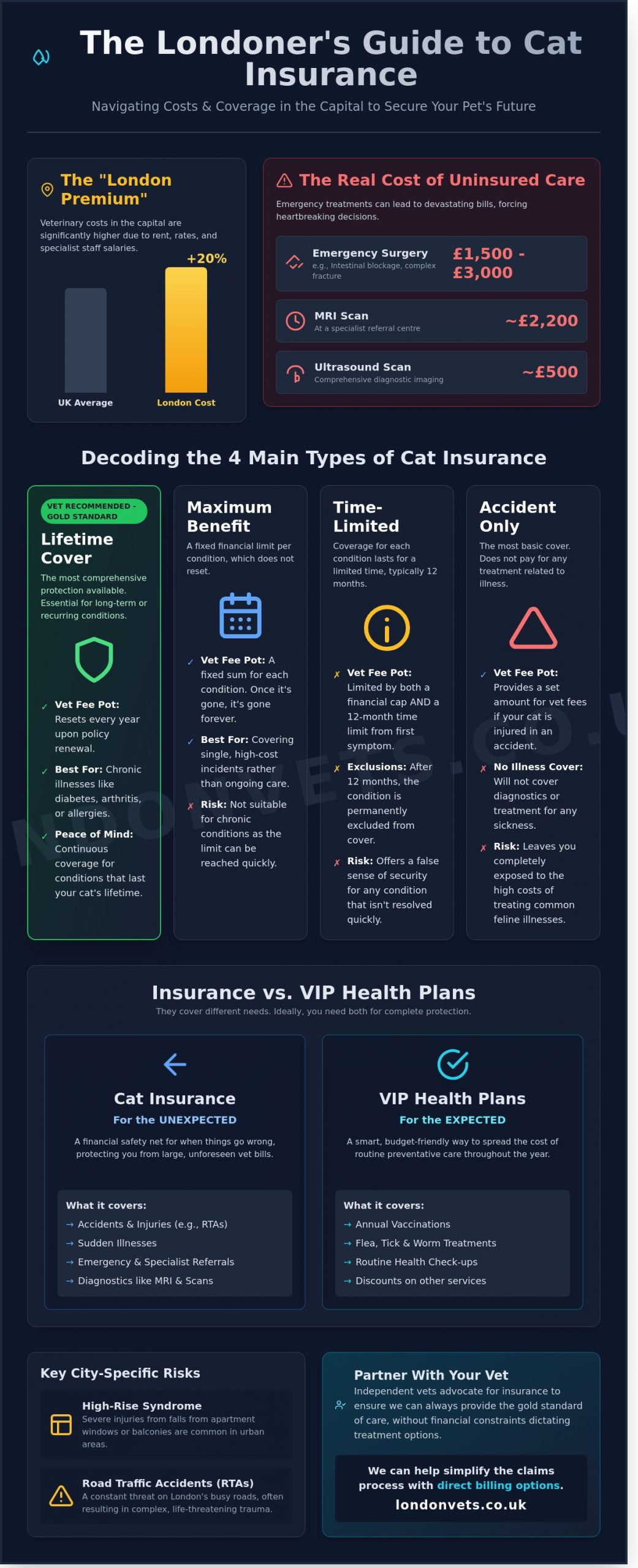
Living in London introduces what we call the “London Premium.” Veterinary costs in the capital are roughly 20% higher than the UK average. This discrepancy isn’t arbitrary. It reflects the significantly higher costs of operating high-tech clinics in the city, where business rates, property rents, and the salaries for specialized staff are at their peak. When your cat requires urgent care, these overheads are reflected in the final bill. Having cat insurance ensures that you can access top-tier medical facilities without hesitation.
Urban felines face specific hazards that their rural counterparts might avoid. We frequently see cases of High-Rise Syndrome, where cats suffer severe injuries from falling out of apartment windows or off balconies. Road Traffic Accidents (RTAs) are also a constant threat on busy thoroughfares like the South Circular or the A3. These incidents are rarely minor; they often involve complex fractures or internal trauma that require immediate, life-saving intervention. Insurance provides the peace of mind that your cat will receive this care the moment they need it.
The Real Cost of Uninsured Vet Care in London
The financial reality of emergency feline care can be stark. In South London, the average cost of emergency surgery for an intestinal blockage or a complex fracture typically ranges between £1,500 and £3,000. These figures don’t include the necessary diagnostics that precede the operation. A single MRI scan at a London referral centre now costs approximately £2,200, while a comprehensive ultrasound can add £500 to your bill. Without cat insurance, these costs can lead to the heartbreaking situation of “economic euthanasia.” This occurs when a treatable condition cannot be managed because the owner cannot afford the sudden financial burden. We believe no owner should ever have to make that choice.
The challenge of managing unexpected medical costs is something many families face; for those looking into how human dental practices provide similar financial flexibility, you can visit Smiley Dental Beverly to learn more about their accessible care options.
Why Independent Vets Advocate for Insurance
As an independent practice, our clinical decisions are driven by what’s best for your cat, not by corporate targets. We advocate for insurance because it allows us to focus on the gold standard of care. When a cat is insured, we can recommend the most effective diagnostic paths and treatments without being limited by immediate budget constraints. It means we can refer your pet to London-based specialists, such as neurologists or cardiologists, the very same day if required.
At London Veterinary Surgeries, we view ourselves as a local guardian for your pets. Our commitment to supporting insured owners is part of our promise to provide a safe haven for the animals in our community. We understand that your cat is a cherished family member. By choosing a comprehensive insurance policy, you’re partnering with us to ensure they live a long, comfortable, and healthy life in the heart of the city.
Decoding the 4 Main Types of Cat Insurance Policies
Selecting the right protection for your companion is a significant decision. We understand that the variety of options can feel overwhelming. At our practice, we believe clarity leads to better care. There are four primary categories of cat insurance you’ll encounter in the UK market. Each offers a different level of financial security for your pet’s medical needs, and choosing the wrong one can leave you vulnerable to unexpected costs.
- Lifetime Cover: This is the most robust option available. It provides a pot of money that resets every year when you renew your policy. It’s the only choice we recommend for managing chronic, long-term conditions that require ongoing medication or monitoring.
- Maximum Benefit: You receive a fixed amount of money for each new condition. There’s no time limit on when you can claim, but once the “pot” for that specific illness is empty, you must cover all future costs yourself.
- Time-Limited: These policies cover a condition for 12 months from the date of the first symptom. After the year ends, or the money limit is reached, that condition is excluded from future claims forever.
- Accident Only: This is the most budget-friendly tier. It covers injuries from mishaps like road traffic accidents but provides zero support if your cat develops an illness. Since 75% of vet visits are for illnesses rather than injuries, this leaves a large gap in protection.
The RSPCA on cat insurance emphasises that having a policy in place ensures you never have to make a heart-breaking choice based on your bank balance. We’ve seen how the right plan provides peace of mind during stressful emergencies, allowing us to focus entirely on your cat’s recovery.
Lifetime Cover: The Gold Standard for London Cats
We often treat recurring issues like feline asthma or diabetes in our clinic. A 2023 clinical review noted that 1 in 200 cats live with asthma; a condition that requires lifelong medication. Lifetime cover handles these cases by refreshing your limits annually. There’s a vital difference between “per condition” and “per year” limits. A “per year” limit of £4,000 covers everything in that period, whereas “per condition” might cap specific treatments. We suggest London owners look for at least £4,000 in annual cover to meet the higher costs of specialist diagnostics often required in the capital.
Exclusions and Fine Print to Watch Out For
The “Pre-existing Condition” trap is a common hurdle. If your cat has seen a vet for a cough before you buy a policy, any future respiratory issues won’t be covered. This is why we encourage owners to insure kittens before they reach 6 months of age. You should also check dental clauses. While many policies cover dental injury from an accident, 65% of basic plans exclude dental illness like resorptive lesions. Finally, be aware that breed influences costs. Owners of Persians often pay 25% more in premiums than those with Domestic Shorthairs due to known hereditary risks. If you’re unsure which plan fits your lifestyle, our team can help you review your cat’s health history during your next visit.
Cat Insurance vs. VIP Health Plans: Which Do You Need?
We often meet pet parents who feel they must choose between a monthly health plan and a comprehensive insurance policy. This stems from a common misunderstanding of how feline healthcare is funded. In simple terms, a health plan covers the “when,” while insurance covers the “what if.” You know your cat will need flea protection and annual boosters; these are certainties. You don’t know if they will develop a sudden heart murmur or suffer a fracture. By combining both, you ensure that every aspect of your cat’s medical journey is financially managed.
Our VIP Health Plan is a structured wellness programme designed to maintain your cat’s baseline health. It includes essential vaccinations, year-round flea and worming treatments, and regular clinical examinations. This isn’t insurance. It’s a proactive way to manage the costs of keeping your cat in peak condition. Conversely, cat insurance is a financial safety net for the unexpected. When you look into what to know about cat insurance, you will find that most providers specifically exclude routine or preventative care from their coverage. Without a health plan, you pay for these annual essentials entirely out of pocket on top of your insurance premiums.
The synergy between these two systems creates a gold standard of care. Regular screenings through a health plan often catch underlying issues before they become emergencies. For example, detecting early-stage kidney disease during a routine blood test allows for manageable dietary changes. If that same condition progressed to a crisis point without detection, the resulting emergency hospitalisation would be a matter for your insurance provider. By staying on top of preventative care, you effectively lower the long-term risk of high-cost claims.
Preventative Care: The Foundation of Health
At our Streatham Hill surgery, we believe that consistent monitoring is the best medicine. Our VIP members benefit from regular nurse consultations where we track weight, dental health, and joint mobility. These 15-minute check-ups are vital for spotting subtle changes in behaviour that might signal discomfort. Joining our Cat VIP Health Plan allows you to spread the cost of this essential care into manageable monthly direct debits. This approach saves most owners over £75 per year compared to paying for individual treatments separately.
When Insurance Takes Over
Insurance is indispensable when life takes an unpredictable turn. Consider the difference between an annual flu booster and a cat swallowing a stray piece of ribbon. The booster is a planned £60 expense covered by your VIP plan. The surgery to remove a foreign object can easily exceed £2,500. Most UK insurers also mandate annual health checks as a condition of your policy. If you miss a scheduled exam, they may refuse a claim for a related illness. Our London clinics facilitate this by documenting every routine visit, ensuring your cat insurance remains valid and ready when you need it most. We handle the paperwork for direct claims at our 24-hour facilities, reducing your stress during a crisis.
Choosing both options isn’t a luxury; it’s a strategic approach to responsible pet ownership in London. It ensures your cat receives gentle, expert care for their daily needs while protecting your family from the sudden financial shock of an accident. This dual-layered protection allows us to focus on what matters most: the long-term wellbeing and comfort of your feline companion.
How to Choose the Best Policy for Your London Lifestyle
Selecting the right cat insurance requires a nuanced understanding of our city’s unique landscape. As an independent practice, we see first-hand how urban environments shape feline health. If your companion explores the streets of South London, particularly near high-traffic zones like the A2 or South Circular, their risk profile differs significantly from a purely indoor cat. Data from the Royal Veterinary College’s VetCompass programme indicates that road traffic accidents remain a leading cause of emergency admissions for outdoor cats. Conversely, indoor felines may require policies that prioritise mental health support or weight management, as 40% of UK cats are now classed as overweight.
Pay close attention to the excess structures. A standard fixed excess might be £75 or £100 per condition. However, once your cat reaches the age of 8 or 10, many insurers introduce a “co-payment.” This means you pay the fixed excess plus a percentage, often 20%, of the remaining bill. For a complex procedure costing £3,000, that 20% adds £600 to your out-of-pocket expenses. We recommend checking if your vet supports “Direct Claims.” At London Veterinary Surgeries, we aim to alleviate financial stress by billing insurers directly whenever possible, so you only pay your excess on the day. This keeps your focus on your pet’s recovery rather than your bank balance.
Dental disease affects 80% of cats over the age of three. In London, where busy schedules can make home tooth brushing difficult, professional dental care is vital. Ensure your policy covers dental illness, not just accidents. Many basic cat insurance plans exclude tooth decay or gingivitis, leaving owners to cover costs that frequently exceed £500 for extractions and imaging. We believe dental health is a cornerstone of feline wellbeing, and your policy should reflect that.
The principle of investing in specialized health care is universal; just as humans might look for advanced solutions like full arch dental implants sterling va to restore their quality of life, providing your cat with professional dental support is a key component of their long-term vitality.
City-Specific Considerations for Cat Owners
London’s density brings specific pressures. If you live in a flat in Wandsworth with multiple cats, look for multi-pet discounts which typically save 10% to 15% on premiums. “Loss and Recovery” cover is another urban essential. With 8.9 million people living in close proximity, a lost cat can be difficult to locate. This cover often provides £500 to £1,000 for local advertising and reward costs to help bring your family member home safely.
Questions to Ask Your Insurer Before Signing
Before committing, ask if the policy covers specialist referral centres. London is home to world-class specialists, but their fees are higher than general practice. Confirm if your premium will spike after a claim. Some providers use claims-based pricing, while others, like many “Lifetime” policy providers, keep increases more predictable. Finally, verify if the “benefit limit” for a condition resets every year or if it is a total limit for the cat’s entire life. Clear answers now prevent heartbreak during a crisis.
Protect your companion’s future by exploring our comprehensive wellness and insurance guidance today.
Partnering with London Veterinary Surgeries for Insured Care
We understand that managing cat insurance claims can feel like a daunting administrative task during a stressful time. As an independent, vet-owned group, we take a proactive role in helping you navigate this process with ease. We don’t just provide clinical treatment; we act as your dedicated advocate with the insurance provider. Our team understands the specific requirements of various UK policies, ensuring that the medical records we submit are precise, detailed, and processed quickly to facilitate a smooth claim experience.
To reduce your immediate out-of-pocket stress, we offer direct claims for 95% of major UK insurance providers. This means that for eligible treatments, we collect the payment directly from your insurer. You only need to pay your policy excess and any non-covered items at the time of your appointment. This system is designed to keep your focus entirely on your cat’s recovery rather than the logistics of your bank balance. We believe financial concerns shouldn’t stand in the way of high-quality clinical care.
Accidents and sudden illnesses don’t follow a schedule. We provide 24-hour emergency support for our insured patients across London, ensuring help is always available. Whether it’s a Sunday afternoon or 3:00 AM on a Tuesday, our skilled clinical team is ready to provide life-saving interventions without delay. We treat every feline visitor with the same devotion we’d show our own pets. Your cat is a member of our family, and they’ll receive the gentle, expert attention they deserve in a safe haven environment.
The Benefit of Independent Care
Since opening our doors in 2006, we’ve cared for over 20,000 London pets. Being an independent practice is a core part of our identity. It means our clinical decisions are driven by your cat’s specific health needs rather than corporate profit targets or rigid head-office protocols. Our multi-award-winning team has the autonomy to recommend the gold standard of treatment tailored to your pet’s lifestyle. We’ve spent 18 years building a reputation for excellence, combining high-level diagnostics with a warm, neighbourhood touch that makes every visit feel personal and unhurried.
Next Steps for Your Cat’s Protection
Securing your pet’s future involves a dual approach to healthcare. While cat insurance covers unexpected accidents and chronic illnesses, our VIP Health Plan manages the essential preventative care like annual vaccinations and monthly parasite control. Combining these two elements ensures total peace of mind for every eventuality. We recommend you book a consultation at our Streatham Hill surgery to discuss your cat’s unique health profile. During this visit, we’ll help you understand how our services integrate with your policy to provide a comprehensive safety net.
Ready to give your feline friend the protection they deserve? Register your cat with London Veterinary Surgeries today and experience the difference that independent, compassionate care makes for your family.
Give Your London Cat the Protection They Deserve
Navigating the complexities of cat insurance doesn’t have to be a daunting task. By selecting the right policy and pairing it with a preventative health plan, you’re building a comprehensive safety net that covers everything from routine check-ups to life-saving surgical procedures. It’s about more than just managing costs; it’s about ensuring your feline companion enjoys a long, vibrant life in our bustling city.
Since 2006, our multi-award winning independent practice has served as a dedicated local guardian for the capital’s pets. We provide 24-hour emergency care and clinical expertise delivered with a gentle, human touch. You’ll rest easy knowing that professional support is always available, regardless of the hour. We’re here to help you navigate every medical decision with calm authority and genuine compassion.
Join the 20,000+ London pet owners who trust us; register your cat today
We look forward to welcoming you and your cat into our community very soon.
Frequently Asked Questions
Is cat insurance worth it for an indoor cat in London?
Yes, cat insurance remains a vital safeguard for indoor cats because household accidents and sudden illnesses don’t stop at the front door. Data from the Association of British Insurers shows that the average claim for feline treatment reached £848 in 2023. Whether it’s an accidental fall or a digestive issue, having cover ensures your companion receives the gold standard of care without the stress of unexpected financial burdens.
How much does cat insurance cost on average in the UK?
On average, you’ll pay between £12 and £28 per month for comprehensive cover in the UK. Research from various consumer indices in late 2023 indicates that premiums vary based on your cat’s breed and your specific London postcode. While basic accident-only policies are cheaper, most owners choose lifetime cover to ensure long-term support for chronic conditions. We recommend comparing at least three quotes to find the right balance for your family budget.
Can I get cat insurance if my cat already has a medical condition?
You can still obtain a policy, but most insurers won’t cover treatment for any condition your cat had before the policy began. Statistics show that 90% of UK providers exclude pre-existing illnesses to keep premiums manageable. However, some specialist providers now offer cover for conditions that haven’t required treatment for at least 24 months. Our team can help you understand how these exclusions might affect your cat’s specific healthcare journey.
Does cat insurance cover vaccinations and neutering?
Standard insurance policies don’t typically cover routine preventative treatments like vaccinations, neutering, or flea control. These are considered predictable costs of pet ownership rather than unexpected risks. This is exactly why we created the London Cat VIP Plan. Our plan complements your insurance by covering 100% of annual boosters and health checks, ensuring your cat stays healthy while your insurance handles the emergencies.
What is the best age to start cat insurance?
The best time to start cat insurance is when your kitten is 8 weeks old and hasn’t developed any medical history. Insuring early locks in lower rates, as premiums for cats over 10 years old can be 50% higher than for younger pets. Starting early also ensures that any future illnesses are covered before they become pre-existing conditions. It’s a proactive way to protect your cat’s wellbeing from the very first day.
How do direct claims work at London Veterinary Surgeries?
We simplify the process by settling directly with your insurance provider, meaning you only need to pay your agreed excess at the surgery. Our dedicated claims team handles the paperwork for over 25 major UK insurers, usually completing the administrative side within 7 working days. This approach removes the financial pressure during stressful times, allowing you to focus entirely on your cat’s recovery and comfort while we manage the logistics.
Will my cat insurance cover dental cleaning or extractions?
Coverage for dental care varies significantly, as many policies only cover dental injuries caused by accidents rather than tooth decay or gum disease. Only about 20% of standard UK policies include full dental illness cover as a default. We suggest checking your policy wording for dental illness specifically. Since 70% of cats over three years old show signs of oral disease, supplemental dental cover is often a wise investment for long-term health.
What happens to my insurance if I move house within London?
Moving house requires you to notify your insurer immediately, as your new postcode can influence your monthly premium. Insurance costs in London can fluctuate by 12% between different boroughs based on local veterinary costs and claim frequencies. We’ve seen that moving from a quiet suburb to a busy central area sometimes increases rates slightly. Keeping your details current ensures your cover remains valid and your cat’s protection is never interrupted.



© London Veterinary Surgeries