
Date: 07 Apr 2026
Imagine returning from a crisp January walk on Wimbledon Common, only to notice a small, unexplained patch of red skin on your Labrador’s paw. Since the first UK case was identified in November 2012, this exact moment has sparked a deep sense of dread for pet owners across the capital. We know that the mystery surrounding alabama rot dogs can make every muddy trail feel like a hidden risk. It’s completely natural to feel anxious when a disease has no known cause, especially when your dog’s health is your top priority.
At London Vets, we believe that clinical clarity is the best cure for worry. We’ve developed this guide to help you understand the symptoms, assess the real risks in 2026, and implement essential preventative steps to keep your companion safe. We’ll show you exactly how to distinguish a minor irritation from a serious lesion and provide practical hygiene tips for your winter walks. By the end of this article, you’ll have a clear, supportive plan to protect your pet while enjoying South London’s beautiful green spaces with total peace of mind.
Key Takeaways
- Understand the nature of Cutaneous and Renal Glomerular Vasculopathy (CRGV) and why this rare condition requires vigilant awareness from all dog owners.
- Learn to identify the subtle early symptoms of alabama rot dogs, specifically focusing on unexplained skin lesions or swelling on the paws, legs, and underbelly.
- Assess the specific environmental risks found in London’s muddy woodland areas to better protect your pet during the high-risk winter and spring seasons.
- Implement the “Wash and Check” hygiene routine as a vital preventative measure after every walk to minimize exposure to potential environmental triggers.
- Discover how our independent South London practice provides a safe haven with 24-hour emergency care and expert diagnostic support for your peace of mind.
What is Alabama Rot? Understanding CRGV in London Dogs
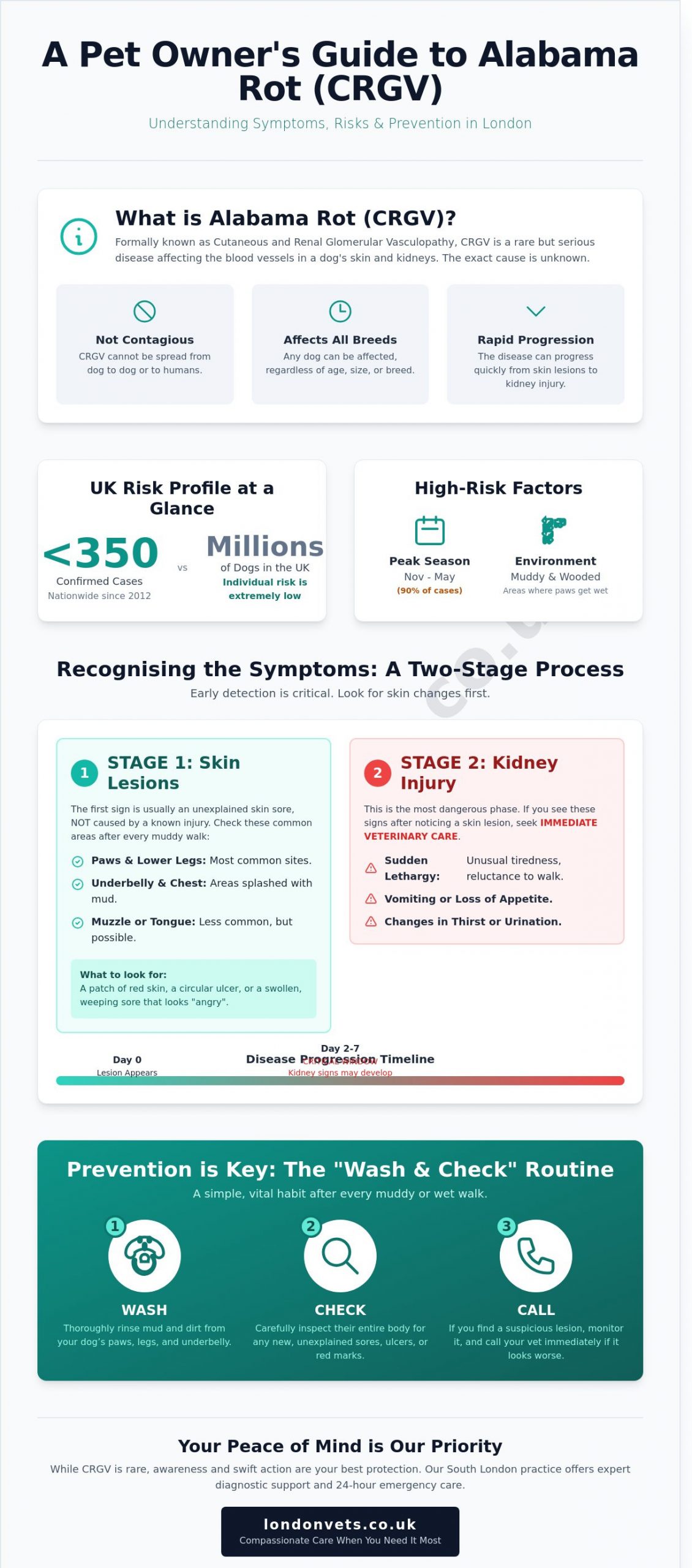
We understand that hearing reports of alabama rot dogs causes immediate concern for any pet owner. Formally known as Cutaneous and Renal Glomerular Vasculopathy (CRGV), this condition is a rare but serious disease that requires our collective attention. Since it first appeared in the UK in 2012, veterinary researchers have worked tirelessly to understand its origins. While the exact cause remains a mystery, data shows that 90% of cases occur between November and May, often following walks in muddy, wooded areas.
As an independent practice, we believe in providing a gold standard of transparency. While headlines can be alarming, the total number of confirmed cases across the Greater London area remains minimal. Since 2012, the UK has seen fewer than 350 confirmed cases nationwide. In a city with hundreds of thousands of dogs, the individual risk to your companion is remarkably small. Our role is to act as your local guardian, offering the clinical expertise needed to keep your family members safe without causing unnecessary panic.
The Science of CRGV: How It Affects the Body
CRGV specifically targets the tiny blood vessels within a dog’s skin and kidneys. It triggers small blood clots that block the flow of oxygen, leading to localized tissue damage. The progression is often rapid. Owners typically notice distinct skin sores or ulcers, usually on the lower legs, chest, or abdomen. If the disease progresses, it can lead to acute kidney injury within two to seven days. It’s vital to remember that CRGV isn’t contagious. You can’t catch it from your pet, and it won’t spread between dogs in the park. We treat every case with a sense of urgency, focusing on gentle, comprehensive care to support the body’s natural recovery processes.
Why “Alabama Rot” is a Misleading Name
The term “Alabama Rot” dates back to the 1980s when the condition was first identified in Greyhounds in the United States. However, the UK version of the disease is different. Our clinical teams prefer the term CRGV because it accurately describes the medical process. Unlike the original 1980s cases, the modern UK variant affects all breeds, sizes, and ages. Whether you own a Miniature Schnauzer in Hampstead or a Labrador in Richmond, the risk factors are identical. By using the clinical name, we move away from outdated stigmas and focus on the specific diagnostic needs of alabama rot dogs in a modern, urban environment.
Recognising the Symptoms: Skin Lesions and Kidney Warning Signs
Identifying the early markers of CRGV is vital for every pet owner in our community. While the specific cause of alabama rot dogs remains under intensive study by specialists at Anderson Moores Veterinary Specialists, we know that early clinical recognition significantly improves the window for supportive care. The most common initial sign is an unexplained skin lesion that hasn’t been caused by a known injury. You’ll typically find these on the distal limbs, which include the paws and lower legs, though they also appear on the underbelly, muzzle, or tongue. These areas are most likely to come into contact with the muddy terrain found in London’s damp woodland areas during the winter months.
We’ve observed that these lesions are often the first and only warning sign. Clinical records from 2024 and 2025 indicate that skin changes usually appear between 1 and 10 days before any signs of kidney dysfunction develop. This timeframe is your critical window for action. We encourage you to make a full-body skin check part of your post-walk routine. It’s a simple, gentle way to ensure your dog’s wellbeing while strengthening your bond.
Visual Guide to CRGV Skin Lesions
A typical CRGV lesion often appears as a patch of red skin, a circular ulcer, or a swollen, weeping sore. It’s easy to mistake these for a simple bramble scratch or a seasonal allergy. However, a standard scratch usually scabs over within 12 hours and doesn’t look “angry” or ulcerated. If you notice a new mark, take a clear photo immediately next to a coin for scale. Check the site again in 4 hours. If the redness spreads, the hair starts falling out around the site, or the center begins to look like an open wound, it requires an urgent professional assessment.
Signs of Kidney Failure to Watch For
The most dangerous phase of this condition involves the kidneys. If the disease progresses, systemic signs will emerge as the organs struggle to filter toxins. You must watch your dog’s daily habits closely for these specific red flags:
- Sudden lethargy: An unusual lack of energy or a reluctance to go for walks.
- Vomiting: This often occurs alongside a complete loss of appetite (anorexia).
- Increased thirst: Noticing the water bowl needs refilling more than twice as often as usual.
- Urination changes: Either a significant increase in frequency or, in late stages, a total stop in urine production.
If you spot any combination of these symptoms, it’s a medical emergency that requires immediate intervention. Our team provides the comprehensive diagnostic care needed to support your dog through these critical moments. We treat every pet as a member of our own family, and we’re here to provide a safe haven when you’re worried about your dog’s health. Fast action remains the gold standard for managing alabama rot dogs effectively.
Assessing the Risk: Muddy Walks and London Green Spaces
Understanding where the risk lies helps us protect our companions without sacrificing their joy. Research from Anderson Moores Veterinary Specialists shows a compelling correlation between alabama rot dogs and wet, woodland environments. Since the first UK cases were identified in 2012, over 90% of confirmed CRGV cases occurred during the winter and spring months. This seasonal pattern suggests that moisture and temperature play a vital role in how the disease manifests in the environment.
While iconic spaces like Richmond Park and Wimbledon Common see thousands of paws every week, they aren’t off-limits. Most London parks remain perfectly safe for your daily routine. We want to reassure you that despite the headlines, the actual number of cases remains very low relative to the millions of walks taken every year. It’s a rare condition, and our goal is to provide you with the clinical facts to manage that risk sensibly.
Navigating London’s Woodlands Safely
High-risk terrain typically involves boggy ground, standing water, and deep woodland mulch. If you’re walking in heavily wooded areas during the peak “Alabama Rot season” from November to May, we recommend sticking to well-trodden paths. Urban green spaces like Streatham Common or Brockwell Park generally present a lower risk. These areas feature more managed grass and paved routes, which limits exposure to the deep, undisturbed silt where the unknown trigger might reside. Simple choices in where you walk can significantly reduce the amount of mud your dog collects.
The Role of Environmental Factors
Current veterinary research continues to investigate whether specific bacteria or toxins in the soil cause the condition. Data confirms that dry, summer conditions see almost zero reported cases across the UK. This suggests the environmental trigger requires damp, cool conditions to thrive. We advise our community to monitor local health alerts for the SW postcode areas. Staying informed through reputable sources like the Royal Veterinary College ensures you have the facts. If you’re ever concerned about alabama rot dogs after a particularly muddy trek, our team is here to provide the clinical expertise and gentle reassurance you need to feel at ease.
Prevention and Hygiene: The Post-Walk Routine for Londoners
While the exact environmental trigger for alabama rot dogs remains a subject of intensive study by the Royal Veterinary College as of 2024, our team emphasizes that proactive hygiene is your most powerful tool. Since the majority of confirmed cases occur between November and May, particularly after walks in muddy, wooded areas, we advocate for a strict “Wash and Check” protocol. This routine isn’t just about keeping your hallway clean; it’s about physically removing potential contaminants before they can penetrate the skin barrier.
For those frequenting damp terrains like Richmond Park, Highgate Wood, or Wimbledon Common, we suggest keeping a dedicated cleaning kit in your vehicle or by the front door. We’ve found that consistent, immediate washing significantly reduces the duration of skin exposure to organic material that may harbor the disease. We view this as a gold standard of preventative care for the modern London pet owner.
How to Wash Your Dog Correctly After a Muddy Walk
- Step 1: Use lukewarm water to rinse away all visible mud. Focus intensely on the paws, lower legs, and the underbelly, as these areas have the most direct contact with the soil. Avoid hot water, which can further irritate skin already sensitized by the cold.
- Step 2: Apply a gentle, vet-approved antiseptic shampoo. This ensures a deep clean of the skin surface rather than just a superficial rinse. We recommend formulas that support the natural lipid layer of the canine epidermis to keep the skin resilient.
- Step 3: Perform a tactile inspection. Carefully feel every paw pad, the webbing between toes, and the “armpit” areas. You’re looking for new lumps, redness, or any localized swelling that wasn’t there before the walk.
Thorough drying is a vital final step that many owners overlook. Leaving the skin damp for extended periods can lead to dermatitis or skin maceration, which weakens the natural defenses of the skin. Use a clean, absorbent towel or a low-heat pet dryer to ensure your dog is completely dry before they settle down. For breeds with highly sensitive skin, protective dog boots or waterproof leg covers provide a practical physical barrier against the mud during the peak winter months.
When to Contact Your Vet Immediately
We advise a zero-tolerance policy for unexplained skin changes. If you discover a sore, blister, or patch of red skin that you can’t attribute to a known bramble scratch or minor injury, contact a professional right away. The window for intervention is narrow. Clinical data indicates that kidney failure can follow the appearance of skin lesions in as little as 3 to 7 days. Waiting to see if a wound heals on its own is a risk we don’t want any family to take when dealing with alabama rot dogs.
Our team at London Vet Specialists provides the advanced diagnostics and 24-hour monitoring required for these complex cases. We treat every concern with clinical urgency and emotional sensitivity to ensure your pet stays safe.
If you’ve noticed an unusual lesion or wish to discuss a preventative healthcare plan, contact our compassionate team today for an expert consultation.
Compassionate Care at London Veterinary Surgeries
We understand the deep anxiety that news of alabama rot dogs can cause local families. As an independent, vet-owned practice, we prioritize clinical autonomy and personalized attention over corporate quotas. Our team remains available 24 hours a day for emergency consultations, providing a vital safety net for owners across South London. If you notice a suspicious lesion or your pet seems unwell after a walk in the woods, you won’t face a long wait or a cold reception. We treat every dog as if they were our own, combining medical precision with the gentle touch your family member deserves during a high-stress health scare. Our commitment to clear, empathetic communication means you’ll always understand the clinical reasoning behind our recommendations.
Our Advanced Diagnostic and Treatment Facilities
Speed is critical when managing suspected CRGV cases. We utilize sophisticated on-site blood panels to monitor kidney function, tracking creatinine and urea levels with high frequency. Our veterinary surgery is equipped with sterile suites for skin biopsies, which remain the gold standard for definitive diagnosis. For dogs requiring intensive support, we provide dedicated 24-hour hospitalisation and aggressive fluid therapy. This level of intensive care helps manage the systemic effects of the disease, ensuring your pet is never left unattended while they fight for recovery. We focus on stabilizing patients quickly to give them the best possible chance of overcoming the condition through constant monitoring and rapid intervention.
Prevention as Part of Your Pet Health Plan
While the exact cause of alabama rot dogs remains a subject of ongoing research in 2026, early detection of skin abnormalities is your best defense. Regular wellness exams allow us to map your dog’s skin health and catch issues before they escalate. We encourage our community to join our pet health plan, which integrates year-round preventative support and routine check-ups into a manageable care schedule. These visits aren’t just about vaccines. They’re an opportunity for our vets to perform thorough physical assessments and answer your specific concerns about local health risks. We’re here to protect your family member, day or night, offering a safe haven and expert guidance in the heart of London.
- Independent, vet-led care tailored to your dog’s specific needs.
- Round-the-clock emergency support for South London residents.
- Advanced diagnostic tools for rapid kidney function assessment.
- Transparent communication to guide you through difficult decisions.
Protecting Your Dog’s Health in London’s Green Spaces
Staying informed is the first step toward keeping your companion safe while enjoying the capital’s parks. While CRGV remains rare, veterinary data from 2026 emphasizes that early detection of unexplained skin lesions is vital for a positive outcome. A simple post-walk hygiene routine after visiting muddy areas helps manage risks effectively. We understand the deep worry that alabama rot dogs can cause for families, but proactive care and expert guidance provide the best protection for your pet. As a multi-award winning independent practice, we’ve earned the trust of over 20,000 London pet owners by delivering a gold standard of clinical excellence and compassionate support.
Our dedicated team provides 24-hour emergency care 7 days a week, so your family member is never without a safe haven. Whether you’ve noticed a concerning mark or simply want the reassurance of a professional assessment, we’re ready to help. Contact London Veterinary Surgeries for 24-hour emergency advice or to book a health check today. We’re here to ensure you can navigate every London walk with total confidence and peace of mind.
Frequently Asked Questions
Is Alabama Rot common in London?
Alabama Rot remains exceptionally rare in London. Since 2012, Anderson Moores Veterinary Specialists have recorded fewer than 10 confirmed cases within the Greater London boundary. While we understand the anxiety this causes, the statistical likelihood of your pet contracting the disease is very low. We monitor local reports closely to ensure our community stays informed about any shifts in local risk levels.
Can my dog catch Alabama Rot from another dog?
You don’t need to worry about your dog catching the disease from another pet. There’s no evidence that alabama rot dogs can pass the condition to each other through contact or shared environments. Research suggests the cause is likely environmental, possibly linked to specific bacteria or toxins found in wet, muddy woodland soil during the winter months.
What does an Alabama Rot sore look like?
An Alabama Rot lesion typically appears as a distinct, circular patch of red, sore, or ulcerated skin. These sores are most often found on the lower legs, paws, or muzzle and aren’t usually caused by a known injury. You might notice swelling or a patch of hair loss that looks like a slow-healing graze. If you spot an unexplained wound, please contact us for a professional assessment.
Should I stop walking my dog in the woods during winter?
You don’t need to avoid the woods entirely, but taking precautions between November and May is sensible. Data from the Royal Veterinary College shows that 90% of cases occur during these colder, wetter months. We recommend washing mud off your dog’s legs and belly immediately after walks. This simple habit helps reduce potential exposure to environmental triggers while allowing your pet to enjoy their exercise.
Is there a vaccine for Alabama Rot?
Currently, there’s no vaccine available to prevent CRGV. Because the exact cause of the disease remains unconfirmed by researchers, a preventative injection hasn’t been developed yet. Our team focuses on early detection and supportive care as the most effective ways to manage the risk. We stay updated on the latest veterinary research to bring you any breakthroughs in preventative medicine as they happen.
How quickly does Alabama Rot progress?
The disease moves quickly, with kidney failure often developing within 1 to 9 days of the first skin sores appearing. Early signs of kidney distress include lethargy, loss of appetite, and vomiting. Because alabama rot dogs require urgent intervention, we treat every suspicious lesion with high priority. Acting within the first 24 to 48 hours of noticing symptoms significantly improves the opportunity for intensive supportive treatment.
Can humans get Alabama Rot from their pets?
There’s no evidence that humans can contract Alabama Rot from dogs or the environment. The condition specifically affects canines and hasn’t been reported in humans or other household pets like cats. You can continue to comfort and care for your dog safely. Our role is to provide a safe haven for your pet’s recovery while ensuring you feel supported and informed throughout the process.
What is the survival rate for dogs with CRGV?
The survival rate is unfortunately low, with approximately 90% of cases resulting in fatality once kidney failure has developed. However, if the condition is caught and treated while it’s limited to skin lesions, the prognosis is much better. We use advanced diagnostics and 24-hour monitoring to give every patient the best possible chance. Early recognition of skin changes is the most critical factor in changing these outcomes.



© London Veterinary Surgeries