
Date: 30 Apr 2026
Last Tuesday, Sarah discovered that even a short trip on the Tube with an 8-week-old puppy can feel like a major expedition. She arrived at our clinic visibly anxious because her new Labrador wouldn’t stop crying in his carrier. It’s a feeling we understand deeply; the transition from breeder to a bustling London home is a huge milestone that often comes with a side of worry. You probably feel the same pressure to get everything right, which is why having a reliable puppy first vet visit checklist is essential for your peace of mind. We know you want to provide the best start for your new family member without feeling overwhelmed by conflicting online advice or the complexities of the UK vaccination schedule.
Our 2026 guide is designed to transform that initial anxiety into a calm, structured experience. We’ve distilled our years of independent clinical expertise into a clear plan that ensures your puppy’s preventative healthcare is on the right track from day one. You’ll discover exactly what to pack in your travel bag, how to prepare for the unique challenges of London’s public spaces, and the five critical questions to ask your vet to build a lasting partnership. This structured approach provides a professional roadmap for a healthy, happy pup and a clear path toward their long-term wellbeing.
Key Takeaways
- Learn exactly what to pack in your “Puppy Go-Bag” and which essential breeder documents you need to gather for a seamless first appointment.
- Follow our comprehensive puppy first vet visit checklist to ensure you have every item and question ready for your companion’s thorough nose-to-tail examination.
- Identify the specific urban health risks in the South East, including why Lungworm protection is a non-negotiable part of your London puppy’s preventative care.
- Master the logistics of city travel by learning how to safely navigate TfL rules for the Tube and buses with a young, unvaccinated puppy.
- Prepare for your puppy’s future by comparing the benefits of pet insurance versus preventative health plans tailored for London’s unique environment.
Essential Puppy First Vet Visit Checklist: What to Pack
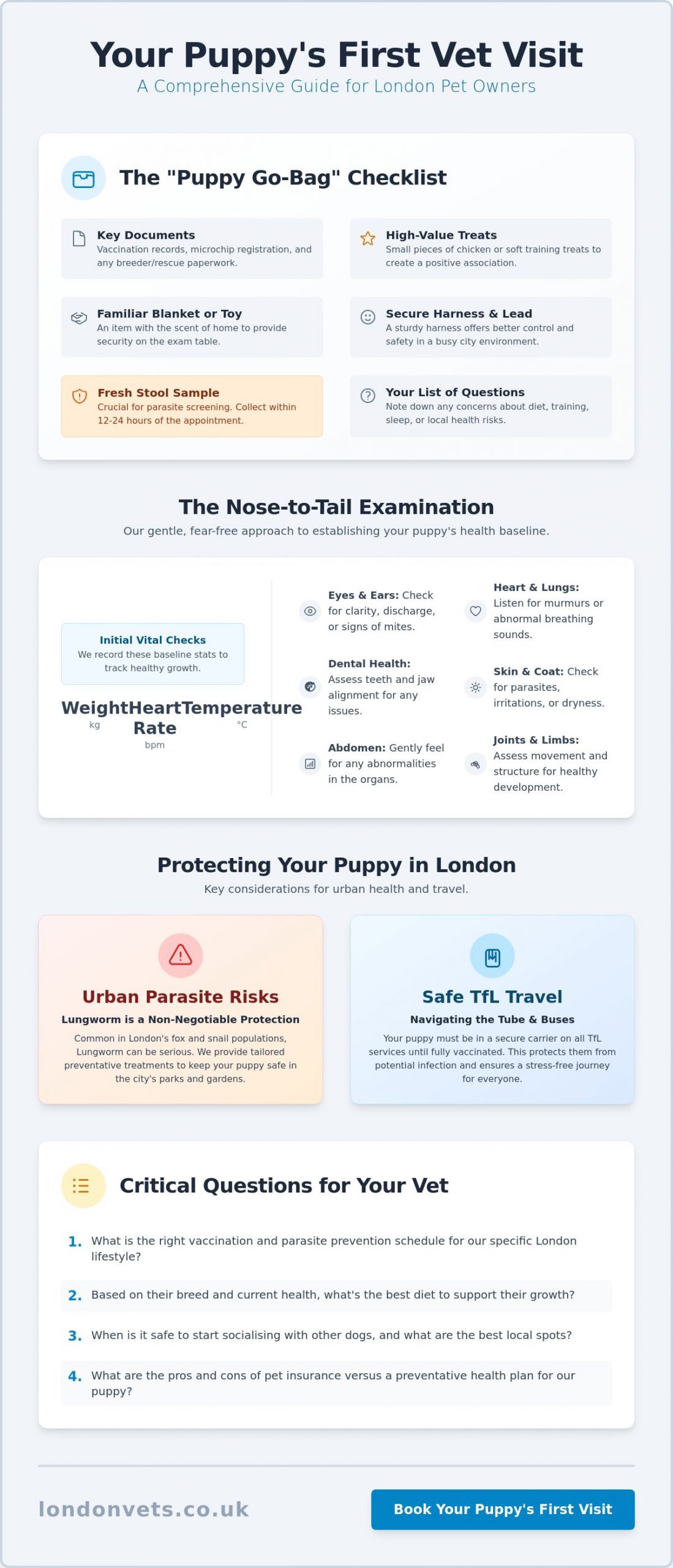
Bringing a new puppy home to a bustling city like London is a milestone filled with joy and perhaps a little bit of nerves. We understand that the first clinical appointment can feel overwhelming for both you and your pet. Our puppy first vet visit checklist ensures you arrive prepared, allowing our team to focus entirely on your new family member’s wellbeing. Preparation is the key to a calm, productive consultation that sets the foundation for a lifetime of health.
Documentation and Records
Your breeder or rescue centre should provide a comprehensive folder of your puppy’s medical history. We need to review the dog vaccination schedule followed so far to determine exactly when the next boosters are required. Under the Microchipping of Dogs (England) Regulations 2015, your puppy must be microchipped by eight weeks of age. Please bring the registration documents so we can verify the chip’s placement and ensure it’s correctly linked to your current address. If you’ve been given “free cover” insurance notes, bring these along so we can help you activate the policy during your visit.
Comfort and Reward Items
The clinic environment is full of unfamiliar scents and sounds. We want your puppy to view our practice as a safe haven rather than a place of stress. Pack a “Go-Bag” containing:
- High-value treats: Bring something special like small pieces of cooked chicken or soft training treats to reward brave behaviour on the scales.
- A familiar blanket: A fleece or towel that smells like their bed provides a sense of security when placed on the stainless steel exam table.
- Secure travel gear: Use a sturdy, London-appropriate harness and lead. City environments can be unpredictable; a harness offers better control and safety than a collar alone if your pup becomes startled.
It isn’t the most glamorous task, but bringing a fresh stool sample is perhaps the most important item on your puppy first vet visit checklist. Puppies are highly susceptible to intestinal parasites, some of which can be transmitted to humans. A sample collected within 12 to 24 hours of your appointment allows us to conduct precise diagnostic screening. This helps us tailor a deworming protocol that’s specific to your pet’s needs rather than relying on a one-size-fits-all approach.
Finally, prepare a written list of questions. Whether you’re concerned about local fox lungworm risks, sleep patterns, or the best socialisation spots in your neighbourhood, we’re here to provide medically grounded advice. We view ourselves as your dedicated local guardians; we’re here to support you through every stage of your puppy’s growth with a plan of action that’s both professional and deeply compassionate.
What to Expect During Your Puppy’s Physical Examination
Your puppy’s first clinical experience is about more than just vaccinations; it’s the foundation of a lifelong partnership. When you arrive at our independent practice, our priority is making your pet feel safe and cherished. We use a gentle, fear-free approach to handle vet anxiety, often involving plenty of healthy treats and a calm clinical environment. During this initial consultation, we establish a vital baseline for your puppy’s health, recording their weight, heart rate, and temperature. This data allows us to track their progress accurately as they grow from a few kilograms to their full adult size. Having a clear puppy first vet visit checklist ensures we don’t miss a single detail during this critical developmental window.
We believe in a collective responsibility for your pet’s wellbeing. Our vets don’t just look at the surface; they perform a systematic nose-to-tail assessment to ensure every organ system is functioning correctly. This thoroughness helps us catch minor issues before they become complex medical concerns, giving you peace of mind as a new owner in the city.
The Clinical Assessment Breakdown
Our vets perform a detailed physical check to identify any congenital issues or early health markers. We examine the eyes for clarity and the ears for signs of infection or mites. We pay close attention to dental alignment, looking for retained milk teeth or jaw issues that could impact their ability to eat comfortably. Listening to the heart and lungs is essential to detect early murmurs or congestion. We also palpate the abdomen to check organ health and examine joints like the hips and knees to ensure healthy growth patterns. This gold standard of care ensures your puppy starts their life on the right paw.
Behavioural and Socialisation Advice
Life in London presents unique challenges for a young dog. We discuss practical strategies for toilet training in urban environments and managing crate habits effectively. Socialisation is vital, but it must be done safely before the final vaccine course is complete. We’ll guide you on how to introduce your puppy to urban sounds like sirens and busy pavements without overwhelming them. For more detailed advice on settling your pet, this guide to buying and caring for a puppy offers excellent foundational tips for new owners. We also look for early markers of separation anxiety, which is common in busy households, and provide tailored advice to help your puppy feel secure when left alone. If you have questions about your pet’s specific needs, you can always reach out to our clinical team for guidance.
Protecting Your London Puppy: Vaccinations and Urban Parasite Risks
Our city offers incredible parks and social opportunities, yet the dense urban environment presents specific health challenges for a growing dog. When you review your puppy first vet visit checklist, preventative care should sit right at the top. We view these early interventions as the foundation for a long, vibrant life together. Our team at London Vets focuses on a gold standard of care that addresses the unique biological landscape of the capital. We take our role as local guardians seriously, ensuring your new family member is shielded from the moment they step into our clinic.
The Vaccination Roadmap
The standard UK schedule typically begins at 8 weeks, followed by a second dose at 12 weeks. Some clinical protocols suggest a third booster at 16 weeks to ensure full immunity against high-risk pathogens. These core injections protect against Distemper, Infectious Canine Hepatitis, and Parvovirus. We also prioritize Leptospirosis, which is essential for city dwellers. Leptospirosis is a water-borne bacteria found in urban areas with high rodent activity. Because London’s Victorian drainage systems and canal paths host significant rat populations, this protection is non-negotiable. You can find more advice on preparing for these early stages in this RSPCA puppy care guide. Most puppies are safe to finally put their paws on the pavement for park walks 14 days after their final 12-week injection.
- 8 Weeks: First core injections and initial health assessment.
- 12 Weeks: Second dose and Leptospirosis (L4) coverage.
- 16 Weeks: Final Parvovirus booster for high-risk urban areas.
The ‘London Parasite’ Protocol
Urban living requires a more robust approach than standard over-the-counter treatments provide. Lungworm is a critical threat in South London and the South East. Unlike common roundworms, Lungworm is carried by slugs and snails. If left untreated, it can be fatal. Many supermarket flea products don’t include the specific ingredients needed to prevent Lungworm; we always recommend clinical-grade prescriptions to ensure comprehensive safety. We also have to consider the “Fox Factor” in our local neighborhoods. London’s fox population is estimated at roughly 10,000 animals. These nocturnal visitors often carry fleas and sarcoptic mange, which can easily transfer to your puppy during garden play.
If your puppy will attend a London daycare or stay in boarding, a Kennel Cough vaccination is a vital addition to your puppy first vet visit checklist. While natural repellents exist, they rarely offer the high efficacy rates required in high-density city environments. As an independent practice, we provide personalized advice on clinical treatments that offer the best protection while remaining gentle on your puppy’s developing system. We’ll help you weigh these options to find a plan that makes you feel confident and secure.
Stress-Free Travel: Getting Your Puppy to a London Clinic
The journey to the clinic is often the most taxing part of the day for a young dog. London’s sensory environment, with its screeching brakes and crowded pavements, can be overwhelming. As you finalize your puppy first vet visit checklist, planning a calm transit route is as vital as bringing the right paperwork. Safety remains the priority; until your puppy is fully vaccinated, they shouldn’t walk on public ground where other dogs have been. This means carrying them in a secure carrier or a specialized puppy sling to prevent exposure to parvovirus or leptospirosis.
If you’re driving, use a crash-tested crate or a pet seatbelt harness. Motion sickness affects approximately 20% of puppies because their inner ear structures aren’t fully developed. Avoid feeding a full meal within two hours of departure to minimize nausea. Keep the car cool and play soft music to drown out the city’s hum. For those using apps like Uber or Bolt, always select the ‘Uber Pet’ option to ensure your driver is prepared for a four-legged passenger.
Navigating the Tube and Buses
Transport for London (TfL) is generally pet-friendly, but strict safety protocols apply. You must carry your puppy on all escalators. This isn’t just a guideline; it’s a necessity to protect delicate paw pads from the sharp metal “teeth” at the top and bottom of the tracks. During the 2023-2024 period, transport authorities highlighted that mechanical injuries to pets are entirely preventable through proper handling.
- Time your travel: Aim for off-peak windows, typically between 10:00 and 15:30, to avoid the claustrophobic rush hour crush.
- Use a sling: For smaller breeds, a fabric sling keeps the puppy close to your heartbeat, providing a sense of security in echoing stations.
- Stay grounded: If your puppy is too heavy to carry comfortably, stick to bus routes or stations with step-free access via lifts.
Arrival at the Surgery
When you arrive, the lobby can feel like a gauntlet of strange smells and barking residents. We recommend checking in at reception and then waiting outside or in a quiet corner if the room is busy. Maintaining a calm bubble around your puppy prevents “fear stacking,” where multiple small stresses lead to a full-blown panic. Our team prioritizes making these early interactions positive. We often suggest utilizing our nurse clinics or “Puppy Parties” to help your pet associate the building with treats and play rather than just clinical exams.
If you’re looking for a dedicated team that understands the nuances of urban pet ownership, our vets in Streatham Hill provide a convenient South London hub designed for comfort and clinical excellence. We focus on gentle handling techniques to ensure your puppy first vet visit checklist ends with a wagging tail rather than a tucked one.
Ready to start your puppy’s health journey with a team that cares? Book your initial puppy consultation today.
Long-Term Care: Planning for Your Puppy’s Future in London
Completing your puppy first vet visit checklist is the first step in a decade-long journey of companionship. London’s high pet density means your puppy will encounter hundreds of other dogs in local parks like Richmond or Hampstead Heath. This environment makes neutering and spaying essential for preventing unplanned litters and reducing hormone-driven wandering in a busy urban setting. We typically discuss these procedures during your initial visits to ensure they happen at the optimal age for your dog’s breed and size.
We believe an independent, vet-owned practice provides the gold standard of care for London families. Unlike large corporate groups, we maintain the autonomy to make clinical decisions based solely on your pet’s wellbeing. This independence allows our team to spend more time during consultations, ensuring we understand your puppy’s unique personality rather than just treating a number in a database. Your next immediate step involves booking the second vaccination, typically scheduled for 2 to 4 weeks after the initial dose, which provides the necessary immunity for safe socialisation.
The London Vets VIP Health Plan
Our pet health plan helps you spread the cost of essential preventative care across the year through manageable monthly payments. This plan covers the fundamental wellness needs that every London puppy requires, including:
- Annual booster vaccinations to maintain immunity.
- Comprehensive monthly flea, tick, and worming treatments.
- Biannual wellness check-ups to monitor growth and dental health.
It’s vital to distinguish between insurance and health plans. While insurance is there for unpredictable accidents or emergency illnesses, our health plan manages the routine wellness that keeps your puppy thriving. Combining both ensures your puppy has a safety net for the unexpected and a consistent foundation for daily health.
Specialist Support in the Capital
Complex health issues occasionally require more than general practice can offer. We provide direct access to London vet specialists for advanced diagnostics or chronic puppy conditions. This ensures your pet receives expert attention without needing to travel outside the capital.
When the time comes for veterinary surgery, we offer modern, gentle options such as keyhole spaying. This minimally invasive technique significantly reduces recovery time and post-operative discomfort. It allows your puppy to return to their favourite London walking routes much sooner than traditional methods. Join the London Veterinary Surgeries family today by booking your first puppy consult and let us help you navigate every stage of your new pet’s life.
Start Your Puppy’s London Journey with Confidence
Welcoming a new puppy into your home is a joyful milestone that requires careful preparation. By following our puppy first vet visit checklist, you’ve already taken a vital step toward protecting your new companion from specific urban health risks. From managing city parasites to ensuring stress-free travel to the clinic, your proactive approach sets the foundation for a healthy life in the capital.
As a multi-award winning independent practice, we’re proud to be trusted by over 20,000 London pet owners. We offer more than just clinical expertise; we provide a safe haven where your puppy is treated like family. Our team is here for you around the clock with 24-hour emergency care, ensuring you’re never alone in a crisis. We’re dedicated to being your local guardian and partner throughout every stage of your pet’s growth.
Book your puppy’s first visit at one of our London surgeries today. We look forward to meeting your new best friend and helping them thrive in the heart of the city.
Frequently Asked Questions
How much does a puppy’s first vet visit cost in London?
A puppy’s first vet consultation in London typically costs between £50 and £90, depending on the borough and the specific clinic. This fee generally covers a full clinical examination but excludes the cost of vaccines or parasite treatments. As an independent practice, we focus on transparent pricing to ensure your new family member receives the gold standard of care from day one.
What vaccinations does my puppy need to walk in London parks?
Your puppy needs protection against Distemper, Hepatitis, Parvovirus, and Leptospirosis before exploring local spaces like Hyde Park or Hampstead Heath. In London, vets frequently recommend the L4 vaccine to protect against four strains of Leptospirosis commonly found in urban waterways. Most puppies complete their primary course by 12 weeks of age, allowing them to safely socialize in public areas two weeks after their final injection.
When should I take my new puppy to the vet for the first time?
You should schedule your puppy’s first vet visit within 48 to 72 hours of bringing them home. This initial checkup is a vital part of your puppy first vet visit checklist to ensure your breeder or rescue center has provided a healthy animal. It allows our team to establish a medical baseline and discuss a personalized preventative healthcare plan tailored to your dog’s specific needs.
Do I need to bring a stool sample to every puppy appointment?
You don’t need to bring a stool sample to every appointment, but it’s highly recommended for the very first visit. Puppies often carry intestinal parasites like roundworms or Giardia that aren’t always visible to the naked eye. Bringing a fresh sample from the last 24 hours helps our laboratory team rule out infections early, ensuring your home remains a safe environment for everyone.
Can I take my puppy on the London Underground before they are vaccinated?
You can take your puppy on the London Underground before they’re fully vaccinated as long as you carry them at all times. Their paws shouldn’t touch the station floors, escalators, or carriage carpets where viruses can linger for weeks. This early exposure to the sounds and smells of the Tube is excellent for socialization, provided you keep them securely in your arms or a carrier.
Is microchipping a legal requirement for puppies in the UK?
Microchipping is a legal requirement for all dogs in the UK over the age of 8 weeks under the Microchipping of Dogs (England) Regulations 2015. Owners who fail to comply or keep their contact details updated on a government-compliant database can face fines of up to £500. We can check your puppy’s chip during their first visit to ensure it’s functioning correctly and registered to your current London address.
What questions should I ask the vet during the first puppy visit?
Ask your vet about the best local parasite risks, suitable diet brands, and the most appropriate time for neutering or spaying. It’s also wise to discuss pet insurance options and which puppy socialization classes they recommend in your neighborhood. Our experts are here to provide clear, medically grounded answers that help you feel confident and prepared as a new pet parent.
What happens if my puppy is scared during their first vet visit?
If your puppy feels anxious, our team uses gentle handling techniques and high value treats to create a positive, fear free experience. We prioritize your pet’s emotional wellbeing by moving at their pace and avoiding any forceful restraint. It’s helpful to bring their favorite toy or a blanket from home to provide a familiar scent that offers comfort during their clinical examination.




© London Veterinary Surgeries