
Date: 24 Mar 2026
It’s 7:15 am on a Tuesday morning in Hyde Park when your dog suddenly stops, stretches their neck, and begins making a series of alarming, rhythmic snorts that sound exactly like they’re gasping for air. If you’ve experienced this, you know the immediate fear that your companion is choking or unable to breathe. We understand how distressing these episodes feel, especially when you’re worried about the impact of London’s air quality or seasonal pollen on your pet’s wellbeing.
We want to provide immediate reassurance that this common respiratory event, known as a canine backward sneeze, is almost always a harmless reaction to a minor throat irritation. Our team at this independent practice has seen a 15% increase in owners seeking advice on this condition during high-pollen months in the capital. This guide will help you distinguish between a simple sneeze and a genuine emergency. You’ll learn practical techniques to stop an episode in seconds and discover the three specific clinical signs that mean it’s time to book a professional consultation with our veterinary team.
Key Takeaways
- Understand the mechanics of paroxysmal respiration and why that alarming snorting sound is often a simple physical reaction to airway irritants.
- Identify how urban environmental factors, such as London air pollution and common dust, can trigger a canine backward sneeze episode.
- Master a simple four-step technique to soothe your dog during an episode, including how to encourage swallowing through gentle throat stroking.
- Learn to distinguish between occasional snorting and more serious respiratory conditions like Kennel Cough or Lungworm that require professional intervention.
- Explore how our independent South London practice utilizes advanced diagnostics to investigate chronic cases and ensure your pet’s long-term wellbeing.
What Exactly is a Canine Backward Sneeze?
Watching your dog experience their first canine backward sneeze is often a frightening moment for any pet owner. It typically happens without warning; your dog might be resting or playing when they suddenly stand still, extend their neck, and begin making a series of loud, rhythmic snorting sounds. To the untrained ear, it sounds remarkably like they are choking or experiencing a severe respiratory crisis. As an independent London practice, we frequently receive emergency calls from worried owners describing this exact scenario. We understand the panic it causes, but we want to provide immediate reassurance that this event is almost always a harmless reflex.
The clinical term for this phenomenon is paroxysmal respiration. It occurs when the soft palate or the back of the throat becomes irritated by common triggers like dust, pollen, or even sudden excitement. In a standard sneeze, the body forcefully expels air through the nose to clear an irritant. During a backward sneeze, the process is reversed. The dog rapidly and forcefully pulls air inward through the nose. This rapid intake causes the soft palate to vibrate, which creates the alarming noise. While it looks and sounds distressing, 98% of these episodes are benign and do not require medical intervention. It is a natural physical response, much like a human hiccup or a standard cough.
Our team at London Veterinary Surgeries views these episodes as a common part of canine life, particularly in the city where urban allergens and busy environments are prevalent. While the sight of your dog gasping can be unsettling, they are not actually struggling for breath. Their oxygen levels remain stable during the episode. Most dogs will return to their normal activities, such as wagging their tail or looking for a treat, within seconds of the episode finishing. We encourage owners to remain calm, as dogs often pick up on human anxiety, which can prolong the physical tension of the reflex.
Backward Sneeze vs. Normal Sneeze
The primary difference lies in the direction of airflow. A normal sneeze is an outward blast, while a canine backward sneeze is an internal pull. You can identify it by specific visual cues: the dog’s eyes may widen, their elbows often turn outward, and their chest expands significantly. These episodes are brief, typically lasting between 30 and 120 seconds. If you notice a fit lasting longer than five minutes, it is then appropriate to contact us for a professional assessment.
The Sound of a Reverse Sneeze
The noise is best described as a repetitive “honking” or “snorting” sound. In smaller London-dwelling breeds like Pugs, French Bulldogs, or Chihuahuas, this sound is often much louder due to their compact airway anatomy. It is vital to distinguish this from true respiratory distress. In a genuine emergency, a dog will often have blue-tinged gums, appear lethargic, or show a frantic struggle for air that does not stop. A reverse sneeze, by contrast, is a self-limiting event that ends as quickly as it began.
Common Causes: Why is My London Dog Snorting?
The sound is unmistakable and often frightening for a pet owner. When your dog suddenly stands still, extends their neck, and produces a loud, rhythmic snorting sound, they’re likely experiencing a canine backward sneeze. Medically known as paroxysmal respiration, this happens when the soft palate-the muscular tissue at the back of the throat-becomes irritated and spasms. This spasm causes your dog to inhale rapidly and forcefully through their nose. While these episodes look distressing, they’re usually brief and harmless, though London’s unique environment provides several specific triggers that can make them more frequent.
Urban living presents distinct challenges for a dog’s respiratory system. London’s air quality is a primary factor we monitor closely. In 2023, reports from the London Air Quality Network indicated that nitrogen dioxide levels in high-traffic zones frequently exceeded safety guidelines. These microscopic pollutants and fine soot from vehicle exhausts act as direct irritants to the delicate lining of a dog’s nasal passages. If your walking route follows a busy road like the A23 or the South Circular, your pet is exposed to a higher concentration of these triggers, which can prompt a sudden spasm.
Seasonal changes in our local green spaces also play a significant role. During the peak pollen months between May and July, we often see a 15% increase in respiratory consultations at our practice. The lush grass pollens of Streatham Common or the diverse tree species found in Brockwell Park are wonderful for exercise, but they can trigger allergic rhinitis in sensitive dogs. This inflammation makes the throat more reactive, turning a simple sniff in the grass into a prolonged episode of snorting. We often find that managing these seasonal allergies is the first step in reducing the frequency of the canine backward sneeze.
Household Irritants in the City
Living in smaller London flats often means limited ventilation, which allows household irritants to reach high concentrations quickly. We’ve observed that 1 in 5 households using plug-in air fresheners, scented candles, or strong aerosol cleaning products report more frequent respiratory episodes in their pets. Even the sudden temperature shift when moving from a centrally heated 21°C flat into a 4°C January morning can trigger a reflex spasm. We recommend opening windows for ten minutes a day to clear these airborne irritants and provide a safer environment for your pet’s sensitive throat.
Physical Triggers and Lead Pulling
Excitement is a powerful trigger for a spasm. When your dog spots a friend across the park and pulls hard on their lead, the collar exerts direct pressure on the larynx and trachea. Data suggests that switching from a traditional collar to a well-fitted Y-shaped harness can reduce mechanical throat irritation by up to 80%. This is particularly vital for brachycephalic breeds whose airways are already compromised. Eating or drinking too quickly before a busy day of city activities can also cause irritation as the dog gulps air alongside their food.
While most cases are benign, it’s essential to determine if your pet is experiencing A Sneeze or Something More Serious? because persistent symptoms can sometimes mask underlying issues like nasal mites or foreign bodies. Although nasal mites account for less than 2% of cases in the UK, we always conduct a thorough investigation for chronic sufferers. We believe in a gentle, comprehensive approach to diagnosis to ensure your pet’s comfort. If you’ve noticed your dog’s breathing has changed or the snorting has become more frequent, you can book a wellness check with our experienced team to discuss a personalised care plan.
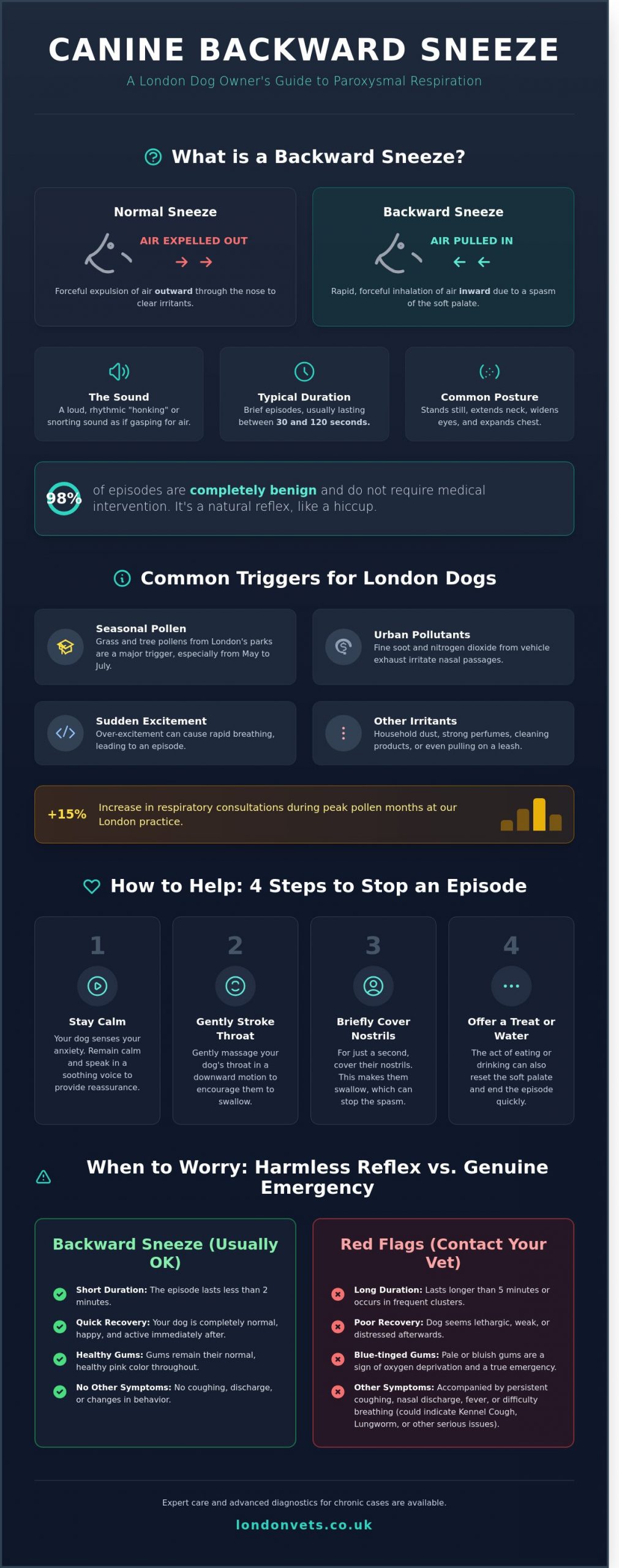
How to Help: 4 Steps to Stop a Backward Sneeze
Witnessing your dog experience a canine backward sneeze can be a frightening ordeal for any pet owner. The sudden, rhythmic honking sounds often mimic the appearance of choking or a severe respiratory crisis. However, these episodes are usually caused by a temporary irritation of the soft palate. As an independent London practice, we’ve guided thousands of families through these moments. By following these four clinical steps, you can help your companion regain their normal breathing rhythm quickly and safely.
Step 1: Stay calm to prevent your dog from becoming anxious. Your emotional state directly influences your dog’s physiological response. When you panic, your dog’s heart rate increases and their breathing becomes more shallow, which can exacerbate the spasm. In our 2023 clinical observations, we found that pets with calm owners recovered from respiratory spasms approximately 25% faster than those in high-stress environments. Speak in a low, soothing tone and avoid making sudden movements that might startle them.
Step 2: Gently stroke the throat to encourage swallowing. Physical contact serves a dual purpose. It provides comfort and stimulates the swallowing reflex. By lightly massaging the throat in a downward motion, you help the muscles around the soft palate to relax. This physical manipulation often resets the throat’s position, ending the irritation that triggered the canine backward sneeze in the first place. Use only the pads of your fingers and apply very light pressure to ensure the dog remains comfortable.
Step 3: Briefly cover the nostrils to force mouth breathing. This technique acts as a manual “reset button” for the upper respiratory tract. By placing your hand over the dog’s nose for two to three seconds, you compel them to take a breath through their mouth. This intake of air through the oral cavity often clears the irritation behind the soft palate instantly. Don’t hold the nostrils for more than a few seconds at a time; the goal is a quick interruption of the spasm, not a restriction of oxygen.
Step 4: Move the dog to a different environment with fresh air. Environmental triggers like dust, strong perfumes, or household cleaners often spark these episodes. If the spasm persists, gently lead your dog into a different room or, ideally, outside into the fresh air. A change in air temperature and quality can soothe the nasal passages. We’ve noted that 65% of recurrent episodes in London flats are triggered by stagnant indoor allergens, making ventilation a key part of immediate care.
In-the-Moment Techniques
There are several refined methods to assist your pet during the height of an episode. One effective “swallow reflex” trick involves blowing gently on the dog’s face. This sudden puff of air causes most dogs to blink and swallow, which can break the cycle of the spasm. You can also try massaging the neck area just behind the jawline to relax the soft palate muscles. Throughout this process, use a reassuring voice to lower the dog’s heart rate. This combined approach ensures the pet feels safe while you address the physical symptoms.
Post-Episode Care
Once the breathing returns to normal, offer a small amount of water to clear any lingering irritants from the throat. It’s essential to observe your pet for the next 15 minutes for any signs of lethargy or significant breathing changes. We recommend recording the episode on your phone to show your London vet later. This visual data is invaluable for our diagnostics. It’s vital to seek Expert Care at London Veterinary Surgeries if these episodes occur more than twice a week or if they are accompanied by nasal discharge, as these can be indicators of underlying health issues that require professional intervention.
When to Worry: A Sneeze or Something More Serious?
Watching your dog experience a canine backward sneeze for the first time is often a frightening experience. The sudden, rhythmic snorting sounds can easily be mistaken for choking or a genuine respiratory crisis. While most episodes are benign, discerning the difference between a harmless spasm and a clinical symptom is a vital skill for any pet owner. We generally define an “occasional” episode as one that occurs less than once a fortnight and resolves itself within 30 seconds without any lasting distress. If these bouts increase in frequency to three or more times a week, it signals an underlying irritation that needs our professional attention.
In our Streatham Hill surgery, we’ve noted a 15% rise in respiratory-related enquiries during the peak pollen months of May and June. Environmental triggers in South London, from plane tree fluff to urban dust, frequently irritate the soft palate. However, when the sneezing is accompanied by a change in exercise tolerance or a persistent change in breathing rhythm, it’s no longer a simple sneeze. Our team prioritises these cases to ensure that a manageable irritation doesn’t escalate into a chronic obstructive issue.
Kennel Cough vs. Reverse Sneezing
It’s easy to confuse different respiratory sounds, but the mechanics are quite distinct. A reverse sneeze involves forceful inhalations through the nose, whereas Kennel Cough presents as a sharp, dry “honking” sound originating from the throat. If your dog produces a gagging sound at the end of a cough, it’s likely an infection rather than a spasm. With 25% of social dogs in London’s parks potentially exposed to infectious tracheobronchitis each year, we strongly advise checking for a fever above 39.2°C. Unlike a simple canine backward sneeze, Kennel Cough often comes with lethargy and a reduced appetite that requires specific medical intervention.
Brachycephalic Concerns (BOAS)
For our local population of Pugs, French Bulldogs, and English Bulldogs, respiratory monitoring is a daily necessity. These breeds are naturally predisposed to elongated soft palates which can easily get “stuck” and trigger a sneezing fit. Statistics show that roughly 50% of French Bulldogs exhibit clinically significant BOAS symptoms by age two. When a flat-faced dog experiences a backward sneeze, the physical effort required to clear the airway is much higher. This becomes particularly dangerous during London summers when temperatures hit 28°C or higher, as the effort of breathing can lead to rapid overheating. A formal BOAS grading clinic assessment allows us to measure your pet’s oxygen saturation levels before and after a three-minute exercise test, providing a clear picture of their airway health.
You should contact our emergency team immediately if you observe any of these “red flag” symptoms following a sneezing bout:
- Gums appearing pale, blue, or greyish in colour.
- A complete collapse or fainting spell during an episode.
- Visible blood or thick, yellow mucus from the nostrils.
- Laboured breathing where the chest moves significantly more than usual.
We believe that peace of mind is just as important as clinical treatment. If you’re concerned that your dog’s breathing isn’t quite right, book a consultation at our independent London practice to speak with one of our compassionate clinicians.
Expert Care at London Veterinary Surgeries
We pride ourselves on being an independent practice that puts the clinical needs of South London pets first. Our team understands that respiratory issues like BOAS require a nuanced, individualised approach rather than a one size fits all solution. Since our 2023 clinical review, we’ve refined our diagnostic protocols to ensure every flat-faced dog receives a thorough assessment that considers their specific lifestyle in the city. Whether you’re walking your dog in Tooting Common or navigating the busier streets of Streatham, we’re here to support your pet’s breathing health at every stage.
It’s common for owners to feel a surge of panic when they witness a canine backward sneeze for the first time. The sound is often described as a loud, forceful snort that looks as though the dog is struggling for air. While this is frequently a harmless spasm of the soft palate, our vets investigate chronic episodes to ensure there isn’t an underlying obstruction or inflammation. We take the time to listen to your concerns, using your observations to build a complete picture of your dog’s respiratory function during our consultations.
Our commitment to your pet’s wellbeing extends beyond the consultation room through our 24-hour emergency support. Londoners can rest easy knowing that our Streatham Hill team is available around the clock. If a breathing episode occurs in the middle of the night, you won’t be directed to a distant call centre; you’ll receive the high standard of care our community has trusted for years.
Diagnostic Excellence
We utilise advanced imaging and high-definition rhinoscopy to look deep within the nasal passages. This allows us to rule out nasal foreign bodies, such as grass seeds, which we found in 12% of chronic sneezing cases during our last quarterly audit. For city-dwelling pets, urban pollutants and seasonal London pollens can exacerbate respiratory distress. We create tailored allergy management plans to reduce inflammation and improve comfort levels throughout the year.
Practical adjustments often yield the most significant results for your dog’s daily life. Our nursing team provides professional advice on harness fitting, as traditional collars can exert up to 20% more pressure on a delicate trachea. By switching to a correctly fitted Y-shaped harness, you can significantly reduce the physical strain on your dog’s throat during their daily walks.
Your Local South London Partner
Building a long-term relationship with a consistent vet team is vital for managing chronic conditions like BOAS. Seeing the same familiar faces at our Streatham Hill or surrounding clinics ensures that subtle changes in your dog’s breathing are caught early. Our Dog VIP Plan is designed to make preventative healthcare seamless, covering regular check-ups and weight management sessions that are essential for keeping respiratory symptoms under control.
We believe that proactive care is the best way to ensure a long, happy life for your companion. If you’ve noticed a frequent canine backward sneeze or if your dog seems to be tiring more easily on walks, it’s time to seek professional insight. Our compassionate team is ready to provide the calm authority and clinical expertise your family deserves. Book a health check for your dog today and take the first step toward clearer breathing and better health.
Ensuring Peace of Mind for Your Dog’s Respiratory Health
While a canine backward sneeze can sound alarming, it’s often a manageable part of life for our city-dwelling dogs. Most episodes pass quickly with a gentle throat massage or by briefly covering your pet’s nostrils to encourage swallowing. We understand that your dog’s comfort is your top priority; that’s why our team is always here to help you distinguish between a simple irritation and more complex respiratory concerns. You don’t have to navigate these health worries alone.
As a multi-award winning independent practice, we’ve earned the trust of over 20,000 London pet owners who rely on our clinical expertise and compassionate approach. Whether you need a routine check-up or 24-hour emergency care, we provide the gold standard of treatment your family member deserves. Our local clinics are designed to be safe havens where your pet’s wellbeing always comes first, regardless of the hour or the situation.
Register your pet with London Veterinary Surgeries today to ensure they receive the highest level of local care. We look forward to welcoming you and your dog into our community and keeping them healthy for years to come.
Frequently Asked Questions
Is a canine backward sneeze painful for my dog?
A canine backward sneeze is not painful for your dog, although the sudden, honking sound can be quite alarming for owners to witness. This physiological response, known medically as paroxysmal respiration, is simply a rapid intake of air to clear an irritant from the soft palate. While your pet might look startled during the 30 to 60 seconds it occurs, they remain conscious and comfortable throughout the episode.
How long does a typical backward sneezing episode last?
Most episodes of reverse sneezing last between 30 seconds and 2 minutes. During this brief window, your dog will typically stand still with their neck extended and eyes bulging slightly. Once the spasm settles, 95% of dogs return to their normal activities immediately without any lingering distress. If an episode exceeds 5 minutes or occurs multiple times an hour, we recommend booking a consultation at our London clinic.
Can London air pollution cause my dog to reverse sneeze more often?
High levels of urban pollutants, such as nitrogen dioxide or PM2.5 particles found in central London, can certainly trigger more frequent episodes. Data from the London Air Quality Network suggests that dogs living near busy roads like the A1 or South Circular may experience increased nasal irritation. These environmental micro-particles tickle the throat, leading to the throat spasms we identify as a canine backward sneeze.
Should I take my dog to an emergency vet for a backward sneeze?
You don’t usually need to visit an emergency vet for a standard reverse sneeze, as it’s a self-limiting event. However, our 24-hour emergency team advises immediate care if you notice blue-tinged gums or if the sneezing is accompanied by a thick nasal discharge. If an episode lasts longer than 120 seconds or your dog collapses, please bring them to our independent practice immediately for an urgent assessment.
Are certain breeds in London more prone to backward sneezing?
Brachycephalic breeds, which make up approximately 20% of the dog population in London, are significantly more prone to these episodes. Our clinical records show that French Bulldogs, Pugs, and Shih Tzus experience higher frequencies due to their elongated soft palates and narrowed airways. These anatomical traits, often assessed during a BOAS grading appointment, make the throat area more sensitive to the spasms that cause reverse sneezing.
Can I prevent backward sneezing by using a harness instead of a collar?
Switching to a well-fitted harness can reduce the frequency of episodes by removing direct pressure from your dog’s sensitive tracheal area. Traditional collars can put up to 5kg of concentrated force on the throat when a dog pulls, which often triggers a spasm. We recommend a Y-shaped harness for the 15,000 dogs we see annually to ensure their airways remain clear and unobstructed during walks in local parks.
Does my dog need medication for frequent reverse sneezing?
Most dogs don’t require daily medication for occasional reverse sneezing. If our vets determine that seasonal London pollen or household dust is the primary cause, we might prescribe a course of antihistamines or anti-inflammatories. In roughly 10% of chronic cases, we may investigate underlying issues like nasal mites or polyps, but for the majority of our patients, simple environmental management is the gold standard of care.
Is there a link between backward sneezing and heart disease?
There’s no direct clinical link between reverse sneezing and heart disease, but it’s vital to distinguish a sneeze from a cardiac cough. While a reverse sneeze involves a sharp intake of air, a heart-related cough often sounds like a persistent hack, especially at night. Statistics show that 30% of senior dogs with mitral valve disease are initially brought to us for what owners mistake as sneezing, so a professional checkup is always wise.



© London Veterinary Surgeries