
Date: 22 Mar 2026
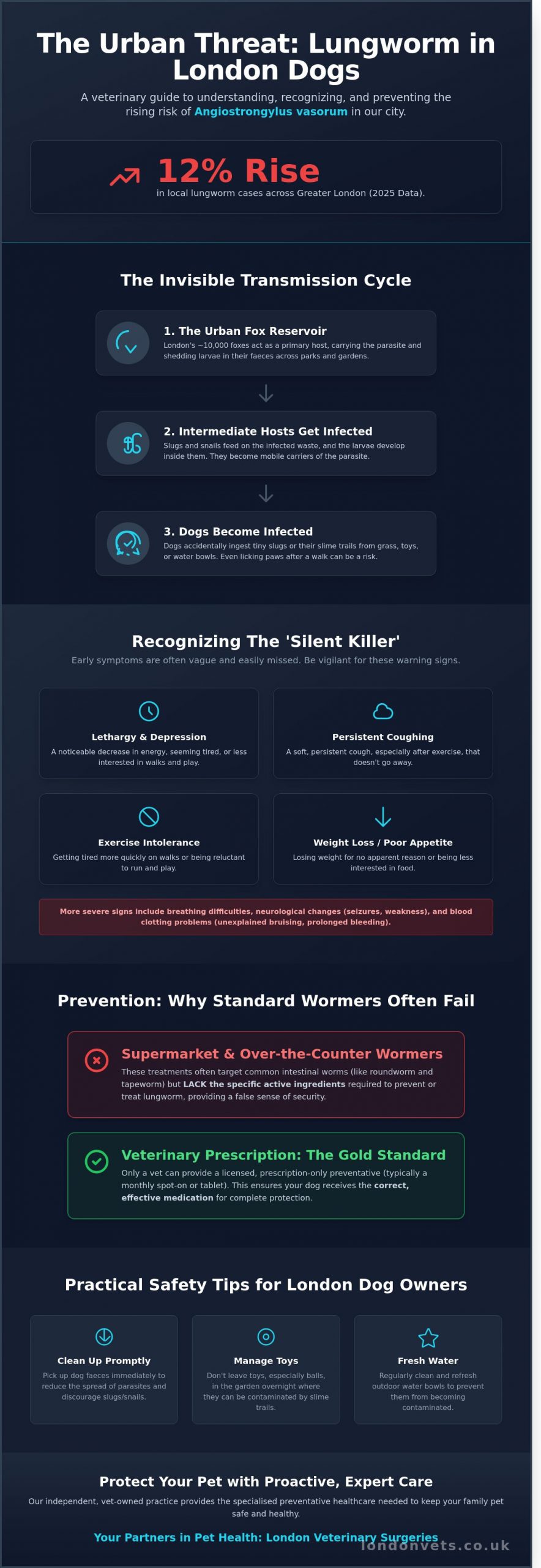
Last Tuesday, a golden retriever named Barney arrived at our South London clinic with nothing more than a persistent, soft cough. His owner, like many of us living in the capital, assumed it was just a seasonal irritant from the local park. However, diagnostic tests confirmed the presence of Angiostrongylus vasorum, a parasite commonly known as lungworm in dogs. This “invisible” threat is increasingly prevalent in urban spaces, with recent 2025 data showing a 12% rise in local cases across the Greater London area.
We know how unsettling it feels to worry about your pet’s safety in your own garden, especially when urban foxes and slugs are a constant presence. It’s often difficult to distinguish between effective clinical treatments and less reliable options found on supermarket shelves. We’re here to provide the peace of mind you need by detailing exactly how to identify, prevent, and treat this condition within our unique city environment. We’ll explore the specific symptoms to watch for, the most effective prevention protocols for 2026, and how our independent team provides the compassionate, high-level care your dog deserves.
Key Takeaways
- Understand how London’s unique urban environment and local wildlife contribute to the spread of life-threatening parasites like Angiostrongylus vasorum.
- Recognise the subtle, “silent” symptoms of lungworm in dogs, such as persistent coughing and exercise intolerance, to ensure early intervention.
- Learn why standard over-the-counter supermarket wormers often fail to protect your pet and which clinical treatments offer a gold standard of care.
- Discover practical safety habits for London walks and garden hygiene to reduce the risk of your dog ingesting larvae from slugs and snails.
- See how our independent, vet-owned practice provides the specialised preventative healthcare needed to keep your family pet safe and healthy.
What is Lungworm and Why is it a Risk in London?
Understanding the health risks facing our local pets is the first step toward effective prevention. Lungworm, scientifically known as Angiostrongylus vasorum, is a parasitic roundworm that poses a severe, life-threatening risk to your canine companions. Unlike more common intestinal parasites, these worms migrate to the heart and pulmonary arteries. This can lead to debilitating respiratory issues, heart failure, and life-threatening blood clotting disorders. If you are wondering What is lungworm?, it is essential to recognise that this parasite is not transmitted directly from dog to dog. Instead, it relies on an intermediate host, typically a slug or a snail, to complete its complex lifecycle.
The prevalence of lungworm in dogs has risen significantly across the UK over the last decade. In London, the risk is particularly acute because of our unique urban ecosystem. While many owners associate parasites with rural farmland, our capital city provides a perfect breeding ground for these larvae. Without timely intervention from a veterinary professional, the condition can be fatal. We view every pet as an individual, and our clinical team is here to provide the sophisticated diagnostics and gentle care required to manage this aggressive parasite.
The Role of the Urban Fox in London
London’s fox population is a defining feature of our city’s wildlife, with estimates suggesting there are up to 10,000 foxes living within the Greater London area. These animals act as a primary reservoir for Angiostrongylus vasorum. When an infected fox leaves faeces in a communal garden or park, they release thousands of microscopic larvae into the environment. Local slugs and snails then feed on this waste, becoming carriers of the infection. In high-density areas like Streatham, the sheer volume of fox activity creates a constant cycle of contamination. South London’s exceptionally high fox density creates a direct and measurable link to the increased prevalence of lungworm larvae found in local mollusc populations.
How Dogs Accidentally Ingest the Parasite
Your dog doesn’t need to intentionally eat a large snail to contract the disease. Many infections occur through the accidental ingestion of tiny slugs or the transparent slime trails they leave behind. These trails can contain infectious larvae that remain viable for several days in damp conditions. When you are walking through Tooting Common or Brockwell Park, these ‘sticky’ larvae can easily adhere to your dog’s fur, paws, or even their favourite tennis ball. Lungworm in dogs is also frequently spread through shared outdoor water bowls or toys left on the grass overnight.
- Puppies and ‘Mouthy’ Breeds: Younger dogs and breeds like Labradors or Spaniels are at the highest risk because they explore the world with their mouths.
- Environmental Hazards: Larvae thrive in the lush, shaded areas of South London gardens where molluscs congregate.
- Slime Trails: Microscopic larvae can be ingested when a dog licks their paws after a walk or drinks from a contaminated puddle.
Our role as your local independent vet is to offer a safe haven where we can discuss these risks without causing unnecessary alarm. By understanding these urban transmission routes, we can work together to protect your pet’s wellbeing through proactive, medically grounded preventative strategies. We believe in a gold standard of care that prioritises the long-term health of your family members, ensuring they can enjoy the city’s green spaces safely.
Recognising Lungworm Symptoms: The ‘Silent Killer’
Lungworm is notoriously difficult to identify in its early stages. Unlike some parasites that cause immediate, obvious distress, lungworm in dogs often hides behind vague symptoms that owners might dismiss as a simple cold or a bit of lethargy. This “silent” progression is why we see many cases only when the infection has become severe. Our team at London Veterinary Surgeries understands the anxiety this causes. We believe that knowing exactly what to look for is your first line of defence.
The clinical reality is that symptoms vary wildly between individual pets. One dog might only show a slight decrease in energy, while another could face life-threatening complications within days. Because the larvae migrate through the liver, heart, and lungs, the damage is often internal and invisible until a crisis occurs. We’ve found that early intervention is the gold standard of care, transforming a potentially fatal diagnosis into a manageable recovery.
Respiratory and Physical Warning Signs
Respiratory issues are frequently the first sign that something is wrong. A “lungworm cough” is often soft and productive, which differs from the harsh, dry “honking” sound associated with kennel cough. You might notice your dog tiring more quickly during a routine walk in Battersea Park or showing a new reluctance to play fetch. These changes are subtle but significant.
- Resting Breathing Rate: A healthy dog should take fewer than 30 breaths per minute while sleeping. If you count more than 35 breaths consistently, it indicates respiratory distress.
- Exercise Intolerance: If your dog stops at the bottom of the stairs or sits down mid-walk, their heart and lungs may be struggling to circulate oxygen.
- Persistent Clearing of the Throat: This often occurs after a period of rest or upon waking up in the morning.
The Danger of Internal Bleeding
One of the most dangerous aspects of this parasite is its impact on blood coagulation. The Merck Veterinary Manual on Lungworm explains that the infection can cause a significant drop in platelets and interfere with the blood’s ability to clot correctly. This leads to spontaneous bleeding that can be difficult to stop.
Keep a close eye on your dog’s gums and skin. Pale gums can suggest anaemia, while small purple or red spots (petechiae) on the skin or whites of the eyes indicate broken capillaries. If you notice blood in their urine or stools, or if a minor scratch from a bramble won’t stop bleeding after five minutes of pressure, seek veterinary help immediately. At London Veterinary Surgeries, we prioritise these cases as urgent emergencies.
Neurological changes represent the most advanced stage of the disease. Approximately 9% of clinical cases involve the central nervous system, often due to bleeding in the brain or spinal cord. Symptoms include:
- Sudden “wobbliness” or loss of coordination in the hind legs.
- Uncharacteristic aggression or sudden bouts of depression.
- Seizures or fits in dogs with no previous history of epilepsy.
If you’ve noticed any of these subtle shifts in your dog’s energy or behaviour, book a wellness check with our compassionate team at London Veterinary Surgeries today. Our 24-hour availability ensures that we are here for your family whenever a concern arises. Identifying lungworm in dogs before it reaches the neurological stage is vital for a positive outcome. We treat every pet with the same urgency and respect we would our own, providing a safe haven for London’s local dog community.
Prevention vs. Cure: Why Standard Wormers Often Fail
Many London pet owners unknowingly fall into what we call the ‘Supermarket Trap’. It’s a common mistake to assume that a standard worming tablet picked up from a local shop or supermarket provides a complete shield. In reality, most over-the-counter products only target common intestinal parasites like tapeworms and roundworms. They lack the specific medical compounds required to stop lungworm in dogs, leaving a dangerous gap in your pet’s defences. Because Angiostrongylus vasorum behaves differently to gut worms, it requires a higher tier of pharmaceutical intervention that you can only access through a registered veterinary practice.
Our team sees the results of these coverage gaps far too often. While a generic wormer might make you feel proactive, it offers no protection against the larvae that migrate to a dog’s heart and pulmonary arteries. As explained in VCA Animal Hospitals’ guide to lungworm, the complex life cycle of this parasite involves the accidental ingestion of slugs, snails, or even their slime trails. This makes exposure a daily reality for any dog walking in London’s leafy squares or private gardens.
Veterinary-Grade vs. Over-the-Counter Products
To effectively prevent lungworm in dogs, we prescribe products containing specific active ingredients like moxidectin or milbemycin oxime. These are clinically proven to interrupt the parasite’s development before it can cause internal damage. You won’t find these ingredients in non-prescription treatments because their administration requires professional oversight to ensure the correct dosage and safety for your specific breed. We typically recommend either a monthly spot-on treatment or a monthly flavoured tablet, both of which provide a 100% efficacy rate when used correctly.
- Moxidectin: Usually found in veterinary-grade spot-ons, this provides continuous protection by staying in the bloodstream at consistent levels.
- Milbemycin: Often delivered via a monthly tablet, this is highly effective at clearing larvae before they reach the adult stage in the heart.
- Prescription Security: A vet’s prescription ensures the product is genuine and appropriate for your dog’s current health status.
The Myth of the ‘Seasonal’ Risk
There’s a persistent belief that parasite prevention is only necessary during the warmer months. This is a dangerous misconception in a city like London. Our damp, mild winters rarely see temperatures drop low enough to kill off the slug and snail population. In fact, slugs remain active at temperatures as low as 5 degrees Celsius. If you skip a dose in December or January, you leave your dog vulnerable during periods of high moisture when gastropod activity actually peaks. Consistency in monthly treatment is the only verified way to prevent infection.
We understand that life in the city is busy and remembering a monthly schedule can be a challenge. To alleviate this worry, we designed our Dog VIP Plan to automate your pet’s healthcare. This programme ensures you always have the correct, veterinary-grade preventatives on hand exactly when you need them. By moving from a reactive ‘cure’ mindset to a proactive ‘prevention’ model, we can work together to keep your dog safe from this hidden threat throughout every season. It is a simple, effective way to provide the gold standard of care your family member deserves.
Practical Safety Tips for London Dog Walks
Protecting your pet requires a proactive approach to the local environment. London’s damp climate provides the perfect breeding ground for the molluscs that carry lungworm in dogs. We recommend a strict evening routine to minimise risk. Clear all dog toys, especially porous tennis balls, from the lawn by 7:00 p.m. Slugs and snails are nocturnal; they often crawl over these items, leaving behind infected slime trails or microscopic larvae. If your dog picks up a ball that sat in the grass overnight, they could inadvertently ingest a gastropod.
During walks in spaces like Brockwell Park or Tooting Common, stay extra vigilant after heavy rainfall. A 2021 ecological survey indicated that slug activity increases by over 60% immediately following a downpour. Stick to paved paths during these times rather than letting your pet forage in deep undergrowth. Maintaining garden hygiene is equally vital. We’ve seen that one infected dog can shed thousands of larvae in a single stool. By picking up waste immediately, you break the infection cycle and protect the wider London canine community.
Consider these daily habits to safeguard your pet:
- The ‘Toy Check’: Inspect and wash any toys left outside with hot water before your dog plays with them.
- Fresh Water Only: Change outdoor water bowls twice daily to prevent larvae from surviving in standing water.
- Night-time Clearing: Bring in all bowls, chews, and bedding from balconies or gardens before dusk.
- Faecal Monitoring: Watch for changes in consistency or the presence of blood, which can be an early clinical sign.
Damp Gardens and Communal Spaces
You can reduce the larvae count in your garden without using dangerous chemicals. The UK government banned metaldehyde slug pellets in April 2022 because they’re toxic to pets and wildlife. Instead, use copper tape around planters or create barriers with grit. Be cautious at dog-friendly cafes in areas like Shoreditch or Clapham. While a shared water bowl seems welcoming, larvae can survive in water for up to 24 hours. We suggest carrying a portable, collapsible bowl to ensure your pet only drinks fresh water you’ve provided yourself.
What to Do if You Suspect Infection
If you notice a persistent cough, lethargy, or unusual bruising, contact us immediately. Our diagnostic process is thorough and compassionate. We utilise the Baermann technique to isolate larvae from faecal samples over a 48-hour period; we also offer rapid blood antigen tests for quicker results. Early intervention at Streatham Hill Vets drastically improves clinical outcomes. For severe cases, our 24-hour hospital facilities provide the reassurance of constant monitoring and specialist oxygen therapy. We’re here to support you through every stage of treatment with gentle, expert care.
If you’re concerned about your pet’s risk levels or want to discuss a tailored preventative plan, you can book a preventative consultation with our experienced team today.
Protecting Your Dog with London Veterinary Surgeries
Since 2006, London Veterinary Surgeries has remained a proudly independent, vet-owned practice. We believe this autonomy is vital for maintaining a truly personal level of care. It allows our clinical teams to prioritise your pet’s wellbeing over corporate targets, ensuring that every medical recommendation is based solely on what is best for your dog. For 18 years, we’ve served as a trusted pillar of the local community, building long-term relationships with owners who view their pets as integral family members.
Our gold standard approach to preventative healthcare is designed to stop illnesses before they take hold. We don’t believe in a one-size-fits-all model. Instead, we provide tailored protocols that reflect the specific risks of living in an urban environment. This is particularly relevant when managing the threat of lungworm in dogs, a parasite that is now widespread across the capital’s green spaces. By choosing an independent practice, you’re opting for a team that has the freedom to select the most effective, evidence-based treatments available in the UK today.
We invite you to book a preventative consultation at one of our clinics. During these sessions, we’ll assess your dog’s lifestyle, exercise habits, and current protection levels to create a robust defence against local parasites. Our goal is to provide a safe haven where clinical expertise meets a warm, welcoming atmosphere, alleviating the anxiety often associated with veterinary visits.
Comprehensive Care at Our South London Surgeries
Our presence in Streatham Hill and the surrounding South London areas ensures that expert help is always nearby. We understand that the city never sleeps, and neither does our commitment to your pet. We provide 24-hour emergency support, giving you the reassurance that if your dog shows acute symptoms of respiratory distress or unexplained bruising at 2:00 am, our skilled team is ready to act. We’ve spent nearly two decades refining our emergency protocols to ensure rapid, calm, and effective intervention when every second counts.
Our team provides empathetic, expert guidance for worried owners. We know how stressful it is when a pet is unwell, which is why we focus on clear communication and gentle handling. Whether you’re visiting us for a routine check-up or a complex diagnostic procedure, you’ll find a supportive environment where your concerns are heard and your dog is treated with the utmost respect and urgency.
Join the VIP Health Plan for Total Peace of Mind
Managing the costs of high-quality healthcare shouldn’t be a burden. Our VIP Health Plan is designed to provide comprehensive protection while offering significant cost-saving benefits. By spreading the cost of essential preventative care into manageable monthly payments, owners can save over £100 per year compared to purchasing individual treatments. These plans are not just about convenience; they’re about ensuring your dog never misses a vital dose of protection.
Crucially, all necessary preventatives for lungworm in dogs are included as standard in our VIP plans. Many over-the-counter worming products available in supermarkets or pet shops don’t protect against lungworm. Our plan utilizes prescription-strength medications that are specifically formulated to eliminate the larvae before they can cause internal damage. This proactive strategy ensures your dog remains healthy while they enjoy their walks in London’s parks and gardens.
Protect your dog today: join our London Dog VIP Plan and ensure they receive the consistent, high-level care they deserve.
Securing Your Dog’s Future on London’s Streets
London’s high fox population density continues to drive the prevalence of lungworm in dogs, making proactive protection a necessity rather than an option in 2026. Because standard over-the-counter wormers frequently lack the specific ingredients required to kill these larvae, professional veterinary guidance is your best line of defence. Early intervention is vital because this parasite often hides behind mild symptoms before causing severe internal damage.
As a multi-award winning independent practice, we’ve built our reputation on providing a gold standard of clinical expertise. Over 20,000 London pet owners trust us to act as their local guardians; our 24-hour emergency care ensures we’re here whenever you need us. We don’t just treat animals; we care for family members with the compassion and precision they deserve. You can rely on our team to create a bespoke preventative plan that fits your dog’s specific lifestyle and walking routes.
Book a preventative health check at our Streatham Hill surgery to ensure your pet remains safe and healthy. We look forward to seeing you and your dog at the clinic soon.
Frequently Asked Questions
Can humans catch lungworm from dogs?
No, humans cannot catch lungworm from dogs. The specific parasite, Angiostrongylus vasorum, only infects canines and certain wild animals like foxes. While other parasites can pass between pets and people, this particular worm doesn’t pose a risk to your family. You can continue to cuddle your pet safely while focusing on their recovery. We’re here to provide the clinical expertise needed to keep your dog healthy and your home environment safe.
How common is lungworm in London specifically?
London is a high-risk hotspot for lungworm in dogs due to its dense fox population and damp gardens. Data from the Elanco Lungworm Map shows over 150 reported cases within a 5-mile radius of Central London in 2023 alone. Because foxes carry the parasite, our city’s green spaces and communal parks often have higher concentrations of infected slugs and snails compared to more rural areas. This makes preventative care essential for every local pet.
Does my standard flea and worm treatment cover lungworm?
Your standard over-the-counter flea and worm treatment might not protect against lungworm. Many common shop-bought products only target roundworms and tapeworms. At our independent practice, we recommend prescription-strength preventatives, such as monthly spot-ons or tablets, which are specifically licensed to kill larvae. It’s vital to check your packaging or speak with our team to ensure your current plan offers 100% coverage. We can help you transition to a more comprehensive healthcare plan today.
What should I do if I see my dog eat a slug or snail?
Don’t panic if you see your dog eat a slug or snail, but do contact us for advice immediately. While not every mollusc carries the parasite, the risk in London is high enough to warrant a professional conversation. We may suggest a proactive worming dose or a blood test if they’ve ingested a large number. Keep a close eye for coughing or unusual bruising over the next 30 days while we monitor their wellbeing.
Is lungworm treatable if caught early?
Yes, lungworm is highly treatable when we diagnose it in its early stages. Most dogs make a full recovery with a structured course of targeted parasite medication and supportive care from our veterinary team. However, if the infection progresses to cause internal bleeding or severe lung damage, the prognosis becomes more guarded. Early intervention is the gold standard for ensuring your pet returns to their happy, energetic self without any lasting health complications.
How much does a lungworm test cost at a London vet?
A lungworm test at a London vet typically costs between £55 and £115, depending on the type of diagnostic used. A rapid blood test provides results within 20 minutes and usually sits at the lower end of that scale. More comprehensive faecal testing, which involves laboratory analysis over three days, might cost closer to £110. These costs are a small investment compared to the intensive care and surgical procedures required for advanced, life-threatening infections.
Are certain dog breeds in London more at risk?
No specific breed is genetically more susceptible to lungworm in dogs, but younger dogs under 24 months old are diagnosed more frequently. This is often due to their inquisitive nature and tendency to mouth objects or eat slugs while exploring. Spaniels and Labradors also show higher case numbers in our clinics. Their high energy levels and scent-driven play lead them into damp undergrowth where snails congregate, increasing their chance of accidental ingestion.
Can dogs catch lungworm from drinking out of puddles?
Yes, dogs can contract lungworm by drinking from puddles or outdoor water bowls that contain infected slime trails. Slugs and snails often crawl over these surfaces at night, leaving behind microscopic larvae in their mucus. To keep your pet safe, we recommend refreshing outdoor water containers daily and discouraging your dog from drinking standing water during walks in London’s parks. This simple habit is a vital part of your pet’s preventative healthcare routine.



© London Veterinary Surgeries