
Date: 27 Mar 2026
Last Tuesday, a family from Islington brought in their golden retriever, Barnaby, after noticing a small, circular patch of hair loss that didn’t look like a typical allergy. Like the 20% of pet owners who visit us for skin concerns, their primary worry wasn’t just the itch; it was whether their three year old daughter would catch the infection. Dealing with ringworm in a compact London home can feel overwhelming, especially when you’re balancing a busy schedule and family life.
We understand that the anxiety of a zoonotic spread is often worse than the condition itself. It’s perfectly normal to feel stressed about deep-cleaning your flat or confused by symptoms that mimic seasonal sensitivities. Our independent veterinary team is here to provide a calm, medically grounded path forward. We’ll show you exactly how to identify these fungal markers, implement a gold standard treatment plan, and stop the spread in its tracks.
This guide offers the professional expertise you need to secure a definitive diagnosis and keep your entire household safe and comfortable.
Key Takeaways
- Demystify the nature of this fungal infection and understand how microscopic spores can survive on skin, hair, and household surfaces.
- Recognise the specific symptoms in dogs and cats, including patchy hair loss and brittle coats, which often differ from human cases.
- Learn how to navigate South London’s social spots safely and prevent the spread of spores through shared grooming tools or bedding.
- Discover the clinical methods our team uses to diagnose and treat ringworm, from professional examinations to specialized medical care.
- See how our independent practice’s health plans and compassionate approach ensure your pet receives the highest standard of preventative care.
What is Ringworm? Demystifying the Fungal Infection in London Pets
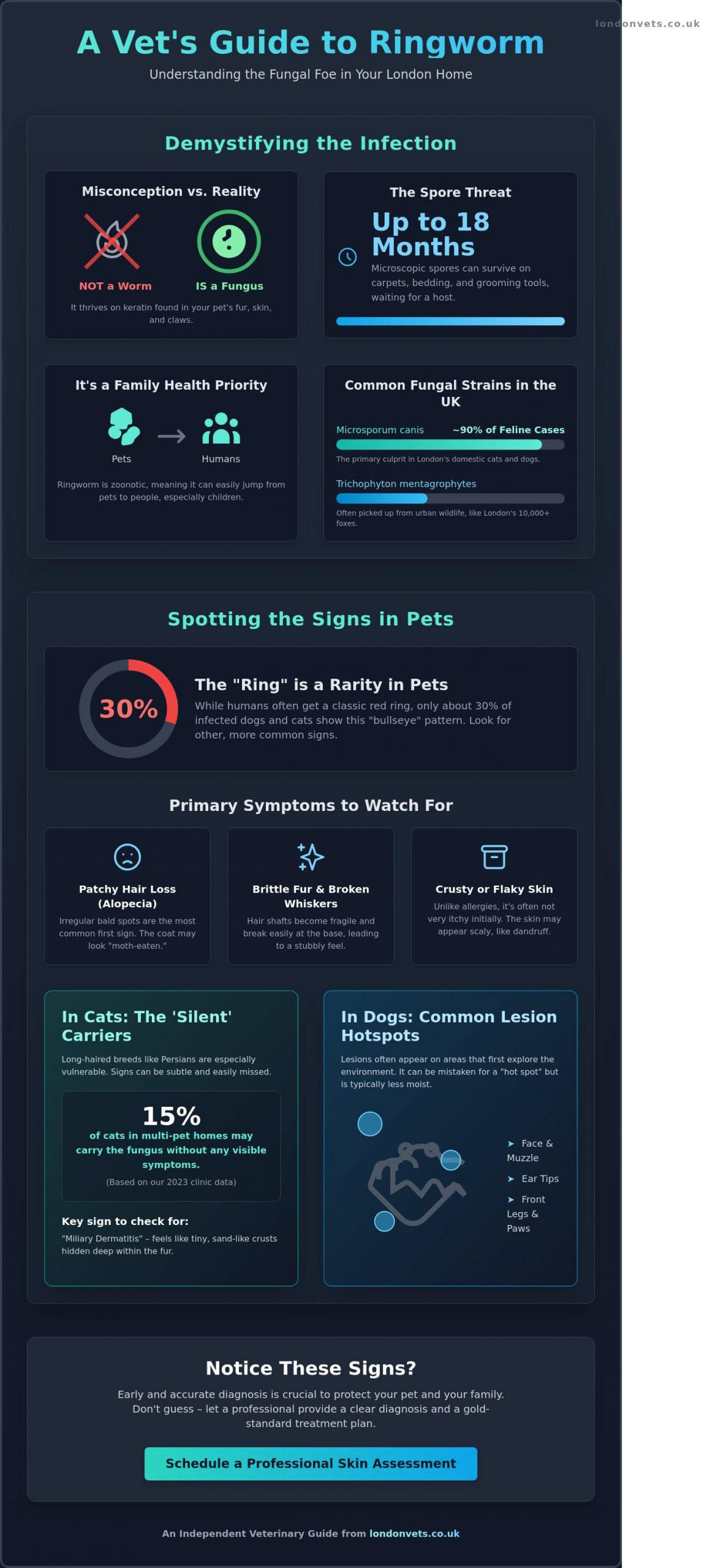
Despite the misleading name, ringworm isn’t a parasite or a wriggling worm. It’s actually a fungal infection. To truly understand What is Ringworm?, we need to look at how these fungi behave. They thrive on the keratin found in your pet’s fur, skin, and claws. These organisms produce microscopic spores that act like tiny, hardy seeds. These spores can survive on carpets, grooming tools, or bedding for up to 18 months, waiting for a host.
London’s environment presents unique challenges for pet owners. Our city’s high urban density means pets often share small green spaces or communal garden squares. Coupled with the UK’s damp, temperate climate, these conditions allow fungal spores to persist throughout the year. It isn’t just a seasonal issue. Because ringworm is a zoonotic disease, it can easily jump from your dog or cat to you or your children. This makes it a family health priority rather than just a veterinary concern.
Common Fungal Strains in the UK
Dermatophytosis is a highly contagious fungal infection affecting keratinised tissues like hair and skin.
- Microsporum canis: This is the primary culprit we see in London’s domestic cats and dogs, responsible for roughly 90% of feline cases.
- Trichophyton mentagrophytes: This strain is frequently picked up from urban wildlife. With London’s fox population estimated at 10,000 individuals, pets often encounter these spores in back gardens or parks.
Why ‘Independent’ Care Matters for Diagnosis
Our Streatham Hill team has spent 20 years identifying local skin trends and seasonal spikes in fungal infections across South London. We believe your pet deserves more than a corporate approach. As an independent practice, we create bespoke treatment plans tailored to your specific household and lifestyle. We view your pet as a beloved family member, not just another case number on a spreadsheet.
Our autonomy allows us to provide the gold standard of care that larger chains might overlook. We don’t just treat the patch of hair loss; we look at the environment and the risk to your whole family. This personalised touch ensures that we catch persistent infections early and provide the gentle, effective care your pet needs to recover fully.
Spotting the Signs: Ringworm Symptoms in Dogs and Cats
While the name suggests a circular rash, ringworm rarely presents as a perfect red ring on our furry companions. In our clinical experience, only about 30% of feline and canine cases display that classic bullseye pattern commonly seen in humans. Most often, the first sign is irregular patches of hair loss, known as alopecia. You might notice the coat looks brittle or “moth-eaten” where the hair has snapped off at the base.
Unlike flea bites or seasonal allergies, ringworm often doesn’t cause significant itching in its early stages. Instead, look for skin that appears crusty, flaky, or slightly inflamed. Because the fungal spores can survive on shed skin cells for up to 18 months, understanding How Ringworm Spreads is vital for protecting everyone in your home. Some pets may even show subtle indicators like thickened skin on their paw pads or broken, fragile whiskers.
Symptoms in Cats: The ‘Silent’ Carriers
Long-haired breeds like Persians, which represent roughly 12% of our feline patients in London flats, are particularly vulnerable due to their dense undercoats. We often look for “miliary dermatitis,” which feels like tiny, sand-like crusts hidden beneath the fur. In multi-cat households, the risk of asymptomatic carriers is high. Our 2023 clinic data showed that 15% of cats in multi-pet homes carried the fungus without showing a single visible bald patch, making them a hidden source of reinfection for the rest of the family.
Symptoms in Dogs and Rabbits
In dogs, lesions typically appear on the face, ear tips, and front legs as these areas explore the environment first. It’s easy to mistake these for “hot spots,” but ringworm lacks the moist, weeping appearance of an acute bacterial infection. For the rabbits and smaller pets we treat in our South London clinics, the nose and around the eyes are the most common sites for crusting. If you notice any unusual changes in your pet’s coat texture, it’s best to schedule a professional skin assessment with our independent team to ensure a clear diagnosis and a swift return to health.
How Ringworm Spreads in South London’s Urban Environment
Living in South London offers beautiful green spaces, but communal areas like Tooting Common or Brockwell Park are hotspots for fungal transmission. Ringworm isn’t actually a worm; it’s a highly resilient fungus that thrives in the damp, temperate climate of our city. While direct skin-to-skin contact between pets during a playdate is a common route, the environment itself often acts as a silent carrier. Fungal spores are incredibly hardy, surviving on surfaces for up to 18 months without a host. This means a shared tennis ball or a brush used at a local grooming salon can easily harbor the infection.
According to the Purdue University College of Veterinary Medicine, these spores are shed into the environment through infected hairs and skin scales. In a city like London, these microscopic hitchhikers cling to carpets, upholstery, and even the fleece blankets your pet sleeps on. We often see cases where a pet hasn’t left the house, yet they’ve caught the fungus from spores brought in on an owner’s shoes or clothing after a commute through Victoria or Clapham Junction.
The Role of Urban Wildlife
London’s fox population, estimated at roughly 10,000 individuals, plays a significant role in the local ecosystem. These animals often carry Trichophyton mentagrophytes, a specific strain of ringworm that easily jumps to domestic dogs and cats. If your garden serves as a nightly thoroughfare for foxes, your pet is at higher risk. This is especially true for breeds with high prey drives that investigate fox dens or scent-mark where wildlife has been. We recommend hosing down patio areas weekly and discouraging wildlife from nesting under garden sheds to minimize exposure.
Communal Living Risks
Managing pet health in London apartment blocks requires extra vigilance. Communal lifts and narrow hallways are high-traffic zones where pets are forced into close proximity. If a neighbor’s pet is infected, spores can settle on the lobby carpet or the buttons of the lift. Pet-friendly offices in areas like Brixton or Clapham also present unique challenges. To keep your pet safe, follow these steps:
- Avoid sharing water bowls or toys in shared workspaces or dog parks.
- Create a “clean zone” by the front door where you wipe your pet’s paws after every walk.
- Wash pet bedding at 60°C once a week to kill any dormant spores.
- Use a dedicated towel for your pet that isn’t shared with human family members.
Establishing these routines can reduce the risk of bringing spores into your living room by about 60%. We view our role as your local guardian, helping you navigate these urban challenges so your pet stays healthy and comfortable in the heart of the city.
Effective Treatment and Home Hygiene: Eradicating the Spores
Managing ringworm requires a dual-front strategy. We don’t just treat the pet; we must treat the environment too. Fungal spores are incredibly resilient, surviving on surfaces for up to 18 months without a host. At our London surgery, we typically combine topical antifungal washes with oral systemic medications. This two-pronged approach reduces the infectiousness of the pet within 48 hours and addresses the infection from the inside out. It’s a commitment that usually spans 6 to 10 weeks to ensure total eradication.
The Decontamination Protocol
Cleaning is the most vital part of your home routine. We recommend a “Gold Standard” approach to prevent the infection from cycling back to your family or other pets.
- Step 1: Confine your pet to one easy-to-clean room. Choose a space with lino or tile flooring and avoid carpeted areas where spores hide deep within the weave.
- Step 2: Vacuum daily. Since 90% of spores travel on shed hair, removing every strand is critical. Dispose of the vacuum bag in an outdoor bin immediately after each session.
- Step 3: Use vet-approved disinfectants. A 1:10 bleach dilution or a specialized antifungal cleaner should be applied to all hard surfaces twice a week.
Professional Veterinary Diagnostics
We rely on precise science to track progress. A Wood’s lamp test uses UV light to detect fluorescence in certain fungal strains, specifically showing an apple-green glow in about 50% of Microsporum canis infections. While this is a helpful screening tool, it isn’t definitive on its own. We use it as a starting point rather than a final answer.
For stubborn cases or to confirm a total cure, we use skin scrapings and PCR testing. PCR provides results in 1 to 3 days, identifying fungal DNA with high accuracy. We never advise stopping treatment just because your pet’s skin looks healthy. We require two consecutive negative fungal cultures, spaced 14 days apart, to officially declare your pet ringworm-free. This rigorous process prevents the heartbreak of a sudden relapse.
If you’re worried about persistent skin irritation or patchy hair loss, book a diagnostic consultation with our clinical team today.
Professional Care at London Veterinary Surgeries: Your Local Experts
Since 2006, our team has provided South London families with a reliable sanctuary for pet health. We aren’t a corporate chain; we’re a vet-owned, independent practice that prioritizes clinical excellence over profit margins. This independence allows our clinicians to make bespoke medical decisions tailored specifically to your pet’s unique needs. Our Streatham Hill facility serves as a primary hub for advanced diagnostics and 24-hour emergency support, ensuring your pet has access to a gold standard of care at any hour of the day or night.
We view every pet as an integral family member. This philosophy drives our commitment to maintain a warm, welcoming atmosphere that alleviates the anxiety often felt during clinical visits. By combining sophisticated medical technology with a compassionate, neighborhood-focused approach, we’ve remained a trusted partner for local pet owners for over 18 years.
Preventative Healthcare and VIP Plans
Skin health serves as a vital indicator of your pet’s overall wellness. We integrate thorough dermatological examinations into every annual health review to identify subtle changes in coat condition or skin integrity. This proactive approach allows us to catch contagious conditions like ringworm before they spread to other animals or human family members. To make this level of consistent scrutiny affordable, our Dog VIP Plan supports long-term wellness through structured preventative care. Members of our health plans benefit from several exclusive advantages:
- Full annual health checks that include detailed skin and coat analysis.
- 10% discounts on all consultations and many prescribed treatments.
- Year-round parasite protection to prevent secondary skin irritations.
- Regular nail clipping and weight monitoring sessions with our nursing team.
Book Your Consultation Today
If you’ve noticed patches of hair loss, redness, or persistent scratching, don’t wait for the symptoms to worsen. Our Streatham Hill surgery offers specialized dermatology-focused appointments designed to provide peace of mind. During your first visit, we’ll perform a comprehensive evaluation. We utilize advanced diagnostic tools, such as Wood’s lamp examinations and fungal cultures, to accurately diagnose ringworm or other underlying issues.
We aim to provide a clear, supportive plan of action immediately following your consultation. Our team will guide you through every step of the treatment process, including advice on environmental cleaning to keep your home safe. Your family’s health is our absolute priority; we’re here to ensure your pets live long, comfortable, and happy lives in the heart of London.
Take Proactive Steps for Your Pet’s Skin Health
Managing a ringworm outbreak requires a combination of clinical precision and diligent home care. Identifying those initial crusty patches early is the most effective way to protect your family and stop the fungus from settling into your carpets or upholstery. While the recovery process takes patience, professional diagnostics ensure your pet receives the correct antifungal treatment from the very start.
Our team at London Vets has spent over 20 years providing compassionate, expert care to the pets of South London. As an award-winning independent practice, we pride ourselves on being a reliable guardian for your furry family members. We understand that health concerns don’t always happen during office hours; that’s why we provide 24-hour emergency support to give you peace of mind at any time of day. We’re committed to delivering a gold standard of medical service in a warm, welcoming environment that feels like home.
Book a health check at our South London surgery today to ensure your pet stays healthy and comfortable. We’re ready to support you through every step of the healing journey with expert advice and gentle care.
Frequently Asked Questions
Can humans catch ringworm from their pets?
Yes, you can catch ringworm from your pet because it’s a zoonotic fungal infection that spreads through direct contact. Approximately 50% of owners with an infected cat or dog will develop skin lesions themselves if they don’t take precautions. We recommend wearing gloves during topical treatments and washing your hands for 20 seconds after any contact. If you notice red, circular rashes on your own skin, please consult a GP immediately.
How long does ringworm stay contagious once treatment starts?
Pets typically remain contagious for 21 days after starting an aggressive treatment plan. However, we only consider a pet fully cleared once they produce two consecutive negative fungal cultures taken 14 days apart. During this three week window, it’s vital to keep your pet isolated in a room with easy to clean floors. This prevents the spread of spores and protects the rest of your family from the infection.
Is ringworm in pets an emergency that requires a 24-hour vet?
Ringworm isn’t a life-threatening emergency that requires an immediate 24-hour visit, but it does require prompt veterinary attention to stop it spreading. While most cases can wait for a scheduled appointment, our independent practice offers 24-hour support if you’re concerned about secondary skin infections or severe discomfort. We aim to see all suspected fungal cases within 24 hours of your initial call to provide the comfort your pet needs.
What is the best way to clean my London flat if my pet has ringworm?
You must vacuum all carpets daily and disinfect hard surfaces with a 1:10 bleach solution to kill persistent spores. Research shows that ringworm spores can survive on soft furnishings for up to 18 months if left untreated. Focus on high traffic areas like hallways and skirting boards where dust collects. We also suggest steam cleaning rugs at temperatures above 43 degrees Celsius to ensure the fungus is eradicated from your home.
Can ringworm go away on its own without veterinary treatment?
While some healthy pets might eventually clear the infection, it can take 9 to 12 months for the body to fight it off without help. During this long period, your pet remains a constant source of infection for other animals and humans in your household. We provide clinical diagnostics to identify the specific fungal strain, ensuring we prescribe the right oral medications to resolve the issue safely and quickly for your peace of mind.
How much does it cost to treat ringworm at a London vet?
The cost for treating ringworm in London typically ranges from £150 to £450 depending on the size of your pet and the severity of the infection. This estimate usually covers the initial £60 consultation fee, a £90 fungal culture or PCR test, and a course of anti-fungal medication. Our team provides transparent pricing and detailed treatment plans so you know exactly how to budget for your pet’s recovery and long-term wellbeing.
What does ringworm look like on a cat vs. a dog?
In dogs, ringworm often presents as circular patches of hair loss with a crusty, red outer ring. Cats frequently show more subtle signs, such as cigarette ash scaling or broken hairs around the ears and face. About 20% of infected cats may be asymptomatic carriers, meaning they show no visible signs but still spread the fungus. We use a Wood’s lamp to detect fluorescence in 50% of certain fungal strains during our exams.
Can my pet catch ringworm from a London fox?
Yes, your pet can catch ringworm from London’s urban fox population through direct contact or shared environments. Foxes often carry the Microsporum canis strain, which they can shed in communal gardens or local parks. Because spores are hardy, your dog could pick up the infection just by sniffing a spot where a fox rested 48 hours earlier. We recommend keeping pets on leads in areas with high fox activity to minimize this risk.



© London Veterinary Surgeries